Published Jul 31, 2025
Updated Jan 8, 2026


Updated Jan 8, 2026
Curious about what kindergarten involves and why it’s crucial for your child? This guide breaks down everything you need to know about kindergarten in Singapore. We’ll discuss the benefits and key components of the curriculum in kindergarten. We’ll also cover the factors to consider when choosing a preschool or kindergarten in Singapore, and how to…
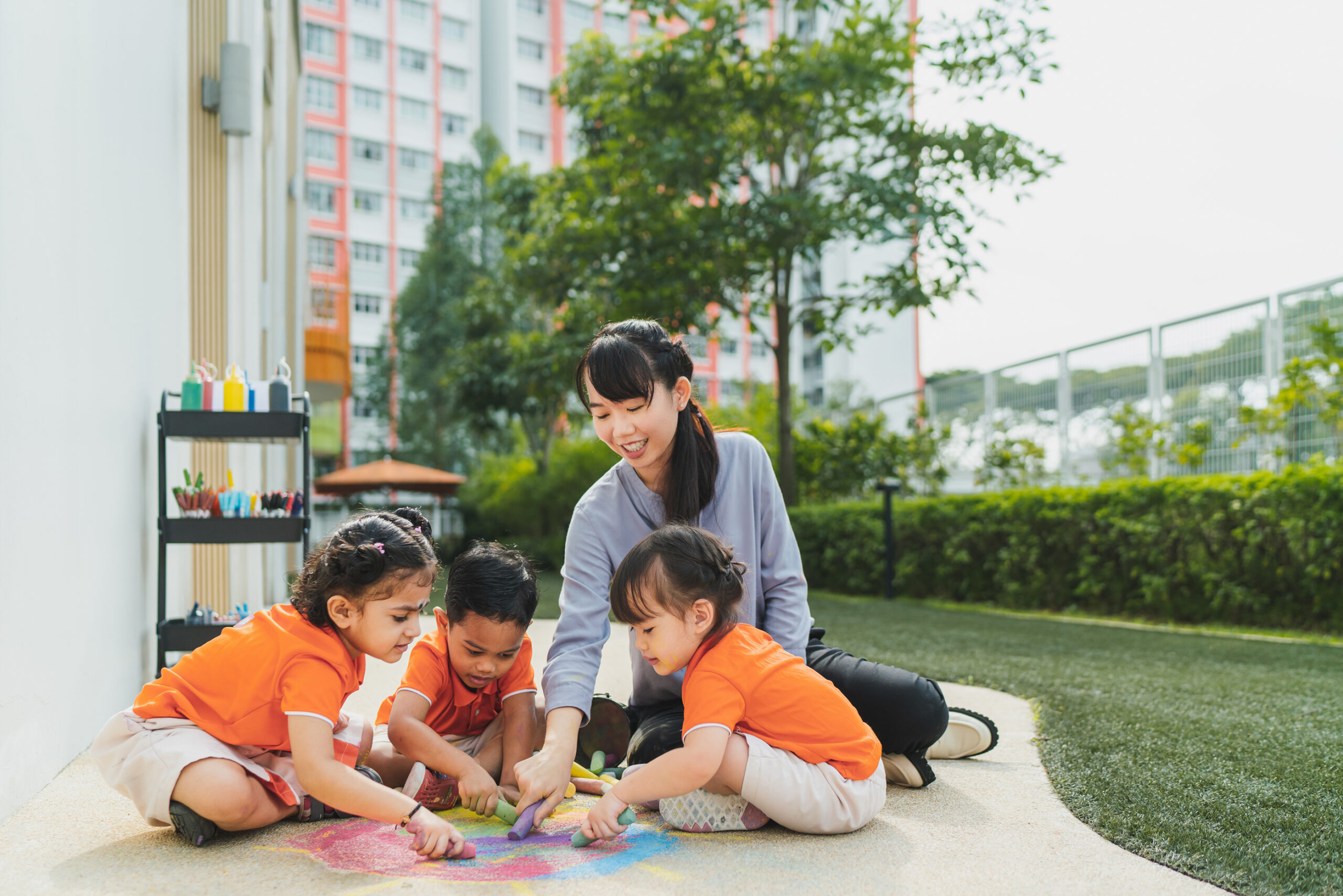
Curious about what kindergarten involves and why it’s crucial for your child? This guide breaks down everything you need to know about kindergarten in Singapore. We’ll discuss the benefits and key components of the curriculum in kindergarten. We’ll also cover the factors to consider when choosing a preschool or kindergarten in Singapore, and how to pick the right one for your child.
The concept of kindergarten originated in the 17th century when it began as a place for child care and moral education. The term “kindergarten” itself is derived from the idea of nurturing children like plants, providing them with the care and education they need to grow and thrive. Kindergarten education is crucial for young children, especially in our fast-paced society where early childhood education lays the foundation for future learning.
For a typical preschool in Singapore, the kindergarten level starts at 5 years old, but there are preschool programmes available for children at younger ages, from 18 months to 4 years old. Thereafter, compulsory attendance at a primary school begins when a child is 7 years old.
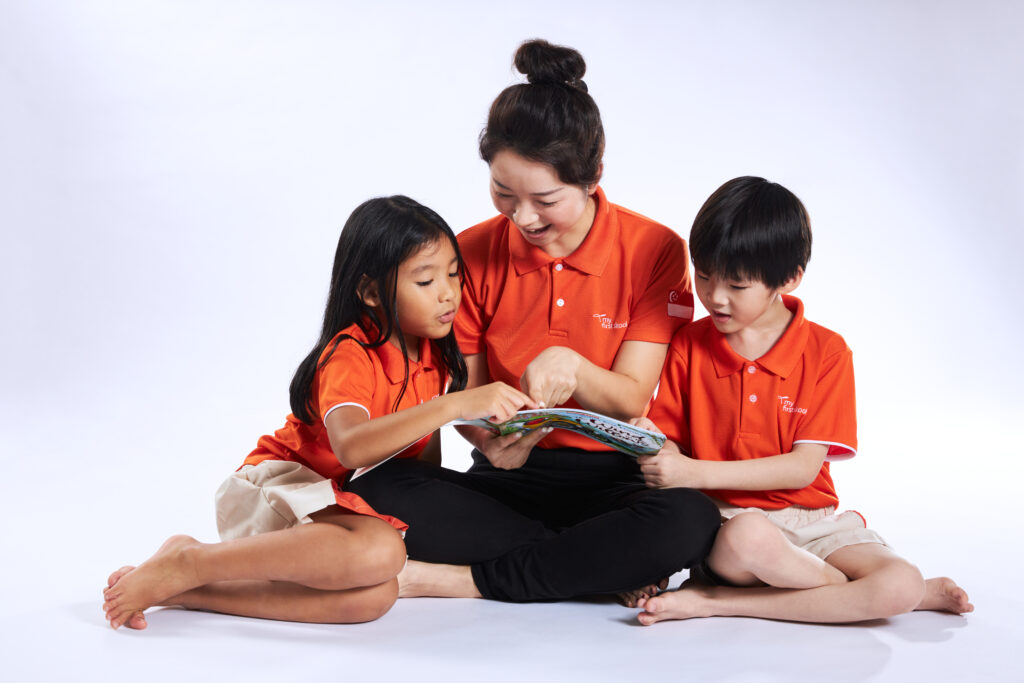
Kindergarten offers a range of activities that enhance children’s skills and abilities. It fosters curiosity, cognitive development, time management, and discipline, preparing them for future academic challenges. Activities like reading stories, singing songs, and role-playing help develop their language and communication skills.
Kindergarten provides essential advantages that contribute to a child’s holistic development and prepare a child to enter primary school. It fosters cognitive development, enhancing problem-solving and critical thinking abilities, essential for future academic success. When children enter Primary 1, they should be able to demonstrate basic literacy and numeracy skills, and developing these skills in kindergarten helps lay a strong foundation for lifelong learning.
Kindergarten education offers benefits beyond giving children a strong academic foundation. It helps children develop independence and emotional resilience, which are needed as they adapt to new environments and manage new responsibilities in primary school. Further, kindergarten also supports social growth, teaching kids to form healthy relationships, handle conflict, and develop empathy – essential skills for building community and belonging.
Finally, outdoor play and other physical activities in kindergarten will help children develop motor skills and maintain their overall health and fitness in their early years.
We elaborate on these benefits in greater detail below.
Most kindergarten curriculums should offer a well-rounded education covering essential subjects. Literacy skills, including letter recognition, phonics, and text comprehension, are foundational. These early literacy skills prepare children for more complex academic concepts in primary school.
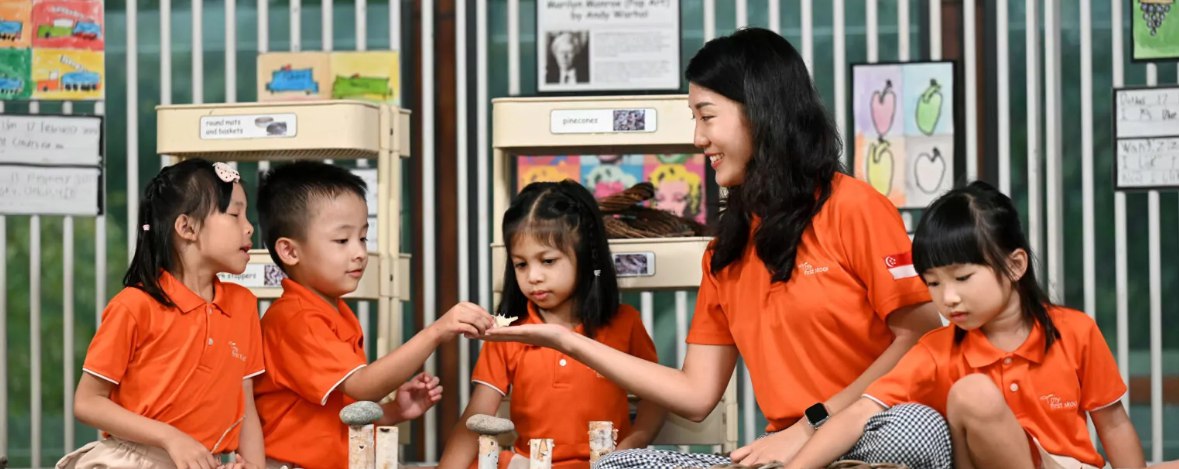
At My First Skool, we empower our children to learn through a pedagogical approach called PETAL© – Playing, Exploring, Thinking, and Applying Learning. This approach provides facilitated play experiences that encourage active exploration, critical thinking and making meaningful discoveries.
Mathematics instruction emphasises counting, number recognition, basic addition and subtraction, and understanding simple patterns. These numeracy skills help children develop a strong understanding of mathematical concepts, serving as a foundation for primary school.
Hands-on science education also encourages kindergarten children to ask questions and conduct simple experiments, fostering curiosity and critical thinking skills. Most kindergarten school curriculums will also include creative arts activities like drawing, singing, and dancing to foster creativity and emotional expression.
Apart from structured learning activities, engaging in play in kindergarten enhances creativity and imagination, crucial for cognitive development. Pretend play fosters language development and allows children to express their ideas and emotions. Puzzles and games also help children to enhance their decision-making, problem-solving and critical-thinking abilities.
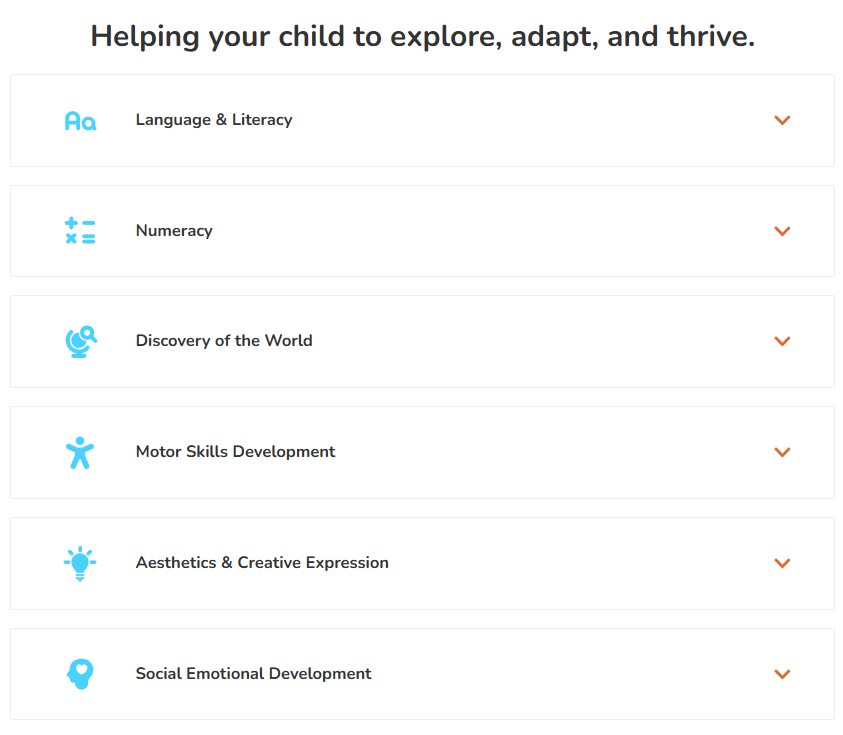
Emotional and social development is a critical aspect of kindergarten education. Kindergarten fosters independence by teaching children to perform tasks with minimal help from teachers. Managing their belongings and personal hygiene builds responsibility, boosting confidence and self-esteem. These skills also enable better concentration and effective engagement with peers.
Through group play and interactions with their peers in kindergarten, children also develop teamwork, collaboration and communication skills. Interactive games and activities teach children the value of working together, sharing, and supporting one another. These social skills are essential for building healthy relationships and a sense of community.
Further, when interacting with their peers in kindergarten, children are bound to face conflicts and disagreements. In this nurturing environment and under the guidance of educators, children can learn to manage their emotions, deal with such conflicts or challenges, and empathise with others. The ability to handle conflict and self-regulate are essential for overall well-being and success in future academic and social settings.
Physical education focuses on developing motor skills and overall health. Outdoor play enhances motor skills such as agility, balance, and coordination, essential for physical development and practical tasks.
Regular outdoor activities significantly benefit children’s health. They contribute to:
Exposure to outdoor environments presents diverse physical challenges, building self-confidence and resilience. These experiences support physical development and also contribute to emotional and social growth, making physical education a vital component of kindergarten learning.
Parental involvement significantly enhances children’s education in kindergarten. Engaging with your child’s education provides essential support and encouragement. Regular communication with teachers, participation in classroom activities, and a supportive home learning environment are key ways parents can be involved.
Involving parents in school activities and fostering community connections enhances children’s learning experiences. Active parental involvement makes children feel supported and motivated to succeed. It also strengthens the school community, creating a positive and collaborative environment for all students.
Effective parent involvement benefits the child’s academic success and promotes a stronger school community. Collaboration between parents and educators ensures children have the best possible start in their educational journey.
Choosing the right kindergarten or preschool requires careful consideration and planning.
The spots in many of the more popular and reputable preschools tend to fill up quickly and usually have waitlists to allow parents to register their children in advance. You will usually be required to submit an application and pay a fee in order to secure a place for your child.
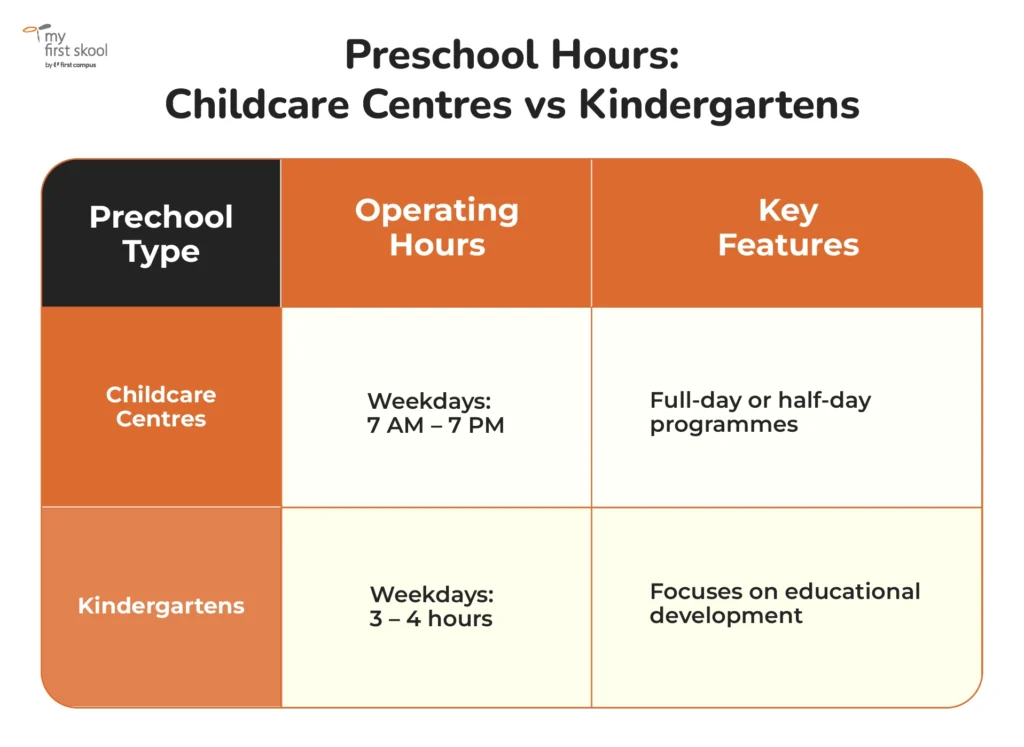
Preschools offering kindergarten-level programmes may operate as childcare centres or kindergartens. Childcare centres offer full-day programmes and usually operate from 7 AM to 7 PM, on weekdays. Kindergartens typically operate for 3 to 4 hours each day, either in the morning or the afternoon, and are closed on weekends and school holidays. Unlike childcare centres, kindergartens focus more on children’s educational development and not on extended care services.
If your children require full-day, extended care, childcare centres may be a better option for you as they ensure that your children stick to a consistent routine and receive essential care services throughout the day.
At My First Skool, we offer full-day childcare services and preschool programmes for children aged 18 months to 6 years old, as well as infant care services for infants aged 2 to 17 months.
Booking a school tour to assess the preschool’s environment and verify that its facilities and resources are as marketed. A supportive school culture also significantly affects a child’s educational experience, and visiting schools helps assess this environment. It’s also useful to look at other parents’ reviews on the preschool or kindergarten you are considering.
Assess the curriculum based on your child’s learning needs
Consider if the preschool’s curriculum and learning environment is aligned with your child’s learning style and developmental needs, to ensure a good fit. Different kindergartens follow different educational philosophies and systems (such as Montessori or Reggio Emilia), and some may prioritise preparing children academically while others may focus more on play-based learning or a skills-based curriculum. Teacher qualifications and the student-to-teacher ratio are also critical elements that impact education quality.
At My First Skool, we have 45+ years of experience in child care and preschool education. All our centres are staffed with trusted, passionate teachers who are professionally trained in early childhood education and are dedicated to ensuring a well-rounded educational journey for your child.
Our relationships-based curriculum employs a pedagogical approach called PETAL© – Playing, Exploring, Thinking, and Applying Learning, which provides facilitated play experiences that encourage active exploration, critical thinking and making meaningful discoveries. These diverse approaches ensure that children receive a comprehensive early education tailored to their unique learning styles.
For children who may experience developmental delays and require more assistance, we also run NTUC First Campus’s pioneer Development Support Specialist (DSS) programme in selected My First Skool Centres. The DSS Programme is focused on children aged 18 months to 6 years old who require a medium level of early intervention support.
The range of childcare fees in Singapore can vary considerably. However, the Government has put several measures in place to ensure that all children have access to quality early education:
My First Skool has been appointed as an Anchor Operator by the ECDA. We are dedicated to keeping our childcare fees affordable and accessible and offer a number of financial support schemes to benefit families from lower-income or disadvantaged backgrounds.
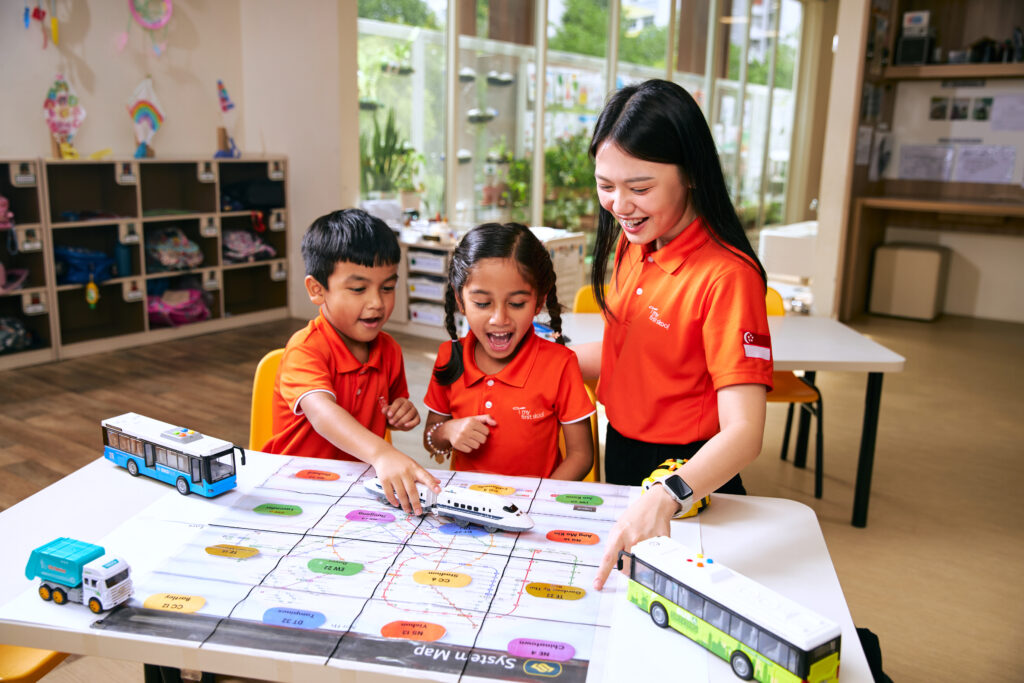
Every year, over 26,000 families across Singapore see their children benefit from our relationships-based curriculum – one that emphasises strong bonds between children, teachers and parents. With centres located throughout Singapore, it’s easy to find a preschool near you and discover how your child can thrive.
You can also quickly explore some of our locations:
In conclusion, kindergarten education in Singapore offers numerous benefits that lay the foundation for future academic success and overall development. From cognitive and emotional growth to social and physical development, kindergarten plays a vital role in preparing children for their educational journey.
Choosing the right kindergarten is a critical decision that requires careful consideration of various factors, including curriculum, teacher qualifications, and school culture. By understanding the importance of early childhood education and being actively involved in your child’s learning, you can provide them with the best possible start in life.
At My First Skool, we believe every child deserves a strong start. As one of Singapore’s most trusted providers of infant care, childcare, preschool, and kindergarten, we offer a nurturing environment where little ones can grow, learn, and thrive. With experienced educators and a proven curriculum, we’re here to support your child’s journey—every step of the way. Registration only takes 5 minutes.
In Singapore, kindergarten is divided into two levels: Kindergarten 1 (K1) for children aged 5 years and Kindergarten 2 (K2) for those aged 6 years. This structure supports the developmental needs of children as they prepare for primary education.
In Singapore, preschools refer to any institutions that provide early childhood education and childcare services to children aged 18 months to 6 years. Preschools may operate as childcare centres or kindergartens.
Preschools offer programmes at the nursery and kindergarten levels, and sometimes the playgroup level.
Before the kindergarten level, the curriculum for other preschool programmes focuses on play-based learning that introduces foundational literacy and numeracy. However, the curriculum at the kindergarten level adopts a more structured approach that emphasises formal instruction in reading, writing, and basic mathematics.
Both childcare centres and kindergartens are preschool operators that offer programmes at the kindergarten level (i.e. K1 and K2).
Childcare centres in Singapore offer services to children from 18 months to 6 years, at the playgroup, nursery and kindergarten levels. Childcare centres provide early education and also essential care services, and usually run both half-day and full-day programmes. Some childcare centres may even offer infant care programmes for babies aged 2 to 17 months.
Meanwhile, kindergartens in Singapore typically operate for 3 to 4 hours daily and focus on academic preparation. They are catered to children between the ages of 3 to 6 years old and offer programs for nursery and kindergarten levels.
In Singapore, parents of Singapore Citizen children may be eligible for Basic and Additional Subsidies under the Infant and Childcare Subsidy Scheme, or subsidies through the Kindergarten Fee Assistance Scheme (KiFAS). These subsidies significantly alleviate the financial burden of early childhood education.
When it comes to choosing a preschool in Singapore, parents are often faced with a sea of options—each promising to give their child the best start in life. You want to give your child a great start in life by sending them to the best preschool possible—one with a quality curriculum and outstanding facilities. But…
When it comes to choosing a preschool in Singapore, parents are often faced with a sea of options—each promising to give their child the best start in life. You want to give your child a great start in life by sending them to the best preschool possible—one with a quality curriculum and outstanding facilities. But with so many choices, how can you determine which preschool is best for your child?
These are 7 important factors to consider when making this life-defining decision!
When choosing a preschool, look closely at their curriculum, programme and teaching methods. These are important as they affect how – and what – your child will learn in school. Preschools that deploy an academic curriculum tend to favour an approach that focuses heavily on completing worksheets. Meanwhile, a play-based curriculum stems from the belief that children learn best through play – so children spend time exploring and engaging in open-ended activities that invoke their imagination. This play-based approach is shown to help children develop independence, as they have more opportunities to interact with one another – honing their social skills. Facilitated play also encourages children to reason, reflect and solve problems using creative thinking.
At NTUC First Campus’ My First Skool, our relationships-based curriculum focuses on building positive and trusting relationships between teachers and children – and this has proven to improve focus and engagement in children aged 0 to 3 years.
For children aged 4 to 6 years, our Inquiry-Based Curriculum encourages young minds to ask questions about things that interest them – prodding for answers as they develop an inquisitive and analytical mindset that’s ideal for their primary school years.
If you’re concerned about choosing a preschool with unqualified teachers, don’t worry. In Singapore, it’s mandatory for all preschool teachers in Singapore to have (at least) a certificate or diploma in early childhood education.
But qualifications are only the beginning of an early childhood educator’s journey. Continual development can be what differentiates teachers with modern and innovative teaching methodologies, from those who stick to traditional methods.
Find out what continual development programmes your shortlisted preschools have for their teaching staff. Generally, the larger a school’s network, the more resources it has to help teachers grow and improve.
Awards are also a good indication of a preschool’s quality. Look out for distinguished industry awards, such as the Singapore Pre-School Accreditation Framework (SPARK) Award and the ECDA Award for Excellence in Early Childhood Development.
Here at My First Skool, we are proud that our brand has been recognised with numerous ECDA Awards – and that 100% of our centres that are eligible for SPARK certification, have been certified. See our complete list of awards here.
As a parent, you know that even the best children misbehave and get into arguments with friends – after all, it’s a natural part of growing up. What you need to know is how your preferred preschools manage these behaviours.
By the time your child is ready to attend preschool, you probably already have a preferred method for disciplining your child. Be sure that the preschool you choose, shares the same values and approach to discipline that you do – so any disciplinary behaviour will be reinforced both at home and in school, helping your child to more quickly (and confidently) understand what they should and shouldn’t do.
This is one factor that parents often overlook during the preschool shortlisting process – only to realise its importance after the semester starts. If there’s one takeaway you get from this article, it’s that your child’s preschool needs to measure – and accurately communicate to you – your child’s development.
When evaluating a preschool, ask if the school sets any specific learning and developmental goals for your child. Then, find out how these goals are measured. The school should regularly track and report your child’s progress – highlighting any areas of concern in a timely manner.
Be sure to ask exactly how this information (and other happenings in school) will be communicated with you, and how frequently.
Parents with children at My First Skool get access to these updates 24/7, thanks to our user-friendly parent portal that provides parents with timely updates – so you can feel assured of your child’s safety and development while you’re away from them.
If there’s one good thing 2020 has taught everyone, it’s the importance of safety, cleanliness and hygiene. And considering the amount of time your child will spend in preschool every day – on the feet, hands and knees – you need to choose a preschool that’s equipped to provide your child with a safe and clean environment that’s conducive for learning and growth.
Well before the pandemic, My First Skool has been an industry leader in safety and hygiene standards at preschools. We take the well-being of every child very seriously, that’s why all our centres – big and small – are equipped with commercial-grade UV sterilisers.
What’s more, every piece of equipment and furniture – and all our materials and toys – have been specifically designed and selected with your child’s safety in mind. Learn more about our safe, hygienic learning environments here
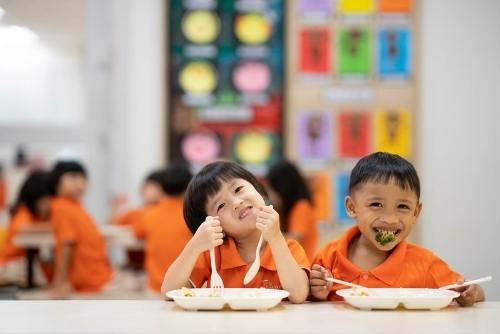
Often, children’s food preferences form during their preschool years. So, it’s important that your chosen preschool serves food that’s both healthy and tasty – so whether it’s meat, fruit or vegetables, your children will enjoy eating healthy dishes!
What type of food will your child be having at preschool? Depending on the school, food will either be prepared by in-house cooks or delivered by caterers. For preschools, the advantage of having an in-house cook is better control of the cleanliness and nutritional value of the food – such as using less salt, sugar and other types of unhealthy seasoning.
You should also check if your selected preschool is accredited under the Health Promotion Board’s Healthy Meals in Preschools Programme (HMPP). HMPP ensures that preschools provide healthy meals to children, and encourages schools to teach children how to choose healthy foods.
Remember, if your child has allergies or special dietary requirements, tell their preschool – so their food can be chosen appropriately.
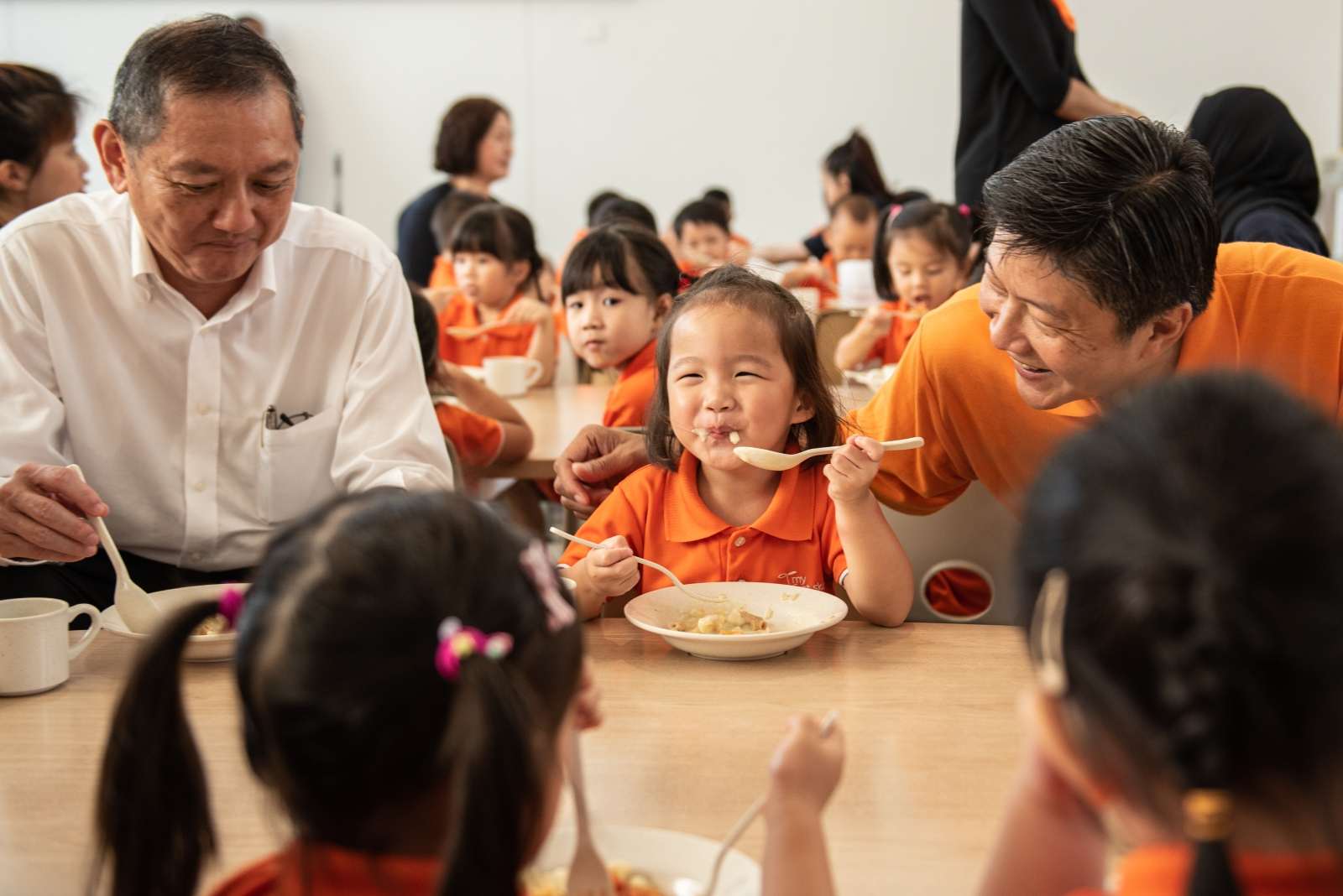
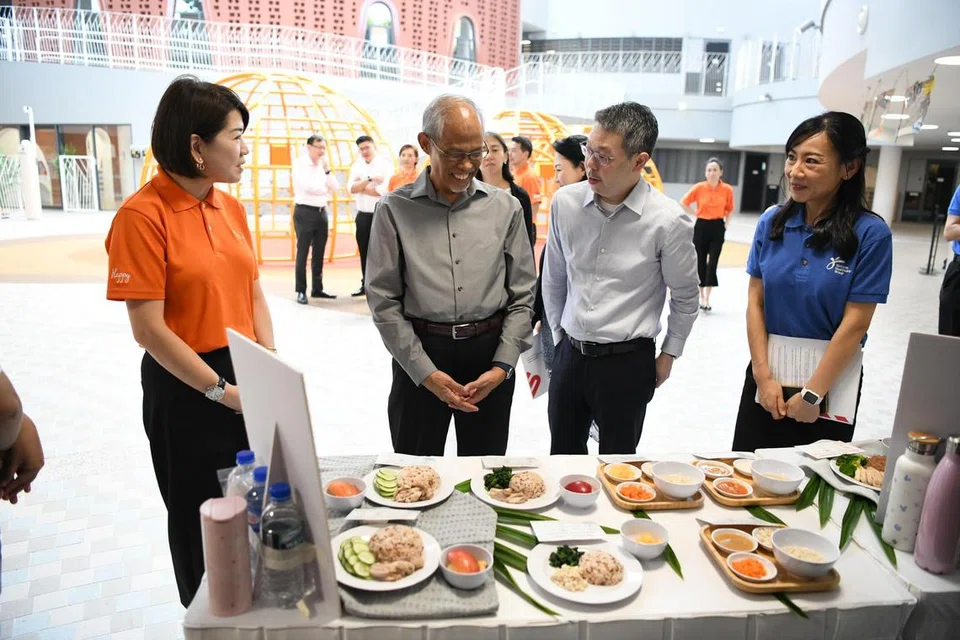
Children at My First Skool enjoy their tasty, well-balanced and nutritionally-optimised meals – specially planned by our in-house chefs to deliver all the nutrients growing bodies and developing minds need. Keen on learning more about our in-house chefs and cooks – like Mr. Bernard Lim, a former sous chef at a three-Michelin-starred French restaurant? Read about them in this Straits Times interview.
Also, 84% of our centres are accredited with HMPP certification, and 78% of our preschools are accredited with the Platinum Tier for Healthy Preschools (HPS) recognition. Keen on learning more about the meals provided at our centres? Take a look here.
Before finalising your decision, check in with parents who are sending their children to your preferred preschool. Ask about their experiences with the school, their children’s development, and their communications with teachers. What better way to find out how a preschool is really like, than hearing it directly from parents?
These are a few helpful questions you could ask:
If possible, you could also visit your shortlisted preschool and ask for additional information. Some questions you can ask are:
Clear up any questions you may have, then make the exciting decision!
Keen on finding out how children at My First Skool spend their days? Check out their routines here, then take a virtual tour of our centres. Or hear what our parents say:
My sons enjoy going to school every morning and that gives me and my husband peace of mind at work, knowing that our little ones are in the good care of the teachers & caregivers. My husband and i appreciate the efforts of the Principal and teachers in ensuring that the centre is always kept safe and clean, thus providing a happy enjoyable, healthy and conclusive learning environment for our children’s development. – Marie,Parent of Lucas & Pierre, My First Skool at Blk 82 Strathmore Avenue
Give your child a head start in life at My First Skool! Registrations are now open.
When it comes to choosing a preschool in Singapore, parents are often faced with a sea of options—each promising to give their child the best start in life. Among the most respected and talked-about educational approaches are Montessori and Reggio Emilia. Both offer child-centred, play-based learning environments, but their philosophies, classroom dynamics, and even teacher…
When it comes to choosing a preschool in Singapore, parents are often faced with a sea of options—each promising to give their child the best start in life.
Among the most respected and talked-about educational approaches are Montessori and Reggio Emilia. Both offer child-centred, play-based learning environments, but their philosophies, classroom dynamics, and even teacher roles can differ significantly.
So, how do you choose between them?
The debate of Reggio Emilia vs Montessori highlights the distinctions in grouping, teacher roles, curriculum, and classroom design, helping parents and educators understand which might better suit their child’s learning style. More importantly, which one aligns best with your child’s needs, personality, and learning style?
In this article, we’ll walk you through the key similarities and differences between these two influential approaches, explore how they are applied in Singapore’s preschool landscape, and offer tips to help you make an informed decision.
Whether you’re leaning towards the structure of Montessori or the creativity of Reggio Emilia, or perhaps a blended, local alternative, this guide is here to help you find the right fit for your little one.
Developed by Dr Maria Montessori over a century ago, the Montessori method is a structured, child-led approach to learning. Classrooms are carefully prepared to encourage independence, with hands-on materials designed to support exploration in areas such as language, mathematics, and practical life.
In a Montessori setting, children choose their own activities and work at their own pace. Teachers act more like guides than instructors, gently observing and stepping in only when needed. The goal? To nurture confident, self-directed learners who take joy in discovery.
Originating in the town of Reggio Emilia, Italy, this approach views children as capable, curious, and full of potential. It’s less about a fixed curriculum and more about following the child’s interests. Learning is project-based, collaborative, and often sparked by real-world questions children ask, where children engage in purposeful play and exploration.
In Reggio Emilia-inspired classrooms, the environment is thoughtfully designed to invite exploration, creativity, and social interaction. Teachers observe children closely and work with them to co-construct knowledge, often documenting their learning journeys through photos, quotes, and portfolios.
At first glance, Montessori and Reggio Emilia might seem worlds apart in their teaching methods. But dig a little deeper, and you’ll find that these two respected approaches share several key principles, especially when it comes to how children learn best:
Both Montessori and Reggio Emilia put the child at the heart of the learning experience. In these classrooms, children are not passive recipients of information. Instead, they are active participants—curious explorers who construct their own understanding of the world.
In both approaches, children are given the autonomy to make decisions about their learning. Whether it’s choosing an activity in a Montessori classroom or initiating a project in a Reggio-inspired space, children are encouraged to follow their interests and develop a sense of ownership.
Montessori and Reggio Emilia educators pay close attention to the physical environment and classroom setup. Both believe the environment is more than just a backdrop—it’s a key part of how children learn.
Rather than directing the lesson, teachers in both approaches act as facilitators in the educational process. They observe, listen closely, and step in to support learning when necessary. In both Reggio Emilia and Montessori classrooms, the adult’s role is to support—not steer—the child’s learning journey.

While Montessori and Reggio Emilia share a child-centric philosophy, their methods differ significantly in fostering creativity and self-expression among children. From the materials used to how lessons unfold, here’s how each approach stands apart.
In Reggio Emilia, learning often happens through long-term, collaborative projects that emerge from children’s interests.
For example, a child’s question about “Why do leaves fall?” might evolve into a weeks-long exploration involving books, art, science, and nature walks.
There’s no fixed curriculum—learning flows organically based on what excites the children, embodying the principles of an emergent curriculum.
Classrooms are designed to inspire exploration. You’ll often see open-ended materials like clay, mirrors, fabrics, or natural elements arranged in beautiful, inviting ways. Every corner of the space encourages communication, creativity, and discovery.
Reggio educators engage in collaborative learning alongside children to explore ideas, often documenting their conversations, creations, and observations.
These documentations are then used to reflect, revisit, and extend the learning journey. Teachers guide, but also learn and adapt with the children.
Known as the “Hundred Languages of Children,” the Reggio Emilia approach encourages creative expression by allowing children to express themselves in many forms—art, music, drama, drawing, storytelling, and more.
Creativity is not a side activity—it’s central to learning.
In a Montessori classroom, self-guided learning is emphasised as children are free to choose their activities, but from a curated set of hands-on learning materials designed to teach specific skills.
They work independently or in small groups, at their own pace, with minimal interruption. Lessons are typically one-on-one or small groups, based on readiness rather than age.
Everything in the Montessori environment is intentionally designed to create a carefully prepared environment—shelves are at a child’s height, and materials are ordered logically from simple to complex.
Items like sandpaper letters, pink towers, or knobbed cylinders are not just toys—they are learning tools designed to support developmental stages.
Montessori teachers step back and observe rather than directly instruct, facilitating a collaborative and child-centred learning process.
They intervene only when a child is ready for a new concept, and lessons are brief, clear, and precise. The goal is to encourage self-correction and independence, not adult approval or reward.
Beyond academics, Montessori places strong emphasis on practical skills—pouring water, tying shoelaces, or washing hands.
These tasks build coordination, responsibility, and confidence, especially valuable for young learners developing independence in Singapore’s fast-paced society.
While Montessori and Reggio Emilia schools originated overseas, both approaches have found a strong foothold in Singapore. However, they are often adapted to suit local culture, parental expectations, and the Ministry of Education’s early years framework.
Montessori education is relatively well-established in Singapore, with several schools offering authentic Montessori programmes. These preschools follow the classic Montessori structure—mixed-age classrooms, specialised materials, and a strong emphasis on independence.
That said, not all schools using the term “Montessori” follow the method fully. Some integrate Montessori elements within broader play-based or thematic curricula, especially to align with MOE’s Nurturing Early Learners (NEL) framework.
Reggio Emilia education is less of a fixed methodology and more of an evolving inspiration that emphasises collaborative learning and creativity. Certain schools in Singapore incorporate Reggio Emilia-inspired practices—particularly in how they set up learning environments, encourage open-ended exploration, and document children’s learning journeys.
Because Reggio Emilia doesn’t come with a prescribed curriculum, local schools often adapt its principles to fit Singapore’s bilingual context, with more structure and school readiness prep than you’d typically find in Italy. For example, Reggio-inspired schools here may blend project work with literacy and numeracy goals to prepare children for primary school.
In Singapore, parents place high value on bilingualism, academic readiness, character development, and community involvement. Preschools—whether Montessori or Reggio Emilia-inspired—are mindful of these priorities. You’ll often find:
Ultimately, both approaches are adapted to meet local expectations while staying true to their core philosophies.
The truth is, there’s no one-size-fits-all answer—especially in Singapore, where children are born into a unique blend of Eastern values and global influences.
Both Montessori and Reggio Emilia have strong track records of nurturing confident, curious, and capable learners. But choosing between them really comes down to what fits your child and family best.
| Choose Montessori if: | Choose Reggio Emilia if: |
| Your child thrives on structure, order, and calm environments.You value academic readiness delivered through hands-on exploration. You want your child to develop independence and self-discipline from an early age.You prefer a clearly defined, methodical approach to learning. | Your child is naturally expressive, social, and full of questions.You value creativity, collaboration, and child-led inquiry.You’re excited by the idea of learning that flows from your child’s interests.You want a warm, dynamic environment that evolves with your child. |
Still weighing the differences between Montessori and Reggio Emilia?
While both offer compelling philosophies, some parents in Singapore may find that a localised preschool model better meets their needs, especially one that supports bilingualism, academic readiness, and holistic child development in a culturally relevant context.
At My First Skool, we understand the needs of Singapore parents, offering a nurturing, child-led learning environment grounded in structure, creativity, and school readiness.
Certified by ECDA and aligned with Singapore’s Nurturing Early Learners framework, our approach supports children’s natural curiosity while preparing them for lifelong learning. These approaches have significantly influenced early childhood education and continue to inspire schools, educators, and parents globally to adopt progressive teaching strategies.
Our preschool curriculum is designed to spark curiosity, encourage independence, and support every child’s unique growth journey. My First Skool provides a holistic foundation that prepares your child for both primary school and life beyond.
Every year, over 26,000 families all across Singapore see their children benefit from our relationship-based curriculum – one that emphasises forging strong bonds between children, teachers and parents.
Find a centre near you or take a virtual tour to explore our learning environments and learn how your child can thrive.
In today’s fast-paced and competitive educational landscape, many Singaporean parents are exploring alternatives to traditional teaching methods. Among these, the Montessori approach has garnered attention for its child-centred philosophy that emphasises independence, hands-on learning, and respect for a child’s natural psychological development. Montessori schools focus on personalised learning experiences where children are encouraged to learn…
In today’s fast-paced and competitive educational landscape, many Singaporean parents are exploring alternatives to traditional teaching methods.
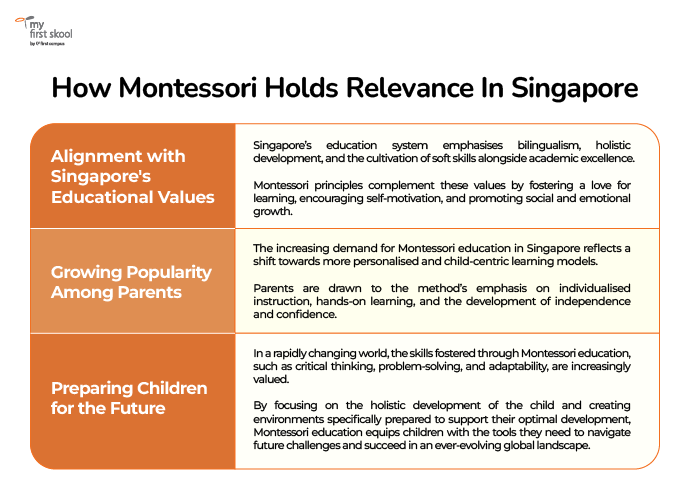
Among these, the Montessori approach has garnered attention for its child-centred philosophy that emphasises independence, hands-on learning, and respect for a child’s natural psychological development.
Montessori schools focus on personalised learning experiences where children are encouraged to learn at their own pace and select their own activities, fostering self-motivation and self-discipline.
This article delves into the principles of Montessori education and its relevance in preparing children in Singapore for the future.
Montessori education is a unique method of education that emphasises self-directed learning, hands-on activities, and collaborative play.
This approach is grounded in the belief that children should be encouraged to learn at their own pace. The Montessori curriculum focuses on the holistic development of the child, encompassing academic, social, emotional, and physical growth.
In the early 20th century, Dr. Maria Montessori, Italy’s first female physician and a trained medical doctor, revolutionised education by introducing a child-centred approach emphasising independence and respect for a child’s natural psychological development.
Her scientific approach to education began in 1907 with the establishment of the first Casa dei Bambini (Children’s House) in Rome’s San Lorenzo district.1
This initiative aimed to provide a nurturing environment for underprivileged children, allowing them to engage in meaningful activities at their own pace. The success of this model highlighted the effectiveness of Montessori’s educational approach, leading to its global adoption.
Montessori education is grounded in several key components that guide its approach to learning and development. These components emphasise the importance of respecting each child’s individuality, fostering independence, and creating an environment conducive to self-directed learning.
In Singapore’s highly structured and competitive educational landscape, the Montessori method offers a distinctive approach that aligns with the nation’s evolving educational priorities.
While Montessori education offers numerous benefits, it may not be the ideal fit for every child or family. Understanding its limitations can help parents make more informed decisions.
Montessori education allows children to choose their activities and learn at their own pace. While this fosters independence, some children may thrive better in a more structured and guided environment, especially those who need more routine or external direction to stay focused.
Not all schools that claim to be “Montessori” adhere strictly to the core principles and practices outlined by Dr. Maria Montessori. This inconsistency can make it challenging for parents to assess quality and effectiveness across different Montessori centres.
In Singapore’s academically competitive context, the Montessori approach’s minimal focus on examinations and standardised assessments might raise concerns for parents preparing their children for the rigours of primary school. While Montessori students develop critical thinking and soft skills, they may need additional support transitioning to conventional academic structures.
Montessori environments require specially designed materials and highly trained educators, which can contribute to higher school fees. This can make the approach less accessible for some families compared to more traditional preschool options.
Because of its individualised nature, Montessori may offer fewer opportunities for children to work collaboratively on group tasks. While social development is still prioritised, some children might benefit from more structured teamwork experiences to build peer-to-peer collaboration skills.
While the Montessori approach offers a thoughtful and child-led philosophy, we believe that early education should go beyond just methodology—it should create a sense of belonging, support, and connection.
As a trusted, long-standing preschool in Singapore, we don’t just provide a curriculum—we build a nurturing community where every child is seen, heard, and valued. Our educators work closely with families to understand each child’s unique needs, guiding them through meaningful, hands-on learning experiences that inspire curiosity and build confidence.
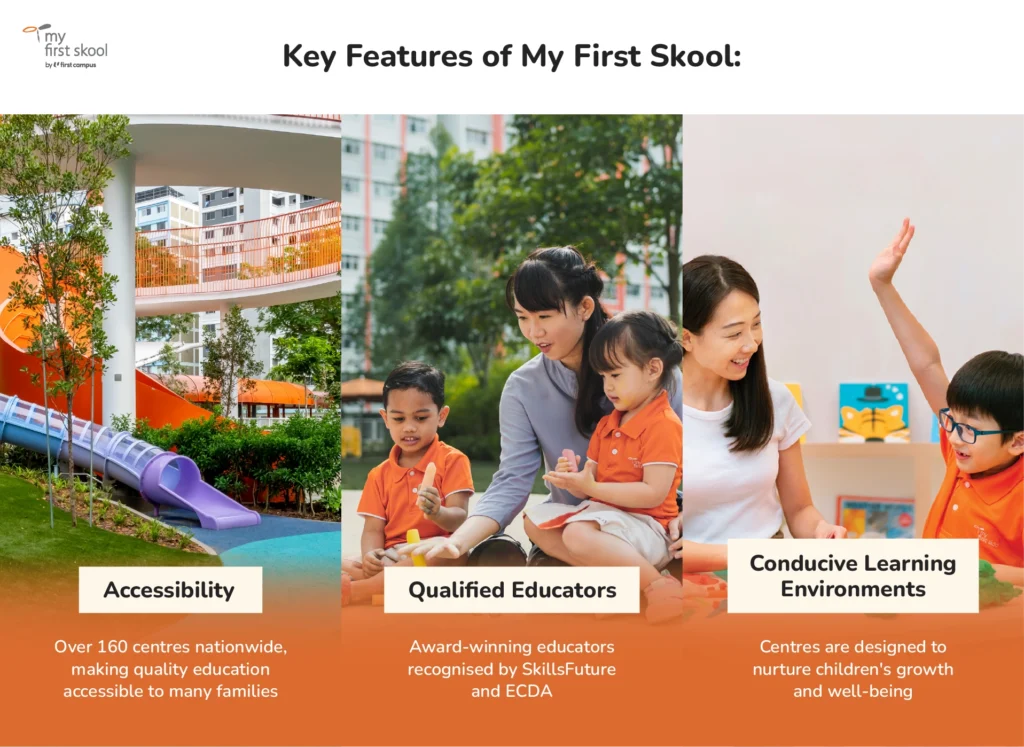
With over 160 preschool centres across Singapore, we make it easy for families to access quality preschool education grounded in local values and backed by years of research. Our close partnership with MOE Kindergartens ensures a smooth and supported transition into primary school—an important milestone in your child’s educational journey.
Because at My First Skool, we know that a strong start isn’t just about learning—it’s about growing within a caring, connected community that supports your child every step of the way.
Every year, over 26,000 families all across Singapore see their children benefit from our relationship-based curriculum – one that emphasises forging strong bonds between children, teachers and parents.
Find a centre near you or take a virtual tour to explore our learning environments and learn how your child can thrive.
Choosing the appropriate preschool in Singapore for your child is a pivotal decision that can significantly influence their early educational journey and holistic development. MOE Kindergartens, in particular, have garnered attention for their structured curriculum and affordability. This article delves into the advantages and considerations of enrolling your child in an MOE Kindergarten and how…
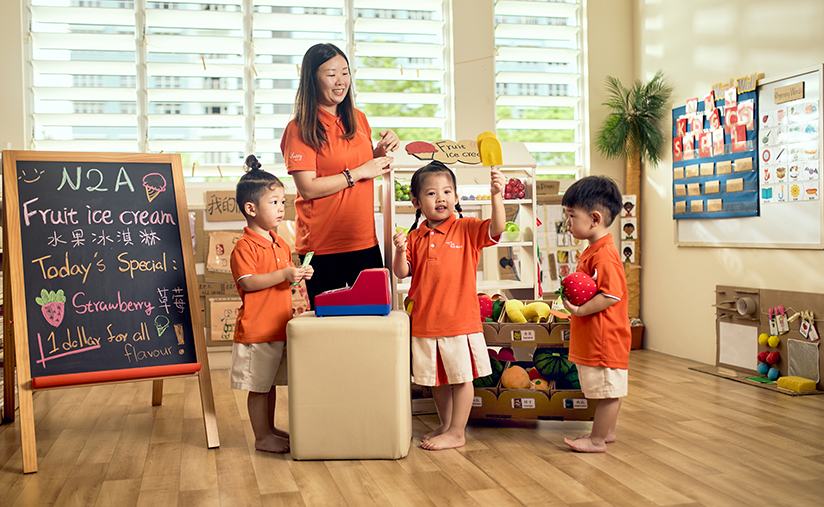
Choosing the appropriate preschool in Singapore for your child is a pivotal decision that can significantly influence their early educational journey and holistic development. MOE Kindergartens, in particular, have garnered attention for their structured curriculum and affordability.
This article delves into the advantages and considerations of enrolling your child in an MOE Kindergarten and how My First Skool, with its inquiry-based learning, bilingual education, and strong teacher-child relationships, is a noteworthy alternative.
MOE Kindergarten are public preschools providing affordable education to Singapore Citizens and PRs. Their curriculum is anchored on the Nurturing Early Learners (NEL) Framework, which aims to provide children with a strong start through holistic skill development, nurturing a love for learning, and cultivating character and life skills to prepare them for P1.
HI-Light Programme: Designed to instil values, social and emotional skills, along with learning skills across five key domains. This integrated approach engages children in various ways, fostering a positive learning attitude.
Starlight Literacy Programme: Promotes bilingualism. Using Big Books, games, songs, and rhymes, the programme enhances language acquisition and early childhood literacy skills. With learning activities and content set in the local context, children learn to appreciate diverse cultures, values, and identities.
To promote self-motivated learning, MK students undertake a “Weeks of Wonder” (WoW) project each term. Collaborating in groups, they learn to work together, communicate ideas, and solve problems.
The availability of MOE Kindergartens may not extend to all neighbourhoods, necessitating considerations regarding travel time and convenience.
Unlike some private preschools offering specialised enrichment programs, MOE Kindergartens maintain a standardised curriculum. Parents seeking additional activities may need to pursue external options.
Attendance at an MOE Kindergarten does not guarantee priority admission to primary schools; the standard Primary 1 registration process applies.
Larger class sizes in MOE Kindergartens may impact the level of individual attention each child receives compared to some private preschools.
MOE Kindergartens adhere to the Nurturing Early Learners (NEL) framework, emphasizing holistic development across various domains, including language, numeracy, social skills, and creativity.
At My First Skool, we have a unique PETAL framework—Playing, Exploring, Thinking, and Applying Learning—that goes beyond classroom basics. Children engage in inquiry-based projects, dramatic learning corners, and even visits to partner primary schools, giving them a strong head start in both academic and life skills.
The alignment of MOE Kindergartens with Singapore’s primary school curriculum facilitates a seamless transition for children advancing to MOE primary schools, as they are already acquainted with the teaching methodologies and educational structure.
Sometimes, switching from a preschool to an MOE Kindergarten can cause disruption or anxiety for young children as they adjust to new teachers, routines, and environments.
At My First Skool, children benefit from emotional continuity—many start their journey here from infancy and grow in a familiar, nurturing setting. This stability, paired with rich learning experiences, helps ease the transition to primary school and supports their confidence every step of the way.
With fees capped at $160 per month before subsidies, MOE Kindergartens offer a cost-effective option for quality early childhood education. Additional financial assistance is available for eligible families, enhancing accessibility.
Educators in MOE Kindergartens undergo rigorous training and adhere to high teaching standards, ensuring that children receive quality education from dedicated professionals.
A strong focus on character development instils values such as respect, responsibility, and teamwork, which are essential for lifelong success.
For parents exploring alternatives to MOE Kindergartens, My First Skool, operated by NTUC First Campus, presents a compelling option.
Starting early at My First Skool means your child builds familiar, secure relationships with teachers and peers—minimising anxiety and disruption that can come with switching to a new environment like an MOE Kindergarten. With emotional continuity and deep learning experiences, MFS prepares children for primary school—and beyond.
With over 160 SPARK-certified centres across Singapore, parents can enjoy greater accessibility and convenience across the entire island.
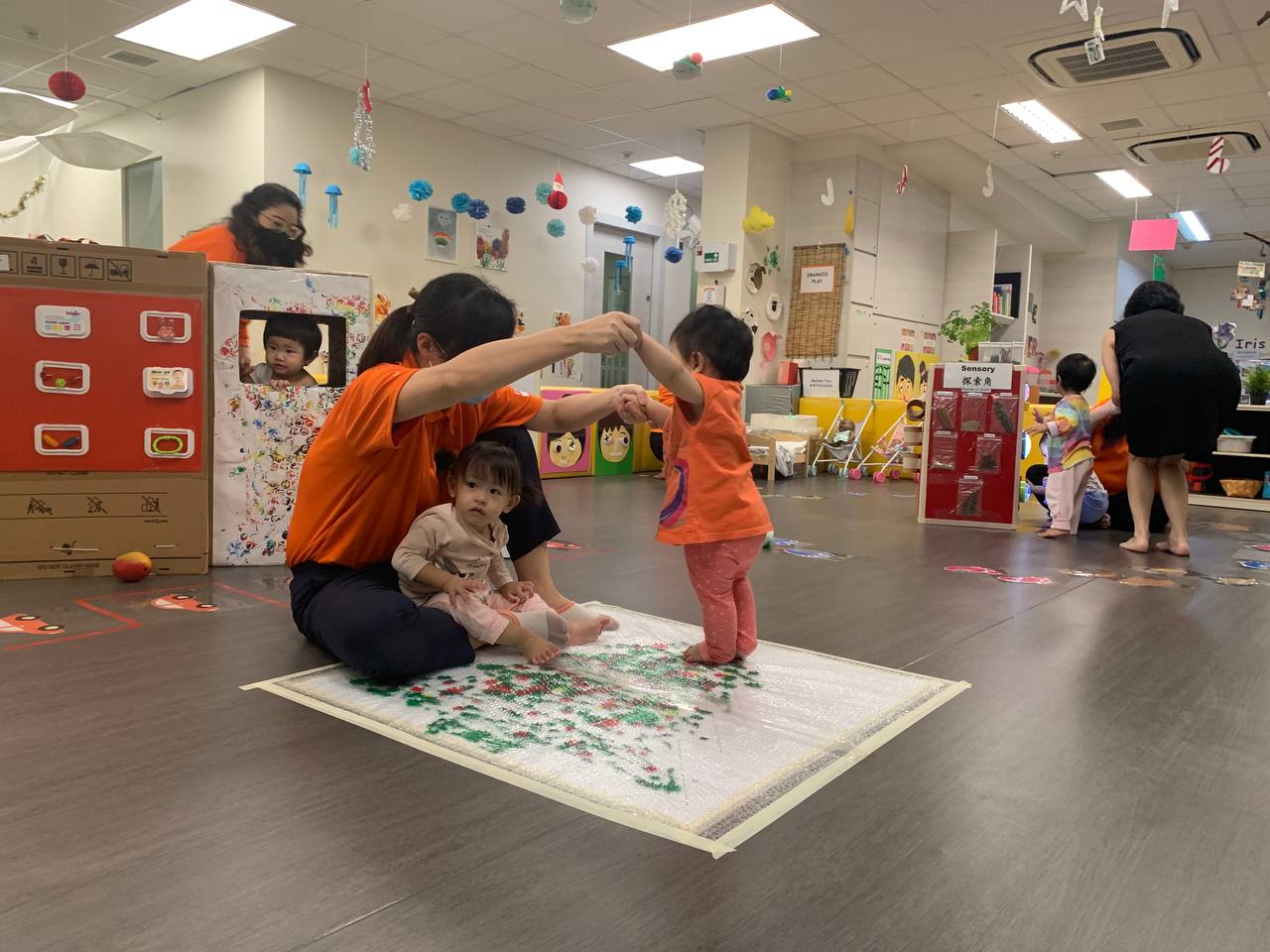
Classrooms are designed with purposeful learning corners, including dramatic play areas, reading nooks, and science exploration zones, where children learn through imaginative play and real-world experiences. These environments are not just engaging—they also mirror elements of primary school settings, helping children transition smoothly when the time comes.
We pride ourselves on a quality and holistic preschool curriculum designed to foster children’s development across multiple domains.
Our unique pedagogical approach, PETAL—Playing, Exploring, Thinking, and Applying Learning—provides facilitated play experiences that aid children’s holistic development.
Deciding whether to enrol your child in an MOE Kindergarten or an alternative like My First Skool depends on various factors, including location, curriculum preferences, and financial considerations.
Both institutions offer quality early childhood education with unique features. A thorough evaluation of your child’s needs and family priorities will guide you in making the most suitable choice for their early educational journey.
At My First Skool, we believe every child deserves a strong start. As one of the most trusted providers of infant care in Singapore, as well as childcare, preschool, and kindergarten, we offer a nurturing environment where little ones can grow, learn, and thrive.
With experienced educators and a proven curriculum, we’re here to support your child’s journey—every step of the way. Registration only takes 5 minutes.
Registration for MOE Kindergarten is only open the year before your child turns 5 for K1. Admission for K2 programs is subject to availability at your preferred centre. You can directly register at MOE’s website.
At MOE Kindergartens, lessons are conducted for 4 hours, either in the morning (8am to 12pm) or afternoon (1pm to 5pm). Afterwards, an adult caregiver must pick up the child.
Alternatively, families without caregiving options outside of MK school hours can send their child to Kindergarten Care (KCare) before or after class, located within all MOE Kindergartens. This full-day service operates from 7am to 7pm.
As of March 2025, MK and KCare fees are:
Childcare subsidies for preschools in Singapore do not apply to MKs, as they are not classified as childcare centres. However, families requiring financial assistance can check if they qualify for the Kindergarten Fee Assistance Scheme (KiFAS).
When choosing an MOE Kindergarten, consider the following factors:
Embarking on a career as a kindergarten teacher in Singapore is both a noble and fulfilling journey. By nurturing young minds during their formative years, you play a pivotal role in shaping children’s future development. This guide outlines the steps to becoming a kindergarten teacher in Singapore as of 2025, offering insights into the qualifications…
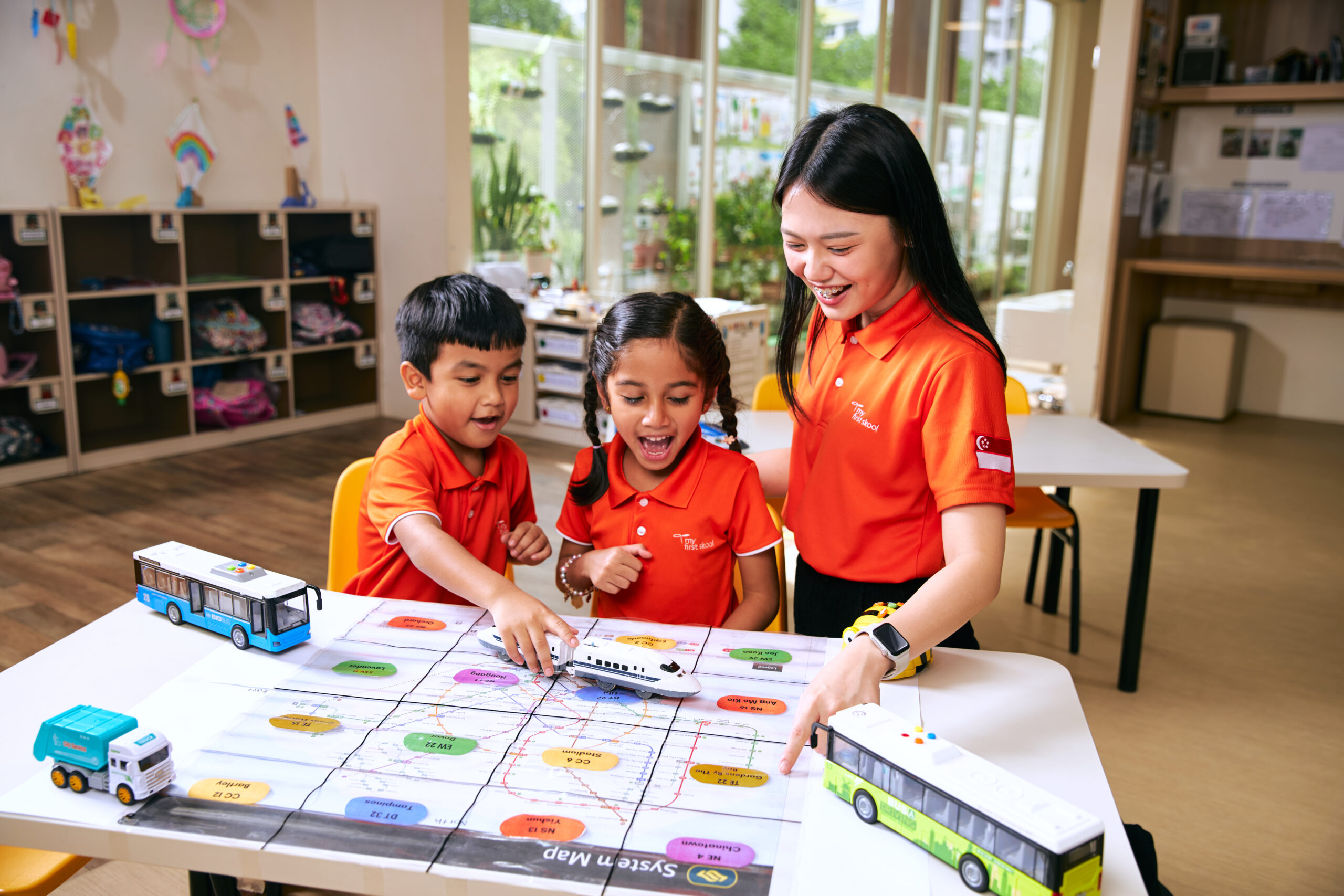
Embarking on a career as a kindergarten teacher in Singapore is both a noble and fulfilling journey. By nurturing young minds during their formative years, you play a pivotal role in shaping children’s future development.
This guide outlines the steps to becoming a kindergarten teacher in Singapore as of 2025, offering insights into the qualifications required, the certification process, and practical tips for thriving in this rewarding profession.
Kindergarten teaching in Singapore is a vital profession that plays a significant role in shaping the early childhood development of young children.
The Early Childhood Development Agency (ECDA) is responsible for regulating and overseeing the early childhood education sector in Singapore.
Kindergarten teachers in Singapore are trained to provide high-quality early childhood care and education to children aged 18 months to 6 years old. They are responsible for creating a nurturing environment that promotes children’s physical, emotional, and social development.
The future of early childhood education in Singapore looks promising, with the government investing heavily in the sector.
The ECDA has introduced various initiatives to improve the quality of early childhood education, including the introduction of the Singapore Pre-school Accreditation Framework (SPAF) and the Early Childhood Development Agency (ECDA) Fellowship.
These initiatives aim to raise the standards of early childhood education and provide kindergarten teachers with opportunities for professional development and career advancement.
Kindergarten teachers in Singapore cater to children aged five to six, preparing them for primary education. Aspiring educators often pursue specialised training and certifications to work effectively in early years settings.
Beyond teaching foundational subjects like literacy and numeracy, they foster social, emotional, and personal development. Their responsibilities include:
The Early Childhood Development Agency (ECDA), under the Ministry of Education (MOE) and the Ministry of Social and Family Development (MSF), regulates kindergarten teaching in Singapore.
To embark on this career, certain academic credentials are essential:
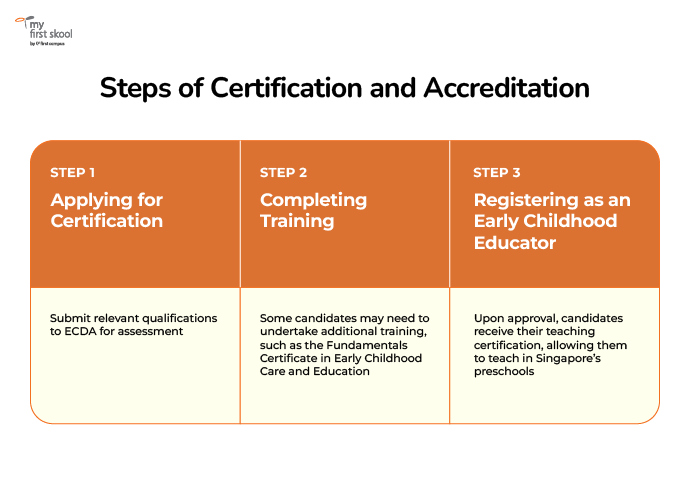
Prospective kindergarten teachers must obtain accreditation from the ECDA. The process includes:
Practical experience is invaluable for aspiring teachers. Many preschools and childcare centres offer internship opportunities that provide hands-on teaching practice. Additionally, volunteer work in early childhood settings can enhance teaching skills and provide exposure to real-world classroom environments.
Successful kindergarten teachers possess a blend of soft and technical skills, including:
Kindergarten teachers in Singapore are entitled to a competitive salary and benefits package. The salary range for kindergarten teachers varies depending on their qualifications, experience, and employer.
However, on average, kindergarten teachers in Singapore can expect to earn a monthly salary ranging from SGD 2,500 to SGD 3,700.2 In addition to their salary, kindergarten teachers are also entitled to various benefits, including:
A career in early childhood education offers various advancement opportunities, such as:
Lead curriculum development and mentor junior teachers. For example, a teacher with five years of experience might transition into this role by coaching new educators on classroom management strategies.
Managing preschools and ensuring quality education standards. An educator who has demonstrated strong leadership skills may move into this role, overseeing staff, budgets, and curriculum development.
Design educational materials and programmes for preschool education. A teacher passionate about curriculum design could work in an organisation that develops structured learning materials for preschools.
Teaching future early childhood educators in tertiary institutions. Some experienced teachers take on this role, guiding the next generation of educators through training workshops and university courses.
Teaching young children is highly rewarding but comes with challenges. Here are some common difficulties and strategies to handle them:
My First Skool is one of Singapore’s leading preschool providers, with over 160 centres island-wide, offering a nurturing and innovative learning environment that puts relationships at the heart of our kindergarten curriculum.
As a kindergarten teacher at My First Skool, you will benefit from:
If you are passionate about shaping young minds and creating a strong foundation for children’s future, consider joining My First Skool to embark on a meaningful career in early childhood education.
Get up to speed on Singapore’s latest preschool subsidies for 2026-2027. Find out how the upcoming $15,000 income ceiling affects your family and calculate your subsidies today.
Navigating the landscape of childcare subsidies in Singapore can be complex for many parents. The Singapore government provides substantial subsidies to ensure quality early childhood education remains accessible and affordable for all families.
These financial supports are designed to ease the burden on working parents, significantly offsetting the monthly fees for both infant care and childcare programmes at ECDA-licensed preschool centres.
However, because the exact subsidy amount depends on a variety of factors, including your working status, household income, and the specific programme your child is enrolled in, figuring out your precise out-of-pocket expenses can sometimes be confusing.
As of 2026, full-day childcare fees are capped at a maximum of $610 per month at Anchor Operator preschools, which includes all My First Skool centres, and $650 at Partner Operator preschools, such as Little Skool-House.
This baseline fee cap ensures that out-of-pocket expenses for full-day childcare at an Anchor Operator remain highly affordable, often comparable to primary school and after-school care fees combined. Coupled with the available government subsidies, many families can expect their net fees to be significantly lower.
Following the Budget 2026 announcement1, and subsequent parliamentary sessions (Budget Debate and Committee of Supply Debate) , the government will be expanding preschool subsidy eligibility. Starting from January 2027, the income ceilings for means-tested preschool subsidies (Additional Subsidy) will be raised. This adjustment will allow over 60,000 more families in Singapore to qualify for higher Additional Subsidies, significantly reducing out-of-pocket childcare costs.
Key changes taking effect in 2027 for Additional Subsidy include:
(Note: The subsidy tables below reflect the current rates valid until December 2026).
Beyond the enhanced preschool subsidies taking effect in 2027, the government also announced immediate support to help parents with child-raising costs. Every Singaporean child aged 12 and below will receive a one-off $500 Child LifeSG Credit.
These credits can be conveniently used to pay for child-related expenses, including medical fees, enrichment classes, and even out-of-pocket preschool expenses – at any merchant or clinic that accepts PayNow or NETS QR, giving parents extra flexibility to manage their daily expenses.
It is important to understand how subsidies for preschool work, what factors can affect the final amount you receive, so you’ll know exactly what to expect and how to make the most of the subsidy for your child’s preschool journey. The amount of subsidy a family can receive is calculated based on several factors, including the family’s income, the number of children in care, and the type of childcare service used.
Singapore provides two primary types of subsidised childcare4 for families with Singapore Citizen (SC) children enrolled in licensed infant or childcare centres:
These subsidies are designed to make early childhood education more accessible and affordable, particularly for low- and middle-income families. By easing the financial burden, the ECDA supports families in providing quality early childhood education for their children.
For full-day childcare programmes, eligible families receive a monthly Basic Subsidy of $300. Additionally, depending on their means-tested household income, families may qualify for an Additional Subsidy of up to $467 per month to further offset their childcare expenses.
| Applicant’s working status | Gross Monthly Household Income | Gross Monthly Per Capita Income | Basic Subsidy (BS) | Additional Subsidy (AS) – Max AS | Additional Subsidy (AS) – Min Co-Pay # |
| Working Applicant | $3,000 and below | $750 and below | $300 | $467 | $3 |
| $3,001 to $4,500 | $751 to $1,125 | $440 | $25 | ||
| $4,501 to $6,000 | $1,126 to $1,500 | $340 | $115 | ||
| $6,001 to $7,500 | $1,501 to $1,875 | $260 | $185 | ||
| $7,501 to $9,000 | $1,876 to $2,250 | $190 | $255 | ||
| $9,001 to $10,500 | $2,251 to $2,625 | $130 | $315 | ||
| $10,501 to $12,000 | $2,626 to $3,000 | $80 | $365 | ||
| Above $12,000 | Above $3,000 | N/A | N/A | ||
| Non-working applicant | N/A | $150 | N/A | N/A | |
* As announced in Budget 2026, the income ceiling will be raised to $15,000 (HHI) or $3,400 (PCI) starting from 2027, allowing more families to qualify for the Additional Subsidy.
# Please note that a minimum co-payment is always required, regardless of whether your total eligible subsidies exceed the actual programme fees. The amount increases progressively with higher income brackets.
For full-day infant care programmes, eligible families receive a monthly Basic Subsidy of $600. Additionally, depending on their means-tested household income, families may qualify for an Additional Subsidy of up to $710 per month to further offset their infant care expenses.
| Applicant’s working status | Gross Monthly Household Income | Gross Monthly Per Capita Income | Basic Subsidy (BS) | Additional Subsidy (AS) – Max AS | Additional Subsidy (AS) – Min Co-Pay# |
| Working Applicant | $3,000 and below | $750 and below | $600 | $710 | $40 |
| $3,001 to $4,500 | $751 to $1,125 | $640 | $110 | ||
| $4,501 to $6,000 | $1,126 to $1,500 | $500 | $250 | ||
| $6,001 to $7,500 | $1,501 to $1,875 | $380 | $360 | ||
| $7,501 to $9,000 | $1,876 to $2,250 | $240 | $500 | ||
| $9,001 to $10,500 | $2,251 to $2,625 | $100 | $640 | ||
| $10,501 to $12,000 | $2,626 to $3,000 | $40 | $700 | ||
| Above $12,000 | Above $3,000 | N/A | N/A | ||
| Non-working applicant | N/A | $150 | N/A | N/A | |
When assessing your eligibility for the Additional Subsidy, ECDA evaluates your household income based on one of two methods:
Per Capita Income (PCI): Calculated by dividing the total gross monthly household income by the number of family members residing in the same household. This option is particularly beneficial for larger families (with 5 or more family members), as it may qualify the family for a higher subsidy tier.
Gross Monthly Household Income (HHI): The combined gross monthly income of both spouses, prior to CPF deductions.
Applications for both Basic and Additional Subsidies should be made through your chosen infant care and childcare centre. The centre will guide you through the application process and inform you about the necessary documentation. Once approved, the subsidies are disbursed directly to the centre, and you will only need to pay the net fees after the subsidy.
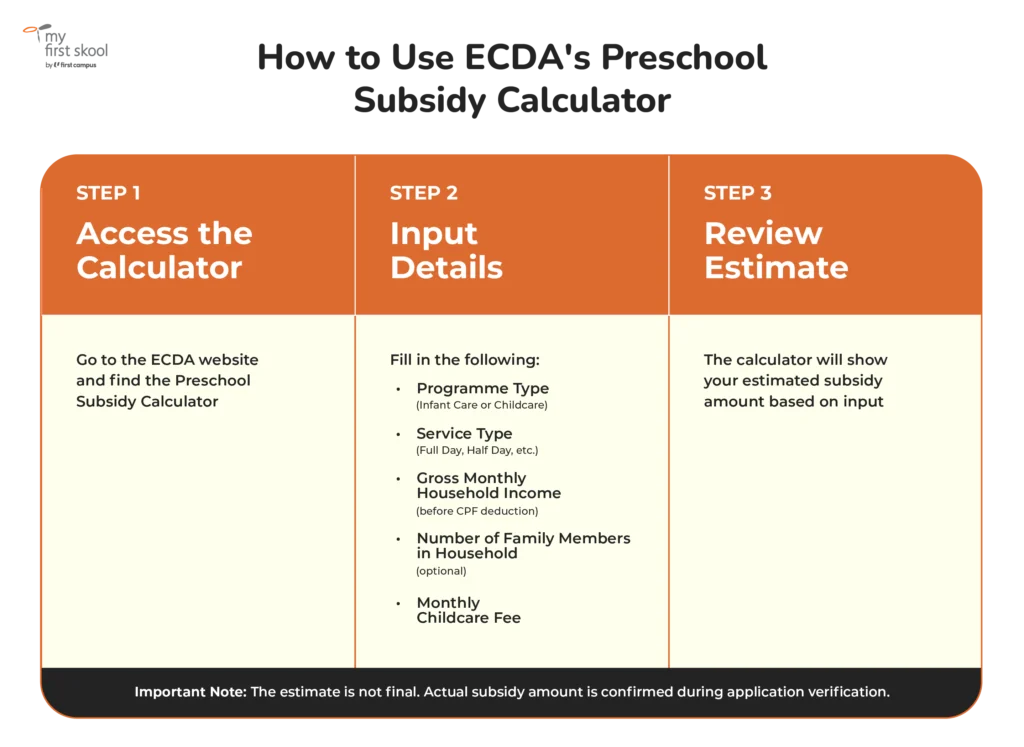
To assist parents in estimating their eligible subsidy amount, the Early Childhood Development Agency (ECDA) provides an online Preschool Subsidy Calculator, designed to help families estimate the amount of financial assistance they may receive for childcare services and infant care in Singapore.
Here’s how you can use it:
Please remember that the figures generated are estimates. The actual subsidy amount will be determined upon verification of your details during the application process.
At My First Skool, we understand the importance of quality and affordable early childhood education.
We are committed to assisting families in navigating our childcare subsidy application process. Our staff are well-versed in the various subsidy schemes and can guide you to ensure you receive the financial support you’re entitled to.
By choosing My First Skool, you’re selecting not only a premier educational institution but also a partner dedicated to making quality childcare accessible and affordable for your family.
Every year, over 26,000 families all across Singapore see their children benefit from our relationship-based curriculum – one that emphasises forging strong bonds between children, teachers and parents. Find a centre near you or take a virtual tour to explore our learning environments and learn how your child can thrive.
In Singapore, the government provides financial assistance to support families with young children through various infant care subsidies. These subsidies aim to reduce the financial burden on low-income families and ensure that children receive quality early childhood education and care. Types of Infant Care Subsidies The Early Childhood Development Agency (ECDA) offers two main types…
In Singapore, the government provides financial assistance to support families with young children through various infant care subsidies.
These subsidies aim to reduce the financial burden on low-income families and ensure that children receive quality early childhood education and care.
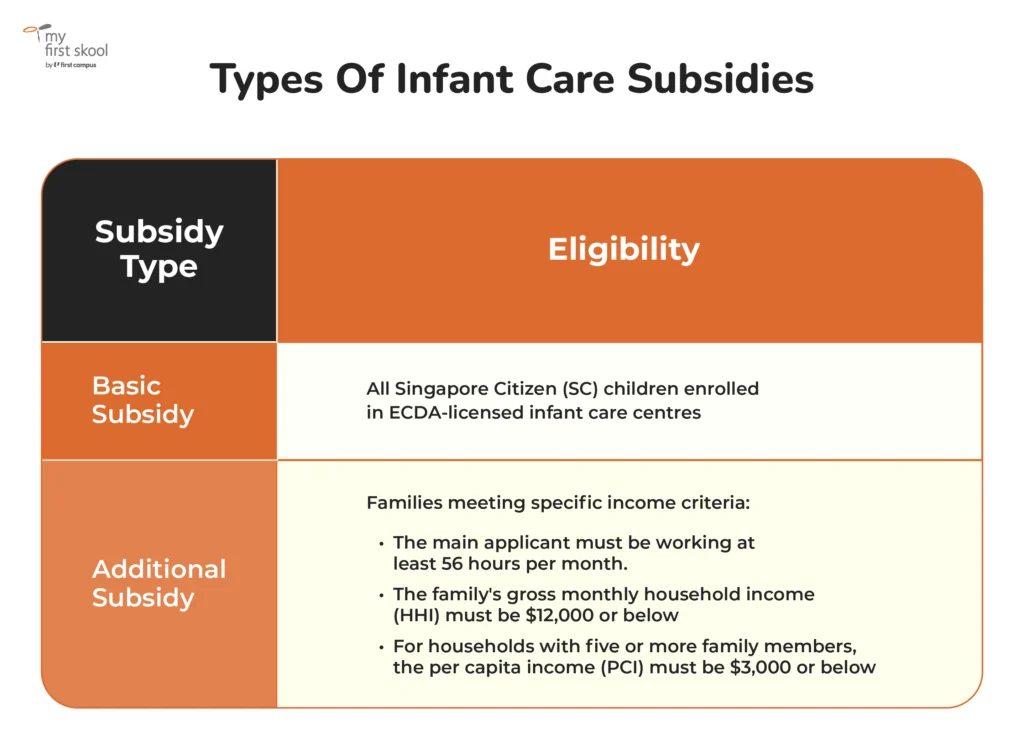
The Early Childhood Development Agency (ECDA) offers two main types of subsidies for infant care:
The subsidy amounts vary based on the working status of the main applicant and the family’s income level. The table below summarises the subsidies available for full-day infant care programmes:
| Types of subsidy | Working main applicant | Non-working main applicant | ||
| Basic Subsidy | $600 | $150 | ||
| Additional Subsidy | $40 to $710 | NA | ||
Note: The exact amount of the Additional Subsidy depends on the family’s income level.
The subsidy application is typically facilitated by the infant or childcare centre during the child’s enrolment. Parents are required to provide the necessary documentation to verify income and employment status. The subsidies are then disbursed directly to the infant care centre, reducing the preschool fees for parents.
But by the end of March 2025, all parents will be able to apply for preschool subsidies via the LifeSG application, reducing the time spent on such paperwork. Please approach your preschool if you need clarification on the subsidy application process that applies to your centre.
Non-working main applicants may still qualify for subsidies under Special Approval (SA) if they meet certain conditions, such as:
Approval under SA is granted for a limited period, depending on individual circumstances.
Regardless of the subsidy amount, families are subject to a minimum co-payment for infant care services. This minimum co-payment applies to Singapore Citizen children enrolled in infant care services. The co-payment amount increases progressively with higher household or per capita income levels.
| Applicant’sworkingstatus | Gross MonthlyHousehold Income | Gross Monthly Per Capita Income | Basic Subsidy (BS) | Additional Subsidy (AS) – Max AS | Additional Subsidy (AS) – Min Co-Pay |
| Working Applicant | $3,000 and below | $750 and below | $600 | $710 | $40 |
| $3,001 to $4,500 | $751 to $1,125 | $640 | $100 | ||
| $4,501 to $6,000 | $1,126 to $1,500 | $500 | $240 | ||
| $6,001 to $7,500 | $1,501 to $1,875 | $380 | $360 | ||
| $7,501 to $9,000 | $1,876 to $2,250 | $240 | $500 | ||
| $9,001 to $10,500 | $2,251 to $2,625 | $100 | $640 | ||
| $10,501 to $12,000 | $2,626 to $3,000 | $40 | $710 | ||
| Above $12,000 | Above $3,000 | N/A | N/A | ||
| Non-working applicant | N/A | $150 | N/A | N/A | |
Full-Day Infant Care Subsidy Table 2025
| Applicant’sworkingstatus | Gross MonthlyHousehold Income | Gross Monthly Per Capita Income | Basic Subsidy (BS) | Additional Subsidy (AS) – Max AS | Additional Subsidy (AS) – Min Co-Pay |
| Working Applicant | $3,000 and below | $750 and below | $300 | $355 | $20 |
| $3,001 to $4,500 | $751 to $1,125 | $320 | $60 | ||
| $4,501 to $6,000 | $1,126 to $1,500 | $250 | $130 | ||
| $6,001 to $7,500 | $1,501 to $1,875 | $190 | $185 | ||
| $7,501 to $9,000 | $1,876 to $2,250 | $120 | $255 | ||
| $9,001 to $10,500 | $2,251 to $2,625 | $50 | $325 | ||
| $10,501 to $12,000 | $2,626 to $3,000 | $20 | $355 | ||
| Above $12,000 | Above $3,000 | N/A | N/A | ||
| Non-working applicant | N/A | $150 | N/A | N/A | |
Half-Day Infant Care Subsidy Table 2025
My First Skool is one of the leading providers of quality early childhood education and infant care in Singapore.
As one of the Anchor Operator Partners (AOP) licensed by the Early Childhood Development Agency (ECDA), My First Skool ensures that all eligible children receive the applicable Basic and Additional Subsidies, making quality infant care accessible to more families.
Find out more about our infant care Singapore prices and how you can benefit from government subsidies.
Every year, over 26,000 families all across Singapore see their children benefit from our relationship-based curriculum – one that emphasises forging strong bonds between children, teachers and parents. Find a centre near you or take a virtual tour to explore our learning environments and learn how your child can thrive.
In early childhood education, the teacher-child ratio is a critical factor influencing the quality of care and education provided. In Singapore, the Early Childhood Development Agency (ECDA) sets forth specific guidelines to ensure that children receive adequate attention and helpful support during their formative years in class. ECDA’s Minimum Qualified Programme Teacher-Child Ratio 2025 ECDA…
In early childhood education, the teacher-child ratio is a critical factor influencing the quality of care and education provided.
In Singapore, the Early Childhood Development Agency (ECDA) sets forth specific guidelines to ensure that children receive adequate attention and helpful support during their formative years in class.
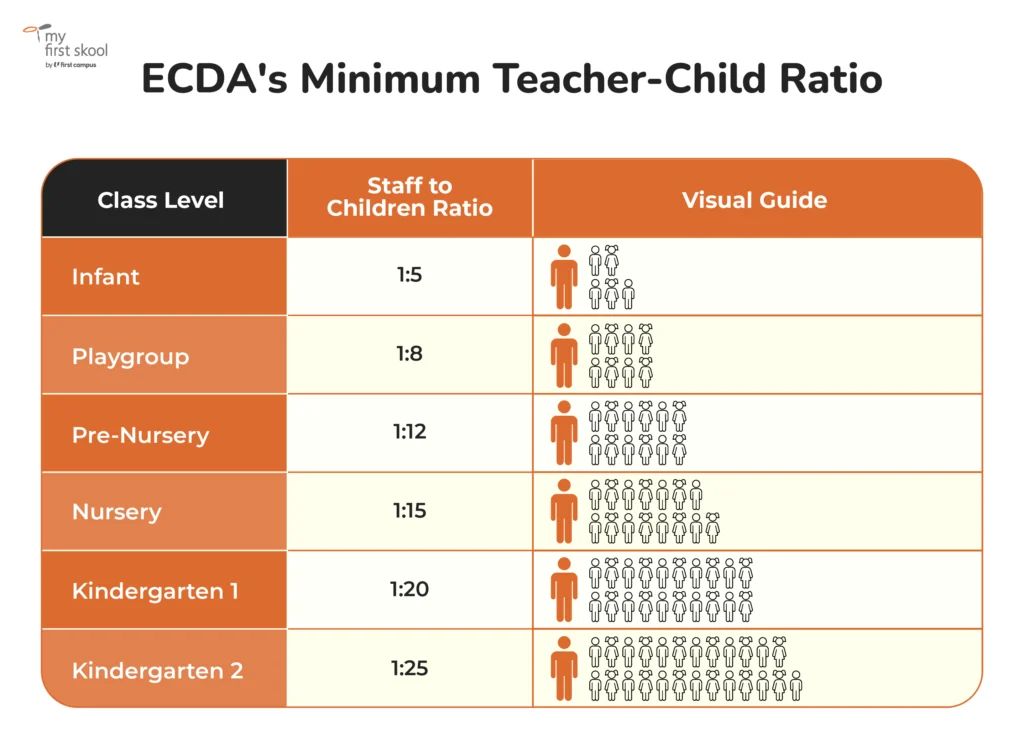
ECDA has established minimum staff-child ratios based on the age of the children, aiming to balance the developmental needs of children with practical staffing considerations. The stipulated ratios as of March 2025 are as follows:
| Class Level | Age of Children | Staff to Children Ratio | Staff to Children Ratio (+ Assistant Educator) |
| Infant | 18 months and below | 1:5 | Not Applicable |
| Playgroup | 18 months – below 3 years | 1:8 | 1+1 : 12 |
| Pre-Nursery | Children who turn 3 years old during the year enrolled | 1:12 | 1+1 : 18 |
| Nursery | Children who turn 4 years old during the year enrolled | 1:15 | 1+1 : 20 |
| Kindergarten 1 | Children who turn 5 years old during the year enrolled | 1:20 | 1+1 : 25 |
| Kindergarten 2 | Children who turn 6 years old during the year enrolled | 1:25 | 1+1 : 30 |
ECDA Minimum Staff-Child Ratios
As a trusted, long-standing preschool in Singapore, we recognise the profound impact teacher-child ratios have on early childhood development. And if you’re searching for a preschool near you that prioritises quality education, we adhere to—and in many instances, strive to surpass—the minimum staff-child ratios stipulated by ECDA.
My First Skool also works very closely with ECDA to ensure our centres adhere to their quality standards, including our staff-child ratio. We receive regular audits from the ECDA at our centres to ensure operational standards are met and that our children receive the best conditions for learning, playing and resting.
My First Skool’s quality extends beyond mere numbers, offering quality education and early childhood development through our relationships-first approach that ensures our students develop meaningful connections with their peers and educators.
We foster real-world values and relational skills such as social and emotional confidence, empathy, and teamwork. This approach not only enhances children’s well-being but also lays a solid foundation for their future learning and development.
Registration only takes 5 minutes
Preschool is also known as Pre-primary school and comprises multiple levels: Infant Care Playgroup Nursery 1 (N1), also referred to as Pre-Nursery Nursery 2 (N2), also referred to as Nursery Kindergarten 1 (K1) Kindergarten 2 (K2) What are the ages for each preschool level? According to guidelines set by ECDA, preschools in Singapore are divided…
Preschool is also known as Pre-primary school and comprises multiple levels:
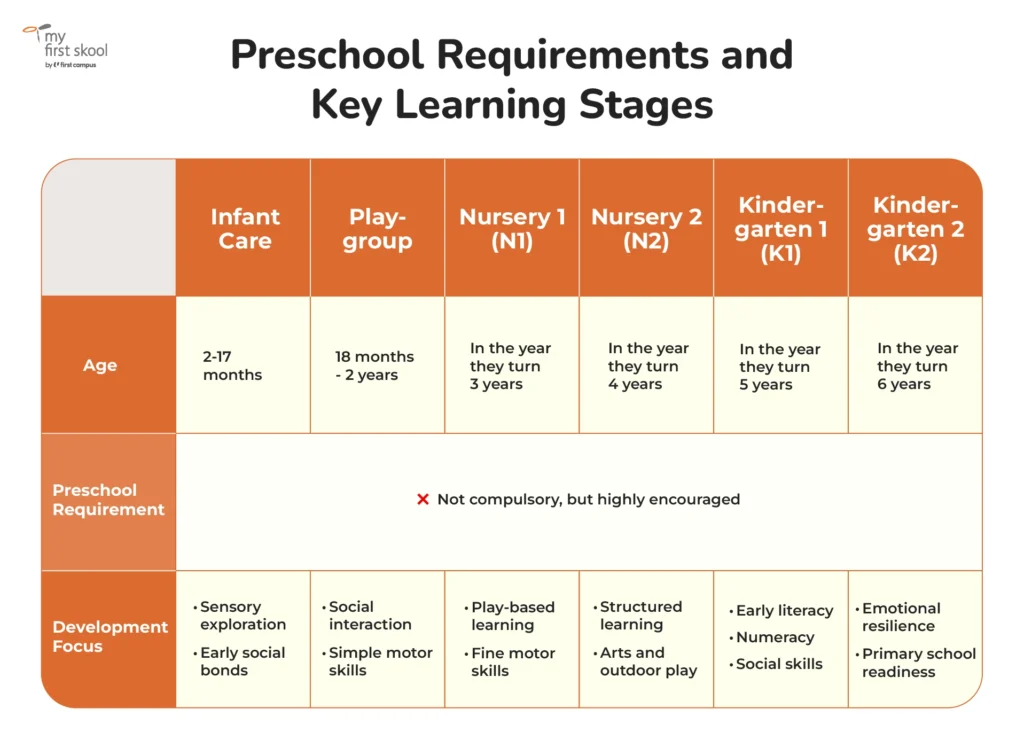
According to guidelines set by ECDA, preschools in Singapore are divided into stages that correspond with the child’s age and developmental progress:
| Level | Preschool Age |
| Infant Care | From 2 months to 17 months old |
| Playgroup | From 18 months to 2 years old |
| Pre-Nursery (N1) | In the year they turn 3 years old |
| Nursery (N2) | In the year they turn 4 years old |
| Kindergarten 1 (K1) | In the year they turn 5 years old |
| Kindergarten 2 (K2) | In the year they turn 6 years old |
The official primary school age in Singapore is seven years old.
No, preschool attendance (whether nursery or kindergarten levels) before primary school is not compulsory. However, although it is not mandatory, preschool education is highly encouraged by the Singapore government for all children as it offers significant benefits and can help your child achieve important learning goals. We cover these in detail below.
Enrolling your child in preschool can be an incredibly enriching and positive experience, and allows your child to benefit from the resources and social interactions that may only be found in a preschool setting. Beyond the obvious academic benefits, preschool helps children:
Taking reference from the Nurturing Early Learners (NEL) Framework, which was introduced by the Ministry of Education (MOE) to guide preschool centres in designing and implementing a quality curriculum for children aged 4 to 6, the desired outcomes of preschool education include children being able to:
By the end of their preschool journey, children should possess a good sense of self-awareness, a sound moral compass, and the necessary skills and knowledge to take on future challenges. Each level of preschool is designed with age-appropriate activities to equip your child with the essential skills and mindset needed to thrive in primary school and beyond, and a well-structured preschool programme will lay the groundwork to achieve the above goals.
Infant care in Singapore caters to infants aged 2 to 17 months. At this stage, a child’s development is centred around sensory exploration, development of fine and gross motor skills, and early social connections. In these early years, infants learn primarily through interactions with caregivers and their environment, and through activities that are designed to stimulate their cognitive and physical development.
From 18 months old, children will join playgroup programmes. At this stage, learning takes place primarily through exploratory play, with activities designed to enhance social interaction, sensory skills, and simple motor coordination.
Nursery 1 (or pre-nursery) programmes cater to children aged 3 years old and provide a more structured environment compared to playgroups. At Nursery 1, children are introduced to basic educational concepts, but the focus is still largely on play-based learning. Tailored activities such as arts and crafts, sensory play, singing and storytelling help to develop children’s fine motor skills, language abilities, and even early problem-solving.
At 4 years old, children will enrol in Nursery 2 programmes. At this stage, children are introduced to more academic and structured learning activities, such as English and Chinese classes and learning about current affairs, alongside artistic activities and outdoor play.
Kindergarten 1 (K1) and Kindergarten 2 (K2) programmes are for children aged 5 to 6 years old respectively. In these two years, the curriculum becomes more structured and is designed to equip children with foundational academic skills (such as early numeracy and literary skills), social behaviours, and emotional resilience required for their impending transition to primary school.
Choosing the best preschool in Singapore for your child is highly subjective and will ultimately depend on your child’s and family’s unique needs. Parents should consider several key factors, such as:
At My First Skool, we are dedicated to ensuring a well-rounded educational journey for your child, through an enriching learning environment and a curriculum designed to support holistic development. We have 45+ years of experience in child care and preschool education, and 100% of our eligible centres are SPARK-certified, an assurance of quality by ECDA.
At My First Skool, we empower our children to learn through a pedagogical approach called PETAL© – Playing, Exploring, Thinking, and Applying Learning. This approach provides facilitated play experiences that encourage active exploration, critical thinking and making meaningful discoveries.
We recognise that children are unique individuals. They explore their environment, form opinions, and want to be heard. As such, we centre our curriculum around relationships, forging close bonds, and building genuine connections with the children and parents.
We take children on excursions designed to enhance their experiences and deepen their understanding of the world around them. We also offer a varied combination of mother tongue languages across our centres and train children in digital literacy to ensure they are equipped with the skills to navigate digital tools in today’s technological era. These diverse approaches ensure that children receive a comprehensive early education tailored to their unique learning styles.
My First Skool offers programmes for children across all early education levels, with full-day childcare services and preschool programmes for children aged 18 months to 6 years old, as well as infant care services for infants aged 2 to 17 months. This allows children to have a seamless transition as they progress through each preschool level. With over 160+ conveniently located centres across Singapore, My First Skool provides families with access to quality preschool services near work or home.
At My First Skool, we believe every child deserves a strong start. As one of Singapore’s most trusted providers of infant care, childcare, preschool, and kindergarten, we offer a nurturing environment where little ones can grow, learn, and thrive. With experienced educators and a proven curriculum, we’re here to support your child’s journey—every step of the way. Registration only takes 5 minutes.
Every year, over 26,000 families all across Singapore see their children benefit from our relationships-based curriculum – one that emphasises forging strong bonds between children, teachers and parents. Find a centre near you or take a virtual tour to explore our learning environments and learn how your child can thrive.
You can also quickly explore some of our locations:
A child can attend daycare or childcare centres in Singapore from as early as 18 months, with some centres also providing infant care for children aged 2 to 17 months. At My First Skool, we offer full-day childcare services and preschool programmes for children aged 18 months to 6 years old, as well as infant care services.
Enrolment for placements in My First Skool is open all year round, depending on the availability of vacancies. Registration may be submitted up to 12 months before your child’s preferred enrolment date. This is available for Singapore citizens, permanent residents and foreigners.
Go on a virtual centre tour of a preschool near you and explore our learning environments from the comfort of your own home.
Subsidies provided by the government can greatly alleviate the cost of preschool education for families. All Singapore Citizen children enrolled in ECDA-licensed infant or childcare centres and in kindergartens operated by Anchor Operator (AOP) or the Ministry of Education (MOE) are eligible for preschool subsidies, which comprise the basic subsidy and additional subsidy under the Infant and Childcare Subsidy Scheme, and subsidies under the Kindergarten Fee Assistance Scheme.
Note that you can only apply for a preschool subsidy after securing a place for your child with a preschool. On the first day of your child’s enrolment, parents should submit a Form 1 (Child Care Enrolment and Subsidy Application) or KF1 (Enrolment and Kindergarten Fee Assistance Scheme (KiFAS) application), acknowledgement letter, and relevant supporting documents to the preschool.
At My First Skool, we are dedicated to keeping our childcare fees affordable and accessible. Families with household income of $6,000 and below will enjoy priority for enrolment. Further, we also offer a number of financial support schemes to benefit families from lower-income backgrounds.


.jpg)