Jul 28, 2022


Environmental awareness Singapore is a country with an excellent reputation for being environmentally aware of recycling needs and what can happen when recycling does not take place. There are many recycling procedures that are in place for families, and for organisations to use and also in early childhood centres these are in place. The curriculum…
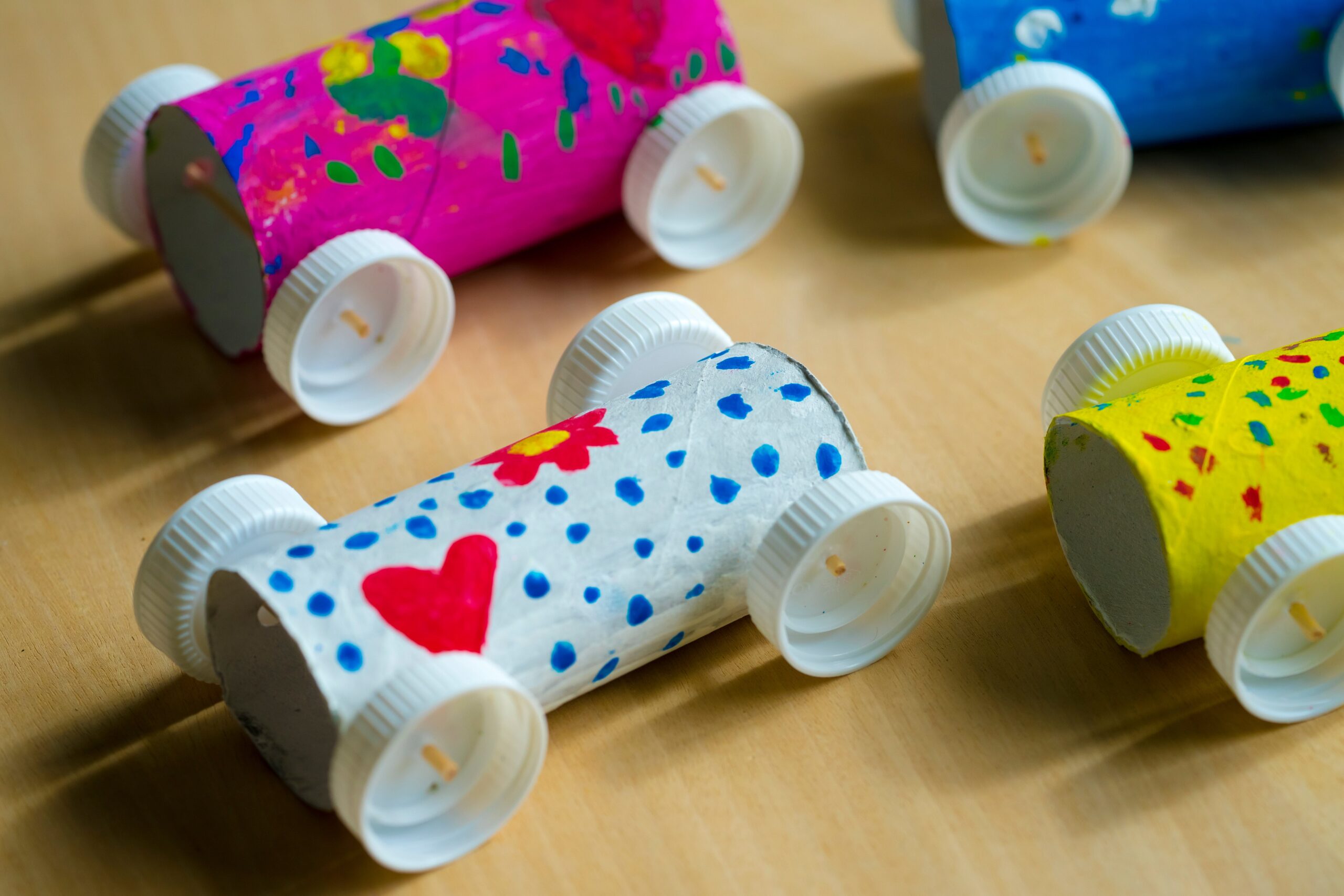
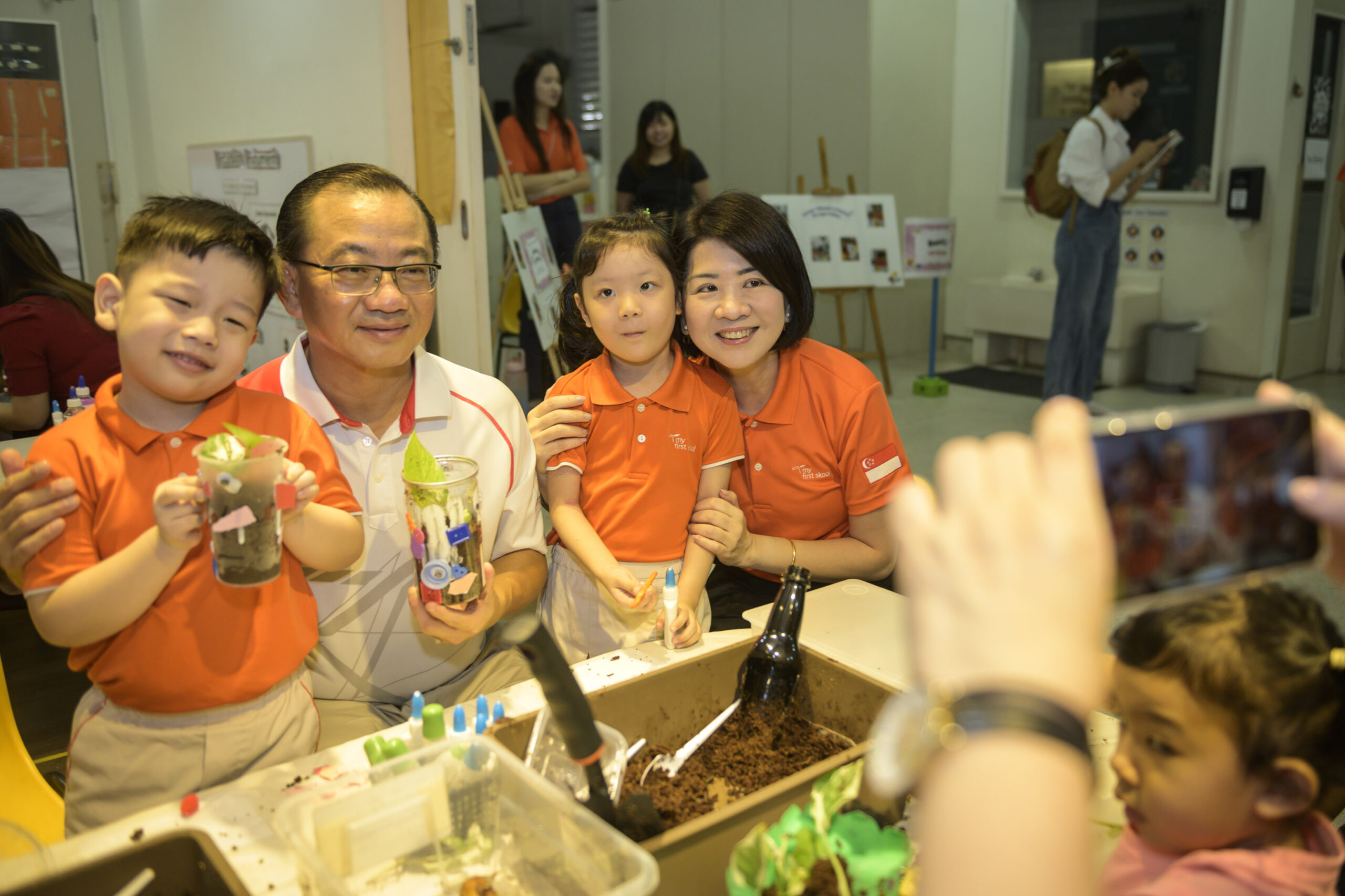
Singapore is a country with an excellent reputation for being environmentally aware of recycling needs and what can happen when recycling does not take place. There are many recycling procedures that are in place for families, and for organisations to use and also in early childhood centres these are in place. The curriculum in use for MFS classes takes account of recycling and awareness of this is raised with children. The Relationships Based Curriculum encourages teachers to make recycled toys and equipment to complement the required commercial equipment which is needed to fulfil licensing requirements.
Being aware of the need to conserve things in our environment then, is the responsibility of both educators and parents. If we can also make our children aware of protecting their environment and reusing materials. An important reason to raise the issue of environmental awareness is that children are growing up in a consumer-oriented society. Many of the toys sold in stores are very commercial and linked to films, videos and other commercial ideas, often featuring super-heroes, action figures or dolls which represent characters that children have seen. Whilst these toys may have a place in children’s play, many experts believe that over-use of such play things can limit the “scripts” that children use in their imaginative play. Figurines of specific characters and items made for particular purposes control children’s play and may limit their imagination for they can only be used in one way. Toys that can be played with in many different ways are better and parents need to understand that not all toys can stimulate creativity and provide cognitive benefits for children. Rather than being limited by the characters portrayed by commercial toys or their functions, simple things allow a child to structure their play in different ways and think creatively in their play.
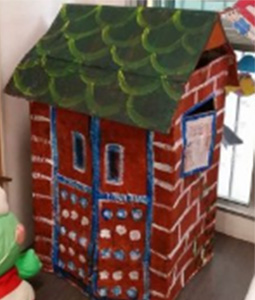
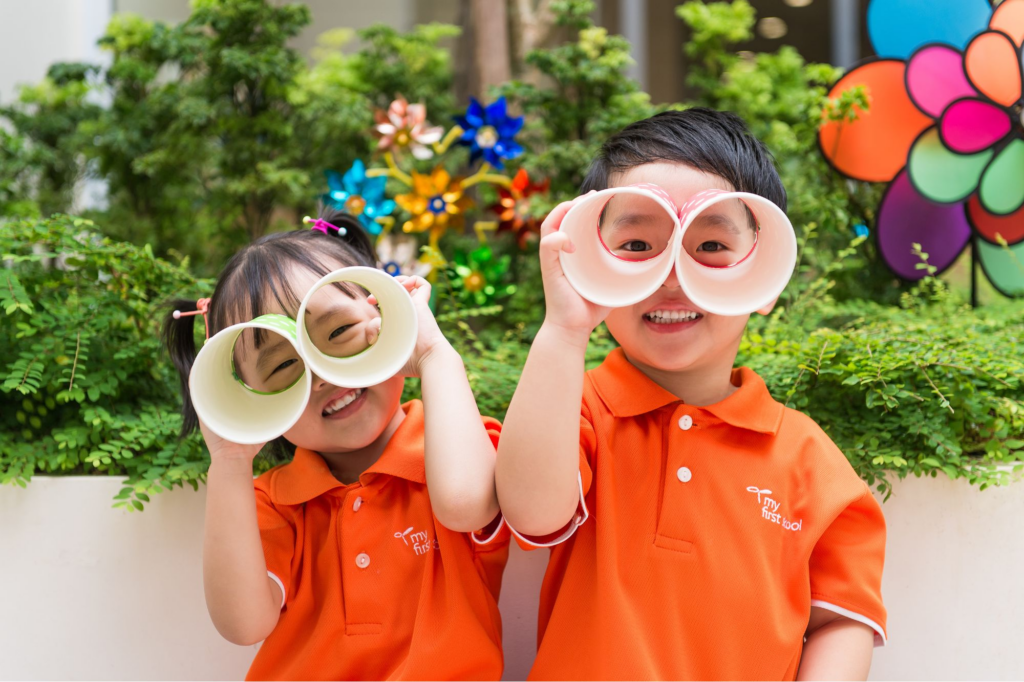
In the home context there are many potential recycled items that come daily into the home and some of these are safe to be used with your children to complement the commercial toys families buy. However, we emphasise the importance of safety. For example, styrofoam is not a suitable product to use as it can break easily and be ingested by small children. However, there are many other safe materials that can be used such as large cardboard boxes which make wonderful play houses and tunnels or turn paper bags into puppets. Old magazines can be turned into colourful decorations or collages and table calendars can be transformed into photo albums. Toilet paper rolls and egg cartons are useful materials for art and craft. When children outgrow their clothes, use them to dress up dolls and adult clothes can be used to promote dramatic play.
Other safety factors to keep in mind are:
In contrast to the consumer toys mentioned earlier, these are materials that can be used and manipulated in different and creative ways by young children. Features of such open-ended materials are that they:
Other safety factors to keep in mind are:
In contrast to the consumer toys mentioned earlier, these are materials that can be used and manipulated in different and creative ways by young children. Features of such open-ended materials are that they:
Other safety factors to keep in mind are:
Recyclable materials are open-ended and provide more learning opportunities for children than some commercially made toys that may be used only in one way, limiting children’s creativity and imagination. Encouraging children to recycle and reuse everyday objects makes our children aware of the need to protect our planet.
Copyright © Marjory Ebbeck and Sheela Warrier 2017
All rights reserved. No part of this publication may be reproduced, stored in a retrieval system, or transmitted in any forms or by any means, electronic, mechanical, photocopying, recording or otherwise, without the prior permission of the Copyright holder.
A Straits Times article featured My First Skool (MFS) at Block 997 Buangkok Crescent’s visual arts programme, which was introduced since the centre first opened in 2018. Thanks to a partnership with the National Gallery Singapore, the centre is one of the 17 MFS centres offering a deeper dive into the practice than the typical…
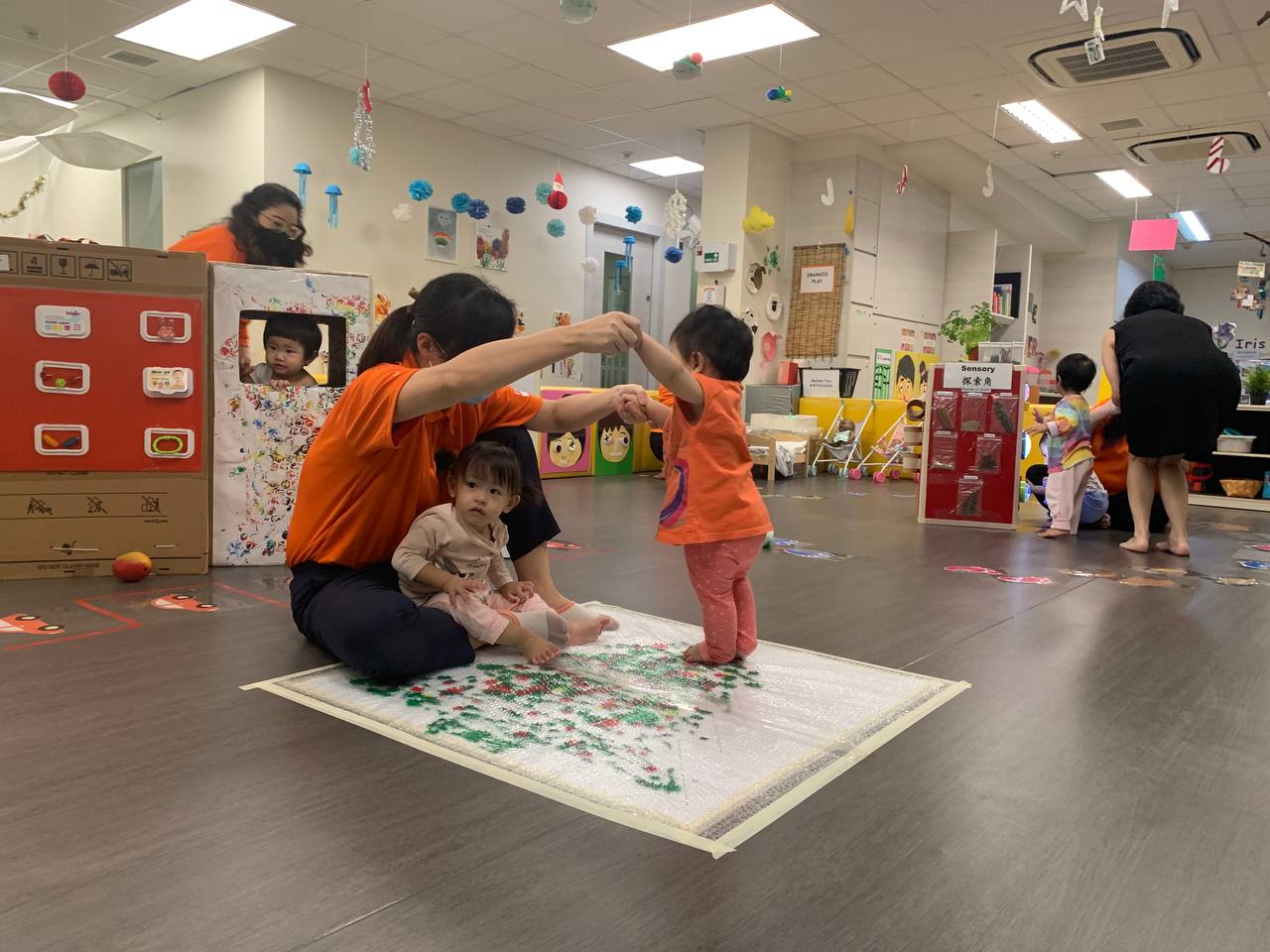
A Straits Times article featured My First Skool (MFS) at Block 997 Buangkok Crescent’s visual arts programme, which was introduced since the centre first opened in 2018. Thanks to a partnership with the National Gallery Singapore, the centre is one of the 17 MFS centres offering a deeper dive into the practice than the typical curriculum offers. As the centre caters to many low-income families, the art programme helps these children develop expressive language.
“Though art, the children are free to explore. Teachers will ask ‘Can you share with me what you have drawn? Why do you want to do it this way?’ They have an opportunity to say something and we respect what they say,” said executive principal Pearlyn Tan.
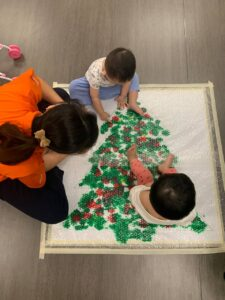
The programme was initially meant for pre-schoolers, but it has also been extended to infants. Conducted weekly, the activities can be as simple as stepping on or touching a “Christmas tree” painting taped securely to the floor.
The safety and health of our children at MFS is our top priority. In preparation for our children’s first week of school, all MFS centres have been sanitised. Nearly all MFS staff are fully vaccinated, and more than half have also received their booster shots. The usual routine health checks for symptoms of Hand, Foot…
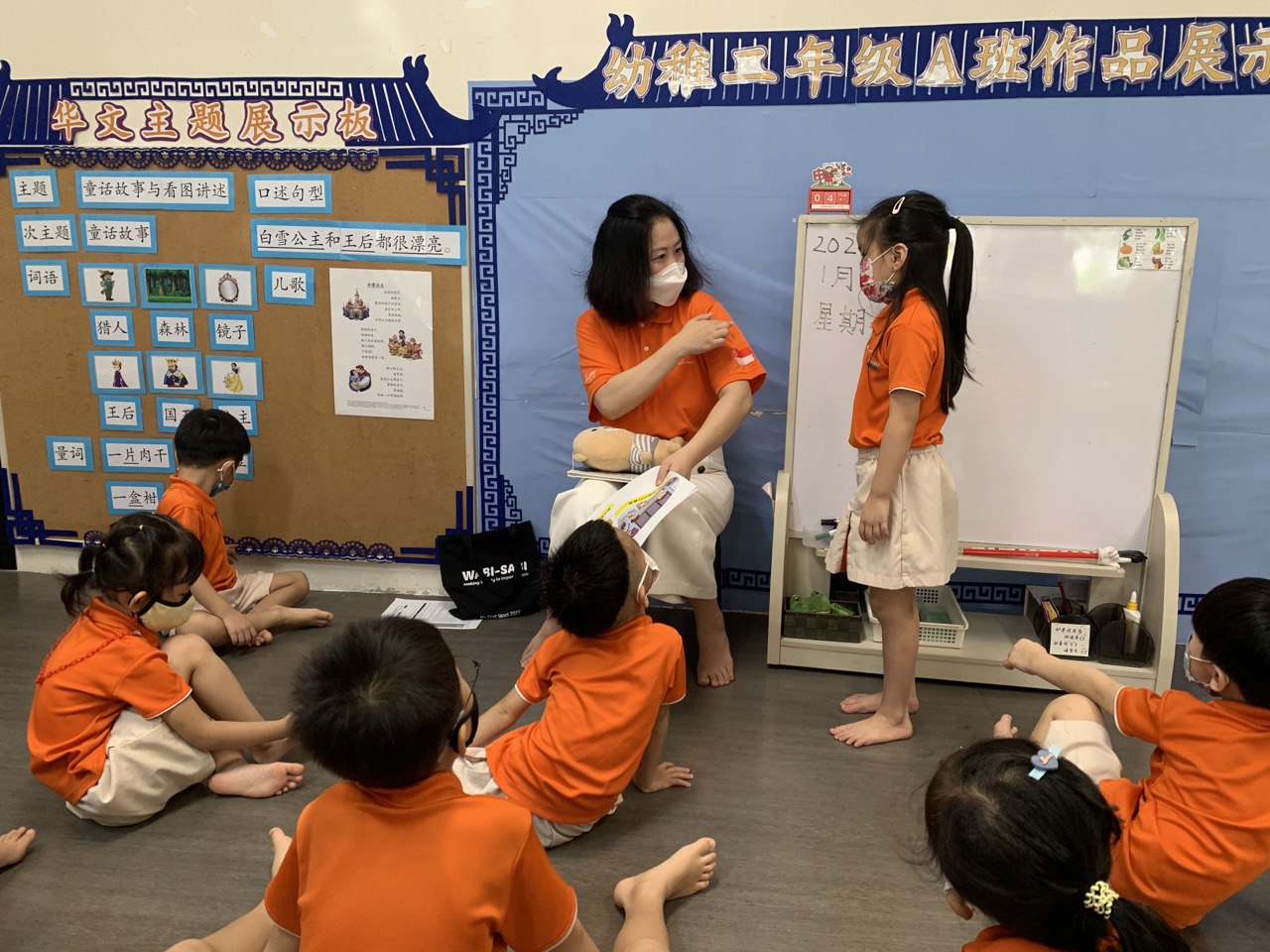
The safety and health of our children at MFS is our top priority.
In preparation for our children’s first week of school, all MFS centres have been sanitised. Nearly all MFS staff are fully vaccinated, and more than half have also received their booster shots.
The usual routine health checks for symptoms of Hand, Foot and Mouth Disease and COVID-19 also greet our children before they start their classes.
With these safety measures in place, our parents are reassured when they send their children to school for the new school year.
Across the 145 pre-school centres with a total of 22,000 children, 80 per cent of children returned to school on January 3. Only 3 per cent have gone abroad during the year-end holiday.
“I trust the teachers, and support has been rendered to us, so I have peace of mind,” said a parent. Another parent said that the teachers at MFS have done a good job in educating the children on the hygiene precautions they should take during the pandemic thus far.
MFS is looking forward to having outdoor play resume this year. “As children are active by nature, we hope that field trips can resume in 2022,” said Thian Ai Ling, General Manager of MFS.
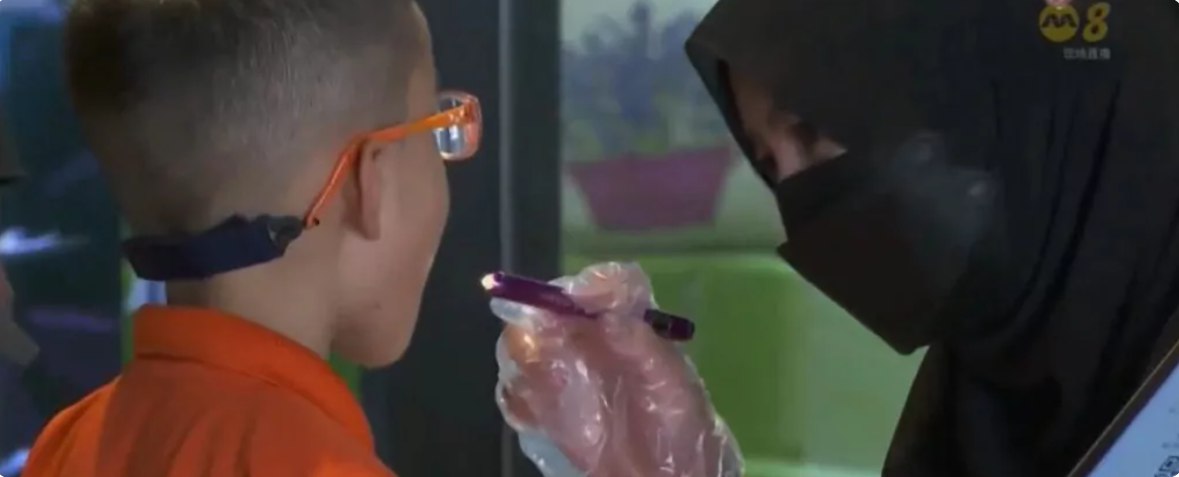
CNA, Channel 8 and Suria Berita visited MFS (70 Telok Blangah Heights) on January 4 and documented the children’s first week of school.
(4 January 2022) CNA: https://www.mewatch.sg/watch/CNA-2022-E15-More-activities-to-be-allowed-for-primary-school-students-265509?redirect=true (Time code: 01:20)
(4 January 2022) Channel 8: https://www.mewatch.sg/watch/Jan-2022-Hello-Singapore-265496 (Time code: 03:27)
(4 January 2022) Channel U: http://my.tvey.es/Cp4q8
(4 January 2022) Suria Berita: https://www.mewatch.sg/watch/Jan-2022-SURIA-Berita-265498 (Time code: 01:57)
In a feature story on how pre-schools in Singapore are helping families in need amid the pandemic, Straits Times reported that NTUC First Campus’ (NFC) Bright Horizons Fund has channelled about $2.4 million in 2021 to bridge the income and learning gaps made worse by the disruptions of the past two years. For instance, more…
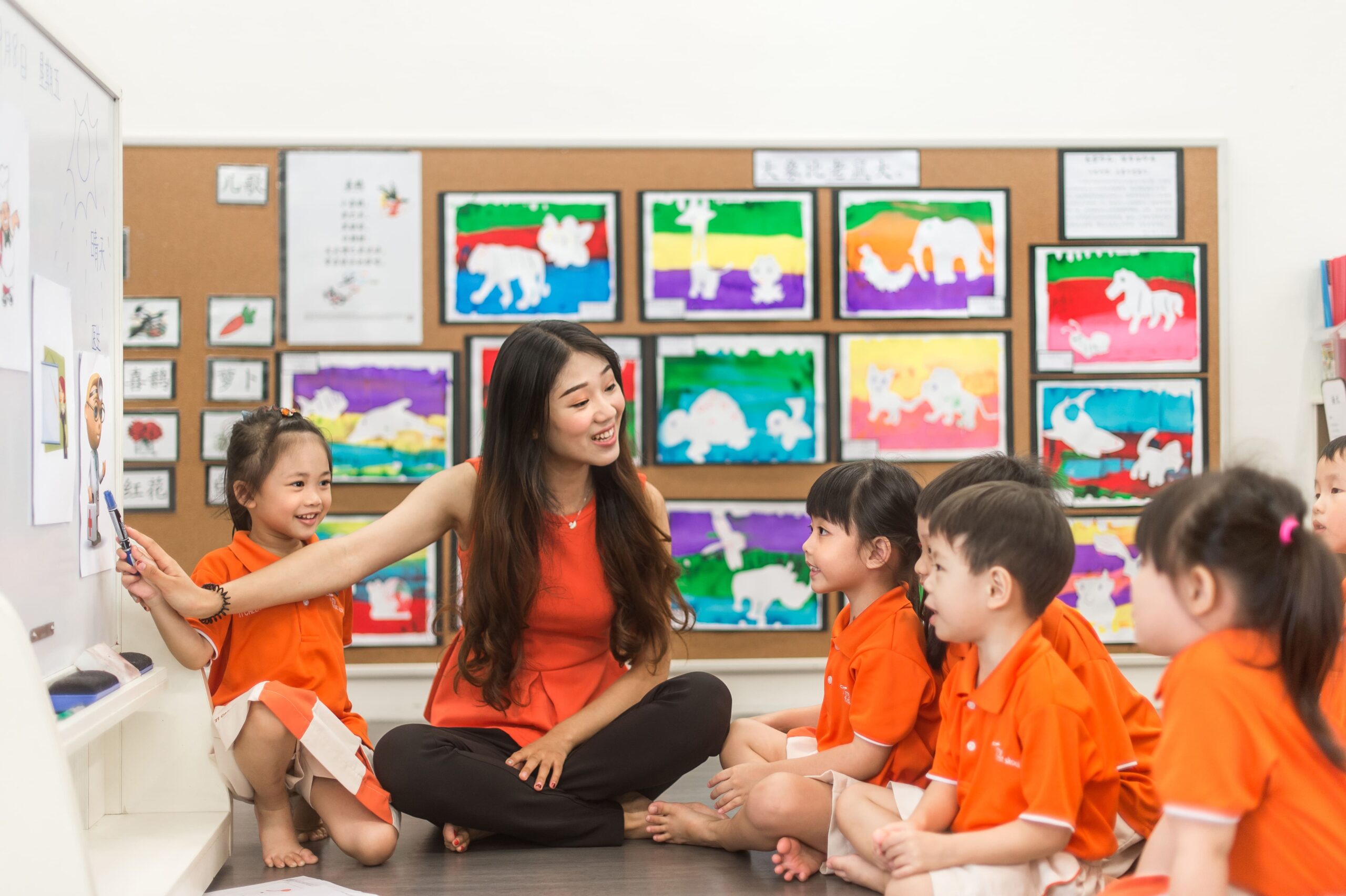
In a feature story on how pre-schools in Singapore are helping families in need amid the pandemic, Straits Times reported that NTUC First Campus’ (NFC) Bright Horizons Fund has channelled about $2.4 million in 2021 to bridge the income and learning gaps made worse by the disruptions of the past two years. For instance, more than 4,200 children attending NTUC pre-schools have received a one-time top-up of $400 to the Child Development Account (CDA). Nearly 3,000 families have also received sponsored NTUC membership, which allows them to benefit from financial and employment support.
Madam Zhu Su Qing, whose youngest daughter attends NFC’s My First Skool centre in Boon Lay, and has two older children in primary school, received the sponsored NTUC membership to defray the cost of groceries. Her daughter also benefited from the one-time top-up of $400 to her CDA account this year. “The school has helped us a lot. So I only worry about their homework and meals when no one is supervising them at home,” said Madam Zhu.
The article also covered upcoming initiatives that families can look forward to in 2022. Some examples include NFC’s mental well-being programme for low-income families, such as counselling sessions for parents and parenting workshops in health and nutrition. NFC’s team of learning support educators will also be curating digital resources such as videos and activities for parents to engage their children with learning needs at home.
(22 November 2021) Straits Times Online: https://www.straitstimes.com/singapore/parenting-education/pre-schools-step-up-to-help-families-during-covid-19-pandemic
My First Skool Early Year Centre is officially opened! On the 23rd May, we had the honour of having Mr. Ng Chee Meng, Secretary-General of the National Trades Union Congress and Minister in the Prime Minster’s Office to officiate the opening of our centre. At My First Skool, one of our priorities is to provide a…
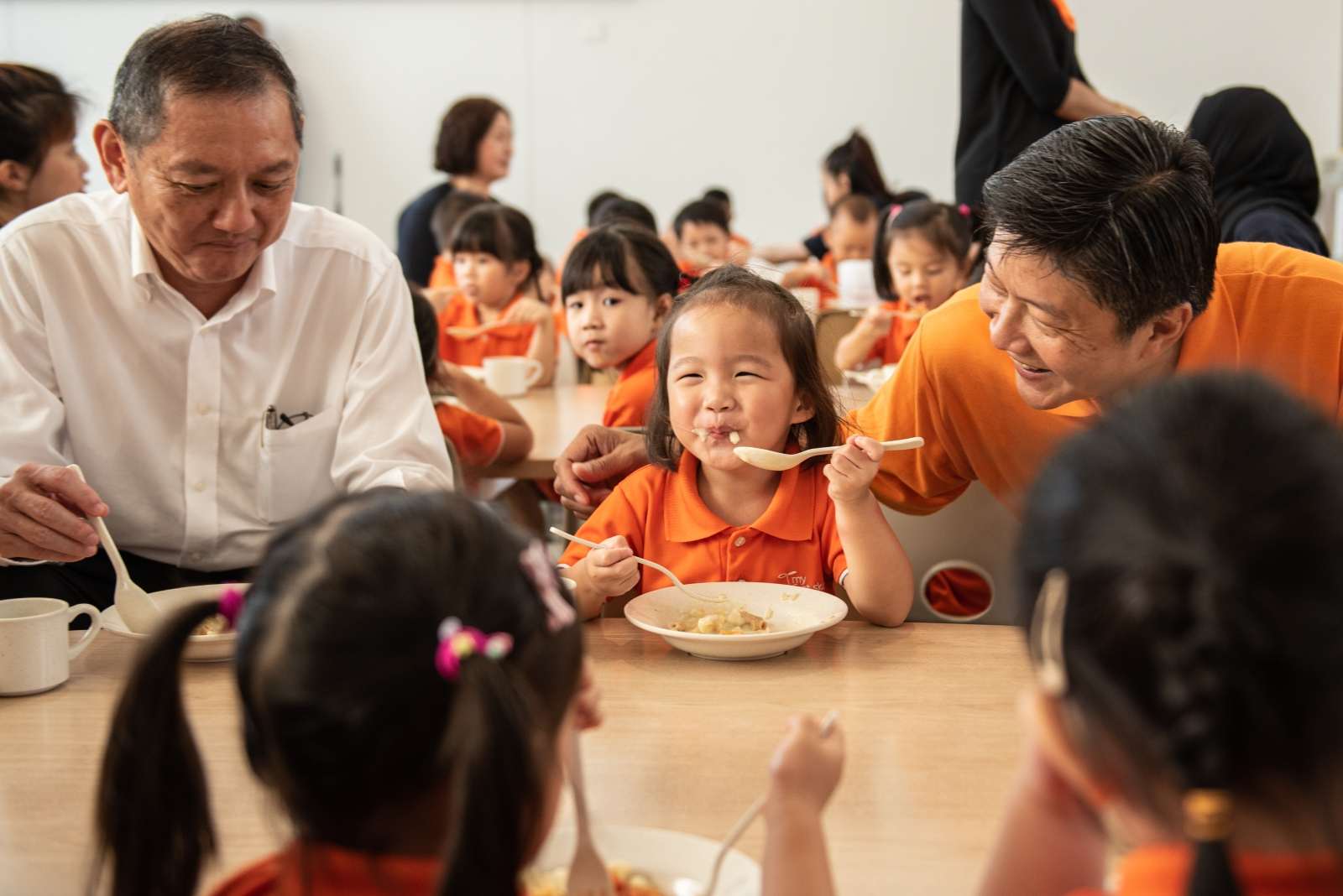
My First Skool Early Year Centre is officially opened! On the 23rd May, we had the honour of having Mr. Ng Chee Meng, Secretary-General of the National Trades Union Congress and Minister in the Prime Minster’s Office to officiate the opening of our centre.
At My First Skool, one of our priorities is to provide a quality and affordable pre-school programme. Besides ample outdoor play areas and in-house commercial kitchen helmed by an experienced head chef, our Early Year Centre at 2 Punggol Drive also leverages on technology to keep our children healthy and safe. A temperature scanner, a visual paging system as well as biometric security access system are just some of the ways we help paretns have a peace of mind knowing that thier child is learning in a safe environment.
Read this article by Channel News Asia to find out how we alleviate the health concerns that parents may have regarding pre-school centres.
Kum Foong Yee worked in the aviation industry for a decade as an Airline Representative. During the COVID-19 pandemic, when there were fewer flights, she took on administrative work. That was when she noticed her two-year-old son developing exponentially and could play on his own independently, after attending infant care at MFS. Intrigued by his…
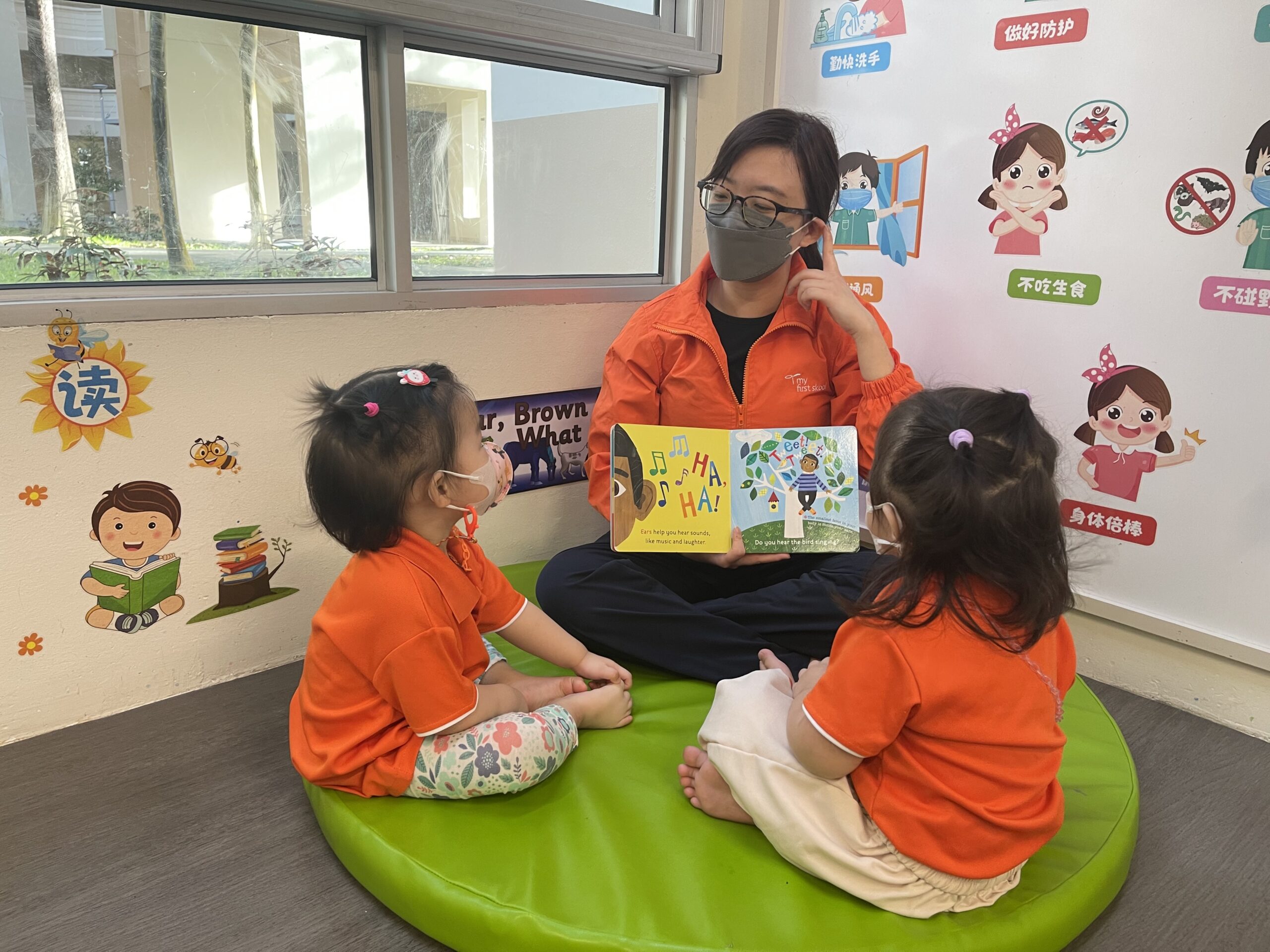
Kum Foong Yee worked in the aviation industry for a decade as an Airline Representative. During the COVID-19 pandemic, when there were fewer flights, she took on administrative work. That was when she noticed her two-year-old son developing exponentially and could play on his own independently, after attending infant care at MFS.
Intrigued by his development, Foong Yee searched online for relevant jobs in the early childhood care and education (ECCE) sector, and read about Workforce Singapore’s Career Conversion Programme.
She enrolled in the Diploma (Conversion) in Early Childhood Care & Education – Teaching in August 2021 and is now undergoing the programme at the National Institute of Early Childhood Development, while working a few days a week at My First Skool (Rivervale Crescent) centre as a Trainee Teacher to gain hands-on experience.
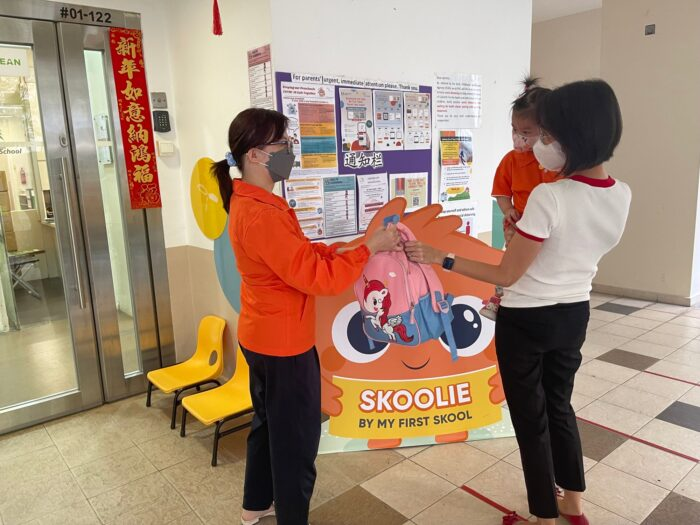
Fully supported by the principal and teachers at the pre-school centre she works at, Foong Yee is coping well with her work-study schedule. Her colleagues regularly share their teaching experience with Foong Yee to help her improve her teaching skills as well.
Foong Yee has since learnt from her practical training at the pre-school centre that being a pre-school teacher is not just about taking care of children, but nurturing them.
(27 January 2022) Channel 8 News: https://www.8world.com/singapore/career-conversion-update-1712661
30-year-old Syuhairah Bte Hassan used to be greeted by white clouds almost daily at her previous workplace. Now, she gets to experience the same sight on children’s artworks. Syuhairah has always wanted to be a pre-school teacher, but chose to start her career as a flight attendant. After six years, she became a stay-home mother for her two…
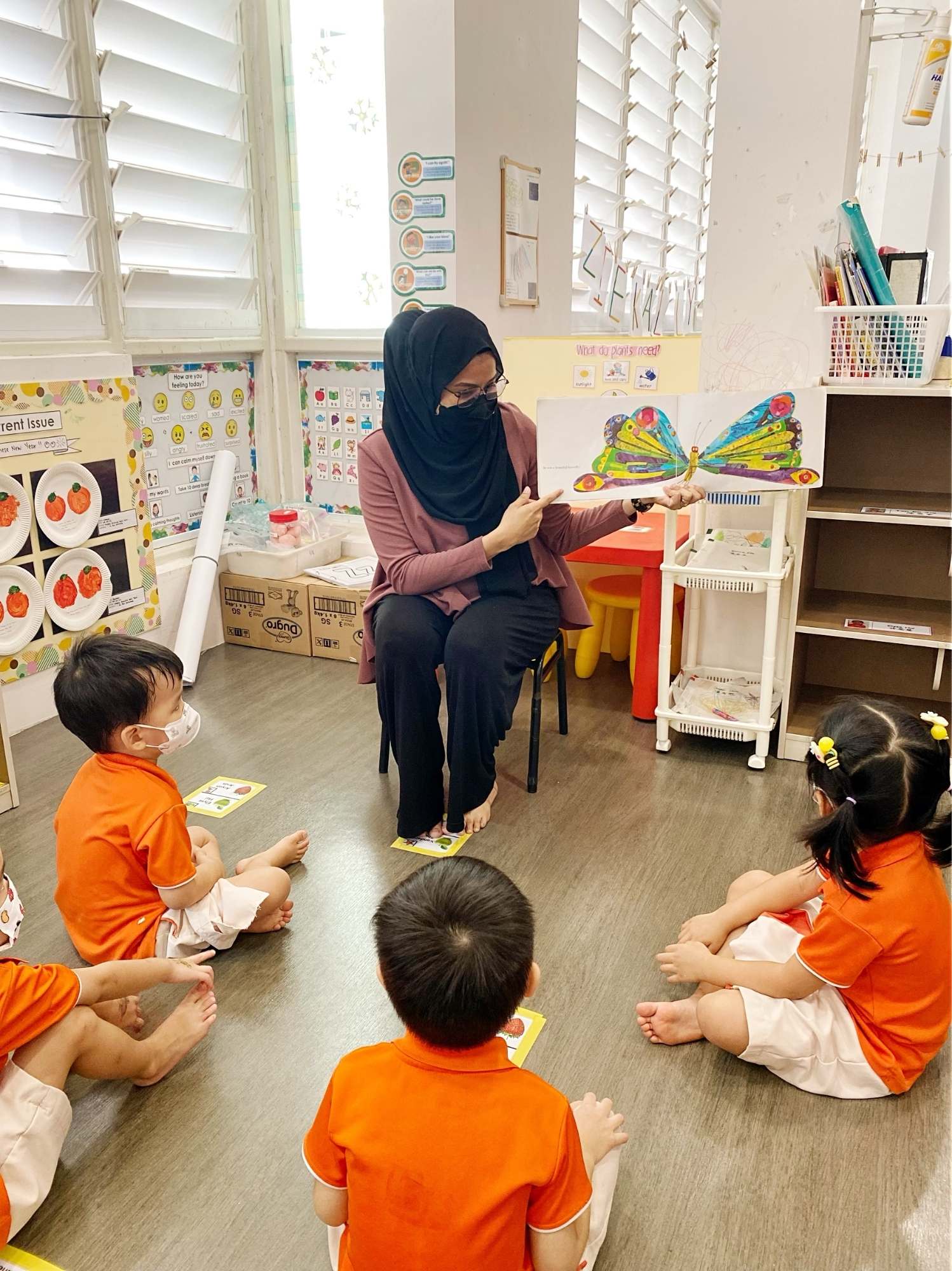
30-year-old Syuhairah Bte Hassan used to be greeted by white clouds almost daily at her previous workplace. Now, she gets to experience the same sight on children’s artworks.
Syuhairah has always wanted to be a pre-school teacher, but chose to start her career as a flight attendant. After six years, she became a stay-home mother for her two young children in 2020. COVID-19 turned out to be a blessing in disguise as it gave her an opportunity to chase her dream of nurturing children.
When Syuhairah’s children grew up, she was keen to return to the workforce as she did not want to put her job experience and skills to waste. She wanted to return to the aviation industry, however it was badly hit amid the pandemic.
Syuhairah was then introduced to the Career Conversion Programme (CCP) for Early Childhood Care & Education by her two sisters, who are early childhood educators themselves. One of them also went through the CCP back in 2019 and encouraged Syuhairah to sign up for it. As a parent, Syuhairah was also interested in the sector as she would like to learn more about shaping her children’s education at a young age. She knew how big a difference it makes to mould the children of today to be better individuals in the future. Without hesitation, Syuhairah enrolled in the Diploma (Conversion) in Early Childhood Care & Education by National Institute of Early Childhood Development.
As part of her on-the-job training, Syuhairah is a trainee teacher attached to My First Skool at Blk 269 Compassvale Link. Although she found the role tiring initially, she is grateful for the continuous support she has received from the experienced leaders and teachers in the centre. The course has also helped her to handle difficult situations professionally. As a former cabin crew member, she could also apply her communication skills and customer relations skills when communicating with parents. During her training, Syuhairah shows initiative by supporting the class teachers and takes a keen interest in the different aspects of work as an early childhood educator.
“The difference in being a cabin crew and an early childhood teacher is that a teacher has to continually build relationships with parents and develop children’s learning. As a cabin crew, responsibility on board is huge as you have to ensure the safety of the passengers. However, your responsibility ends once the passenger disembarks,” she said.
Syuhairah is currently undergoing the CCP and will graduate in August 2022. She finds the journey rewarding, especially as she gets to build rapport with the children while watching them grow from their very first day at school.
(16 March 2022) Lianhe Zaobao Online: https://www.zaobao.com.sg/news/singapore/story20220316-1252677
“The more that you read, the more things you will know. The more that you learn, the more places you’ll go.” – Dr. Seuss During these uncertain times, many people are discovering how important resilience is in their lives and be able to persevere and overcome the obstacles they face. Resilient people demonstrate their ability to bounce back, get…
“The more that you read, the more things you will know. The more that you learn, the more places you’ll go.” – Dr. Seuss
During these uncertain times, many people are discovering how important resilience is in their lives and be able to persevere and overcome the obstacles they face. Resilient people demonstrate their ability to bounce back, get their lives on track and stay on course, never letting their environment take control of their emotions and decisions.
This is an important skill that needs to be developed in children from an early age, so they too, can have the resilience to handle setbacks and failures, deal with adversity and change, and to keep going when things get difficult.
As parents, how can we help our children to develop resilience?
In addition to setting positive examples for children and occasionally stepping aside to let them bounce back from small failures on their own, you can also inspire your child with the fascinating characters, role models and stories found in these 10 recommended books.
Synopsis: This charming story is based on a real-life event that happened to the author’s grandchildren, and tells the tale of a little yellow digger who gets stuck in the mud. A bigger-sized digger is called in to help free the little digger, and this is where the story takes an inspiring turn. We’ll keep the ending a secret, so you can discover this wonderful tale with your child!
Why this book is good: This book teaches children that physical size doesn’t always matter, it’s the size of your heart and spirit that counts!
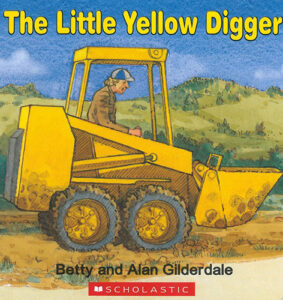
The Little Yellow Digger
Synopsis: In this book, your child will read about a spider who was blown by the wind to a fence near a farmyard. She starts spinning her web and is absolutely focused on the task at hand – refusing to be distracted by any of the other farm animals and demonstrating resilience in accomplishing her task. She’s finally rewarded when she manages to catch a pesky fly in her web, delighting the other animals who now see her as their hero.
Why this book is good: By following the story of the very busy spider, your child can comprehend the value of striving towards their goals.

The Very Busy Spider
Synopsis: The classic nursery rhyme gets brought to life in this expanded adaptation. This book introduces children to the itsy bitsy spider, a tiny spider who keeps climbing a water spout, only to be washed down again – except in this story, our determined little spider has his day as he manages to achieve his goal of climbing up the spout.
Why this book is good: This fun little book will teach your child about determination, while expanding their imagination as they read about a never-heard-before story about this famous nursery rhyme character.
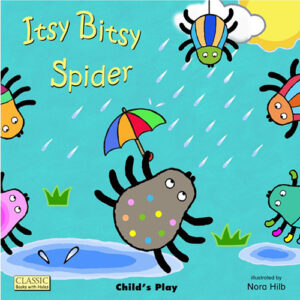
Itsy Bitsy Spider
Synopsis: Your child will love this hilarious story of Farmer Brown and his cows, who have an interesting way to telling Farmer Brown about the changes they’d like to see implemented in the barn – they use a typewriter to type their requests to him!
Why this book is good: This title shows children the value of communication, cooperation and compromise. Through the cows’ resilience, children also discover the importance of not giving up – even when things don’t always go their way.
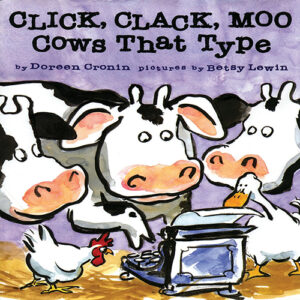
Click, Clack, Moo Cows That Type
Synopsis: As your child goes through life, they will undoubtedly encounter hurdles and setbacks – and this story is all about these “messed up” moments. In this tale, Little Louie just wants to tell his story, but it keeps getting messed up!
Why this book is ideal: Embark on an adventure with Little Louie and let your child see how Little Louie learns valuable lessons in resilience and embracing life’s not-so-perfect times.
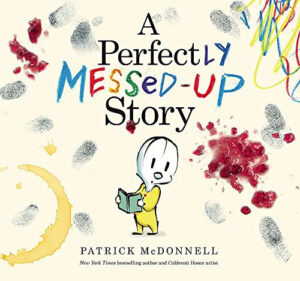
A Perfectly Messed-up Story
Synopsis: Lou is an adventurous little girl, but one day she faces an unfamiliar challenge. Her friends want to climb a tree and Lou is unsure of herself – so she makes up reasons for not joining her friends, saying that her arm is sore, she couldn’t climb because she had just eaten, and other excuses.
Why this book is good: This delightful picture book depicts what children often go through when confronted with difficult situations, then teaches them how to overcome their fears, become more courageous, and adopt a growth mindset.
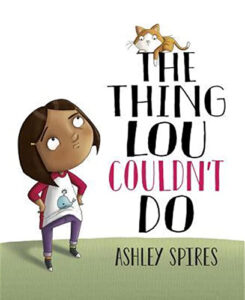
The Thing Lou Couldn’t Do
Synopsis: The Tiny Seed tells the story of tiny flower seeds that are blown across the land by the wind, and how the most resilient seeds survive many obstacles to eventually sprout into plants and bloom into flowers – starting the amazing process over again.
Why this book is good: A highly recommended read for children aged 4 to 6 years old, this short story teaches children about the life cycle of a plant and gives them a new appreciation for nature, resilience, growth and life.
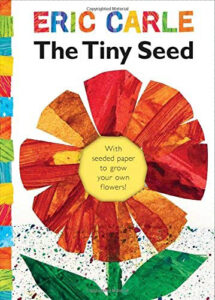
The Tiny Seed
Synopsis: Rosie has a creative mind and dreams of becoming an engineer. She collects odds and ends that other people see as “rubbish”, and every night, uses these odds and ends to construct incredible inventions while alone in her room. But because Rosie is afraid of failure, she hides her inventions away, until one day…. someone changes her life, forever.
Why this book is good: This heartfelt story will teach your child the importance of overcoming the fear of failure and discovering the incredible joy of being their truest self.
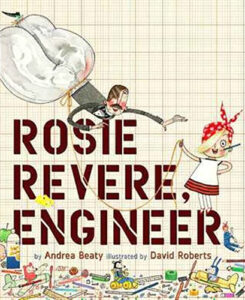
Rosie Revere, Engineer
Synopsis: Poor humpty dumpty. His biggest claim to fame is falling off a wall and not being put back together again. This fun book rewrites this famous nursey rhyme and shows a side of humpty dumpty that children haven’t seen before – his determination in getting back up again and achieving what he set out to do.
Why this book is good: Parents can use this story to teach their children about what could happen with determination and resilience. With these qualities, humpty dumpty is no longer the egg who fell off the wall, he’s the egg who back up and reached new heights!
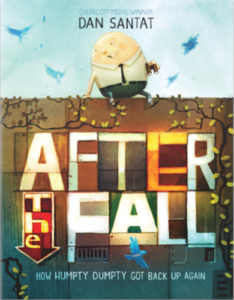
After the Fall: How Humpty Dumpty Got Back Up
Synopsis: Is your child interested in nature? If so, this book belongs at the top of their reading list. Plant the Tiny Seed follows a tiny seed through its entire life cycle as it grows into a gorgeous zinnia.
Why this book is good: The book encourages interactive play as your child is instructed to wiggle their fingers to water the seed, clap to make the sun shine, and other fun activities. In addition to learning the value of resilience, your child will also discover interesting facts about all the seeds, flowers, insects and animals that are featured in this title.
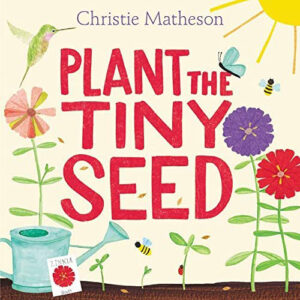
Plant the Tiny Seed
Reading books with your child is a fantastic way to nurture a close relationship with them.
At My First Skool, we believe that a strong relationship between a child and their parents, teachers and caretakers is the key to inspiring them towards growth. Children learn better from people they trust, and when they feel safe and comfortable in their learning environment.
This close-knit relationship between teacher and child is the foundation of our relationships-based curriculum (RBC), which develops children who are confident, resilient, and have an “I can do it” mentality. These positive bonds encourage children to learn, as they feel the genuine care, concern and support that they are receiving from their teachers. This is the type of supportive relationship that RBC sets out to build.
To learn more about our curriculum, speak to us or register for a live centre tour.
After staying home for two months, children will be making their way back to school in early June. While returning to school is usually an exciting experience for young children who are looking forward to seeing their schoolmates again, the prolonged period of staying at home may make this process a little more challenging than…
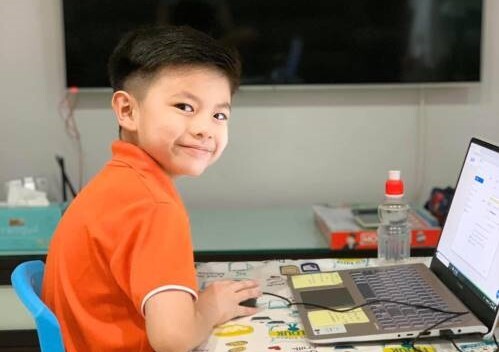
After staying home for two months, children will be making their way back to school in early June.
While returning to school is usually an exciting experience for young children who are looking forward to seeing their schoolmates again, the prolonged period of staying at home may make this process a little more challenging than usual – especially as your child may have been following different daily routines at home, with varying meal and nap times).
Don’t worry, we’re here to help with five adjustments that you can implement in the coming week to smoothly transition your child back to preschool life and habits.
My First Skool’s curriculum begins at 9am, so your child needs to reach school before that. If they’ve been sleeping late, now’s the time to send them to bed earlier, and have them wake up earlier. Their mealtimes need to be scheduled according to fit their school timetable too (which you can access from your parent portal app).
Finally, naptimes are a common feature of preschools in Singapore. At My First Skool, we value naptimes as they provide children with much-needed rest, which supports their physical and mental development. Check your child’s timetable to see when naptimes are scheduled, and encourage your child to rest or sleep during those times.
By adjusting your child’s schedule to more closely match their school’s timetable, you are helping them adapt to returning to school quickly and easily – which will greatly aid in their development.
Upon reopening, your child’s school is likely to implement new safety measures to keep children safe. At My First Skool, our staff, teachers and children will be washing their hands more frequently and masks will be worn at all times in our preschools.
Speak to your child about social distancing, and how they may not be able to play or eat with their classmates in the same way for a little while. Explain why masks are important and get them excited about using one, by getting them a mask they like, or by decorating the one they have at home with buttons or stickers. Having a unique-looking mask also prevents any potential mask mix ups from happening at school.
Social interaction is a big part of your child’s school life, and their development. To get them accustomed to the new way of interacting with friends, you can arrange virtual play dates over the coming week for them to say hi to teachers and friends.
Seeing and chatting with their friends and classmates again, can help them to not only reduce anxiety about going back to school, but also get them excited about meeting their friends again, even though they have to practice social distancing.
Normalise the subject of “school” by making it a topic of casual conversation while at home. Assure your child that everything will be good, tell them about the fun they’ll have with friends, and remind them of all the good times they’ll have at school. Reassure them that although there might be new measures, life in school will still be fun and they can continue their learning.
Take their school uniform out of the cupboard and get them used to wearing it around the home over the next week.
For younger children, like infants, show them pictures of themselves in school, interacting with their educarers and talk to them about it.
You can also get them accustomed to school by taking a virtual tour of your child’s classroom together. Guide them through the different areas, injecting fun and anticipation into your conversations.
You can also start packing your child’s school bag with them, so they get used to doing so again. While packing their water bottle, clothes, books and diapers (if needed), you can remind them of when they’ll need each of these items. For example, “We’re packing clothes so you can change after your afternoon shower, and your book is for lesson time.”
As we transition into phase one of Singapore’s safe reopening, this is the ideal time to prepare your child for a smooth return to preschool – so you (and the rest of the family) can transition to work and normalcy too.
For more resources on helping your child to cope with the current circuit breaker, visit our resources section.
As one of the top preschools in Singapore, we lead the industry in terms of health and safety practices. To ensure a safe and healthy environment for our children to return back to preschool after circuit breaker, we’ve installed commercial grade UV sanitisers to sanitise children’s toys and kitchen equipment so that you can have a peace of mind. Register your interest with us today!
What is digital literacy, and why does it matter for your child? As smartphones, tablets and other digital devices become more commonplace in our households, they’ve also become a bigger part of our everyday lives – and a huge part of your children’s lives. Understanding technology is important – as is learning how to use…
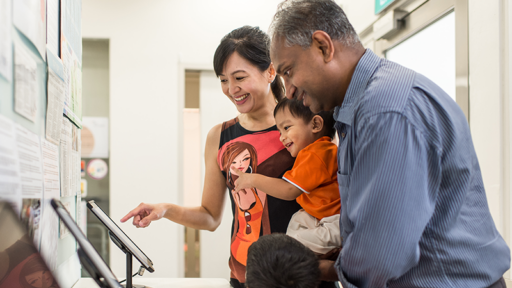
What is digital literacy, and why does it matter for your child?
As smartphones, tablets and other digital devices become more commonplace in our households, they’ve also become a bigger part of our everyday lives – and a huge part of your children’s lives. Understanding technology is important – as is learning how to use it to enable your children to learn, grow and develop.
Nurturing your children’s digital literacy skills is essential in today’s connected world. Digital literacy allows children to learn in fun and meaningful ways – and prepares them for new learning situations that could arise from the constantly evolving COVID-19 situation.
Digital literacy is the ability to understand and use technology. This means being able to locate and utilise information online in a useful way. It also includes the ability to create content for online platforms. But that’s not all. Being digitally literate also means knowing the limitations of technology – and the potential dangers it brings.
Now that we’ve covered what digital literacy is, let’s see how we can develop your children’s digital literacy. We hope that by the end of this article, you’ll have some ideas on how you can help your children nurture their digital literacy capabilities – so they will know how to search for information online, create content using digital tools, and share their content to safe online platforms.
As a parent, you can support your children by creating opportunities for them to use digital devices in meaningful ways. Let’s get started!
Does your children constantly ask you questions? Let’s channel that healthy dose of curiosity into a lesson in digital literacy.
The next time your inquisitive children ask you a question, instead of giving them the answer, encourage them to find the answer online. While there are many ways of finding answers online, a great place to start is Kiddle, which is Google’s child-friendly search engine! First, let’s make things simple for your child by making Kiddle your browser’s default starting page.
If your child is new to technology and typing, ask them to first write down their question on a piece of paper. Then, type it into the search bar. You can even create a “search engine guide” for your child, so they can learn to use Kiddle with minimal facilitation.
After searching for answers online, guide your children through a process of collating relevant information. They can use PowerPoint or Word to collate the information they find, then share their findings with their family and friends. If needed, your child can print out the information and keep it in a file. Encourage them to go beyond the first search result they see, so they can gain a broader perspective. As we mentioned a little earlier – there are many, many ways to find answers online!
This activity builds your children’s resourcefulness, while developing their cognitive and decision-making skills.
As your child is searching for information online, this is an ideal time to teach them about the dangers of the web. Similar to alerting parents when they encounter dangerous situations in real life, children should also adopt this same mindset when going online – if your child comes across content that could be dangerous or unhealthy, they should inform you about it (and not look at it or engage with it by clicking or tapping anything).
Creating content is an important part of digital literacy. This includes creating digital assets such as videos and pictures. Thankfully, with user-friendly apps, children can easily try their hand at video and photo editing – and see impressive results!
At My First Skool, this is one activity that encourages creativity in our children. Specifically, our children are given the task of telling stories by creating attractive videos – using fun and eye-catching techniques such as stop motion. Children work in a group to craft their story, prepare a storyboard and write a script. Next, they prepare materials and props. Then, they record and edit their project on video.
Projects such as these develop multiple areas of children’s skills – such as their writing and storytelling abilites, their creative skills and of course, their digital literacy.
In addition to common digital devices (like laptops, mobile phones and tablets), there are also specific educational digital devices that are highly effective at teaching your children problem solving and logical thinking skills.
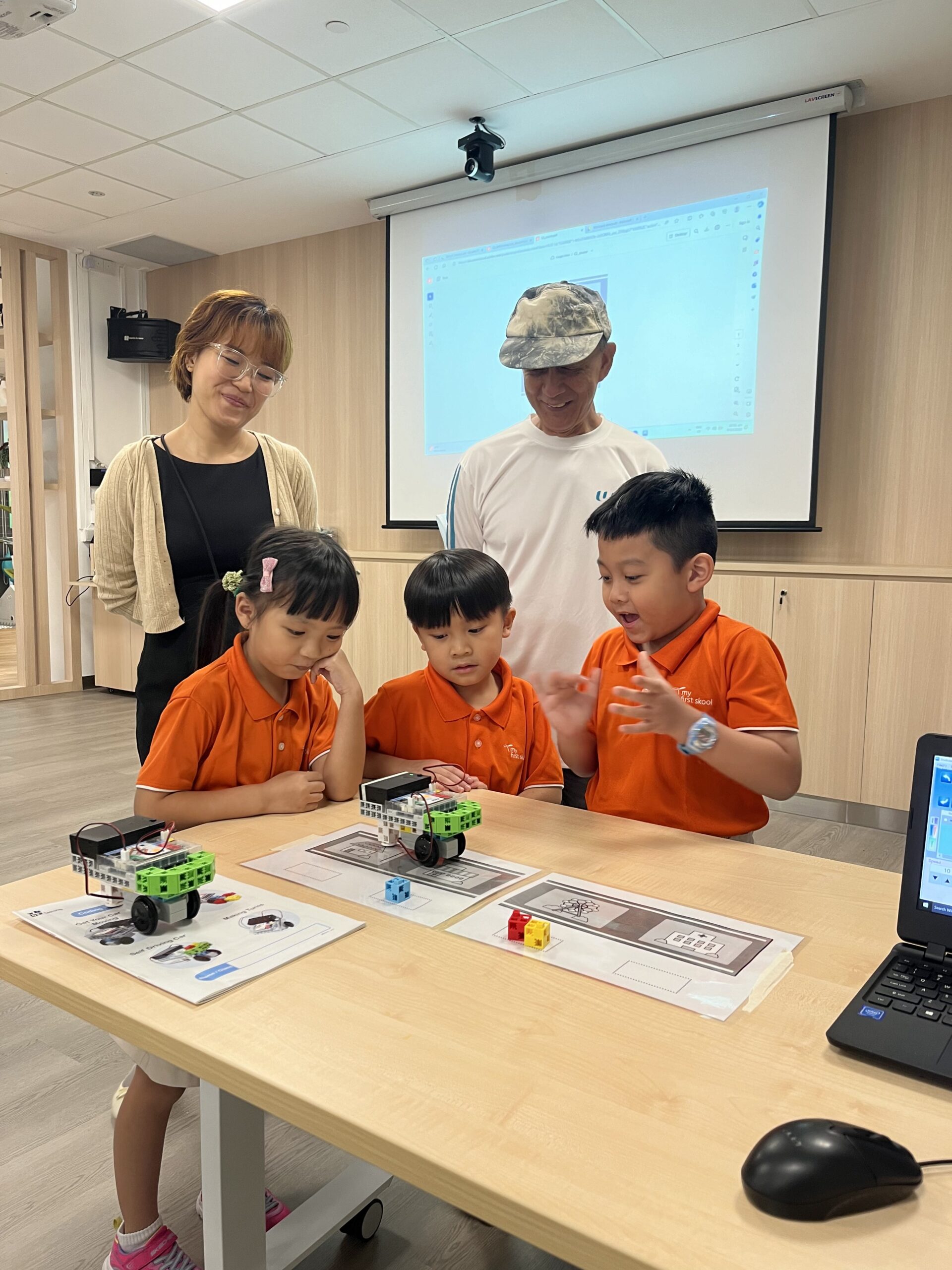
At My First Skool, children have access to these educational digital devices, which are used to teach children soft coding skills. One of these devices is the incredibly popular Bee-Bot – a robot bee that buzzes across the floor, navigates obstacle and reaches its destination, thanks to directional inputs that are planned by the children. The process of planning these directional inputs trains children to think in a logical, step-by-step manner – which is an important foundation in coding.
Activities like Bee-Bot teach children concepts such as a spatial awareness, directional sense and simple coding – while they’re having lots of fun with robots and friends!
Children at My First Skool develop holistically, thanks to our comprehensive curriculum that nurtures a variety of abilities that are essential in young children – from digital literacy to language, numeracy, discovery of the world, motor skills, aesthetics and creative expression, as well as social and emotional development.
Best of all, our high-quality curriculum and care, doesn’t equate to high fees – our fees remain affordable, as our parent company’s (NTUC First Campus) mission is give every child a head start in life, regardless of their financial standing.
Interested in enrolling your child at My First Skool? Register your child for our upcoming 2020 and 2021 intakes, or take a virtual tour of a My First Skool preschool near you.


.jpg)