May 3, 2025


Embarking on a career as a kindergarten teacher in Singapore is both a noble and fulfilling journey. By nurturing young minds during their formative years, you play a pivotal role in shaping children’s future development. This guide outlines the steps to becoming a kindergarten teacher in Singapore as of 2025, offering insights into the qualifications…
Embarking on a career as a kindergarten teacher in Singapore is both a noble and fulfilling journey. By nurturing young minds during their formative years, you play a pivotal role in shaping children’s future development.
This guide outlines the steps to becoming a kindergarten teacher in Singapore as of 2025, offering insights into the qualifications required, the certification process, and practical tips for thriving in this rewarding profession.
Kindergarten teaching in Singapore is a vital profession that plays a significant role in shaping the early childhood development of young children.
The Early Childhood Development Agency (ECDA) is responsible for regulating and overseeing the early childhood education sector in Singapore.
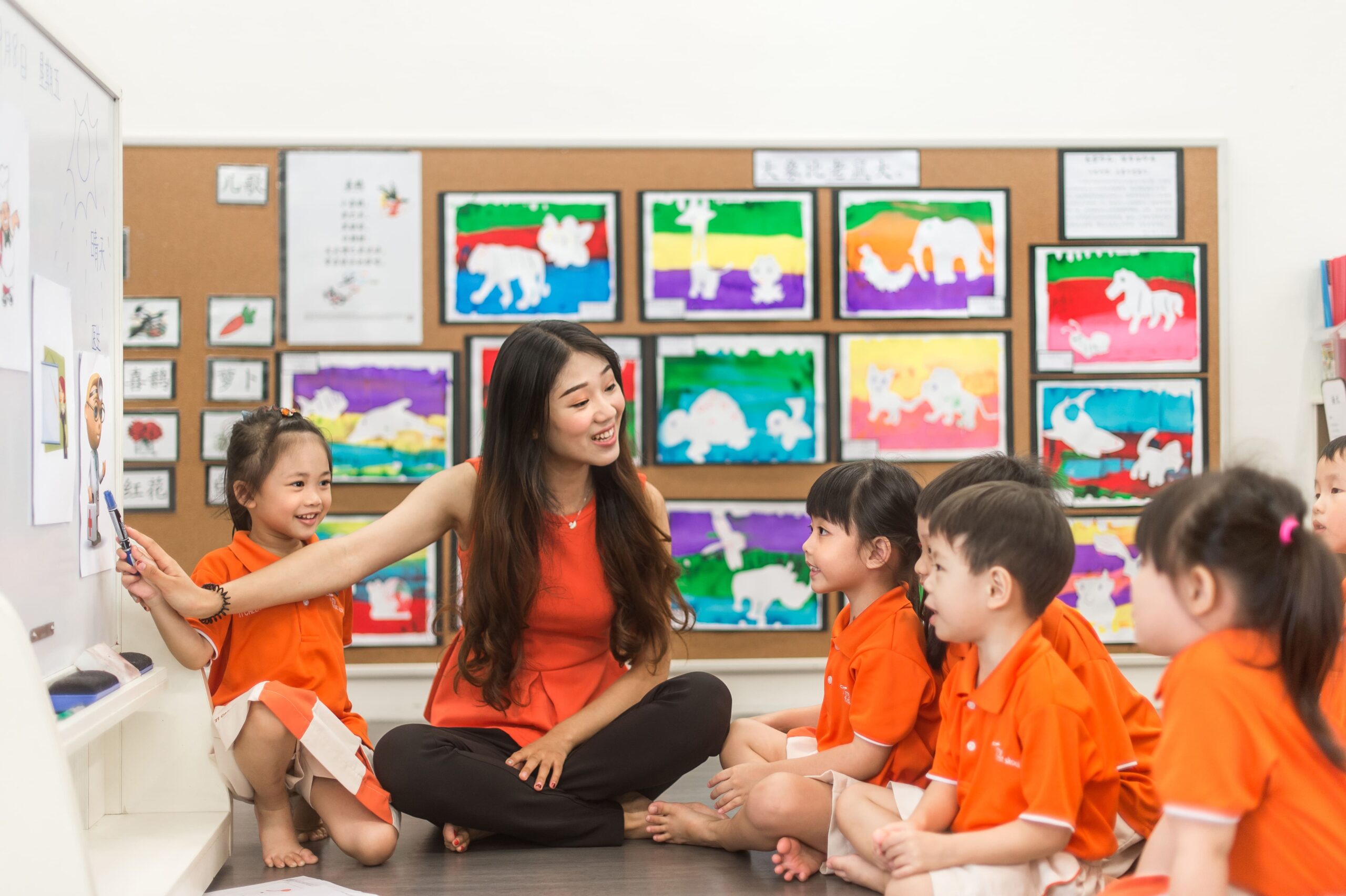
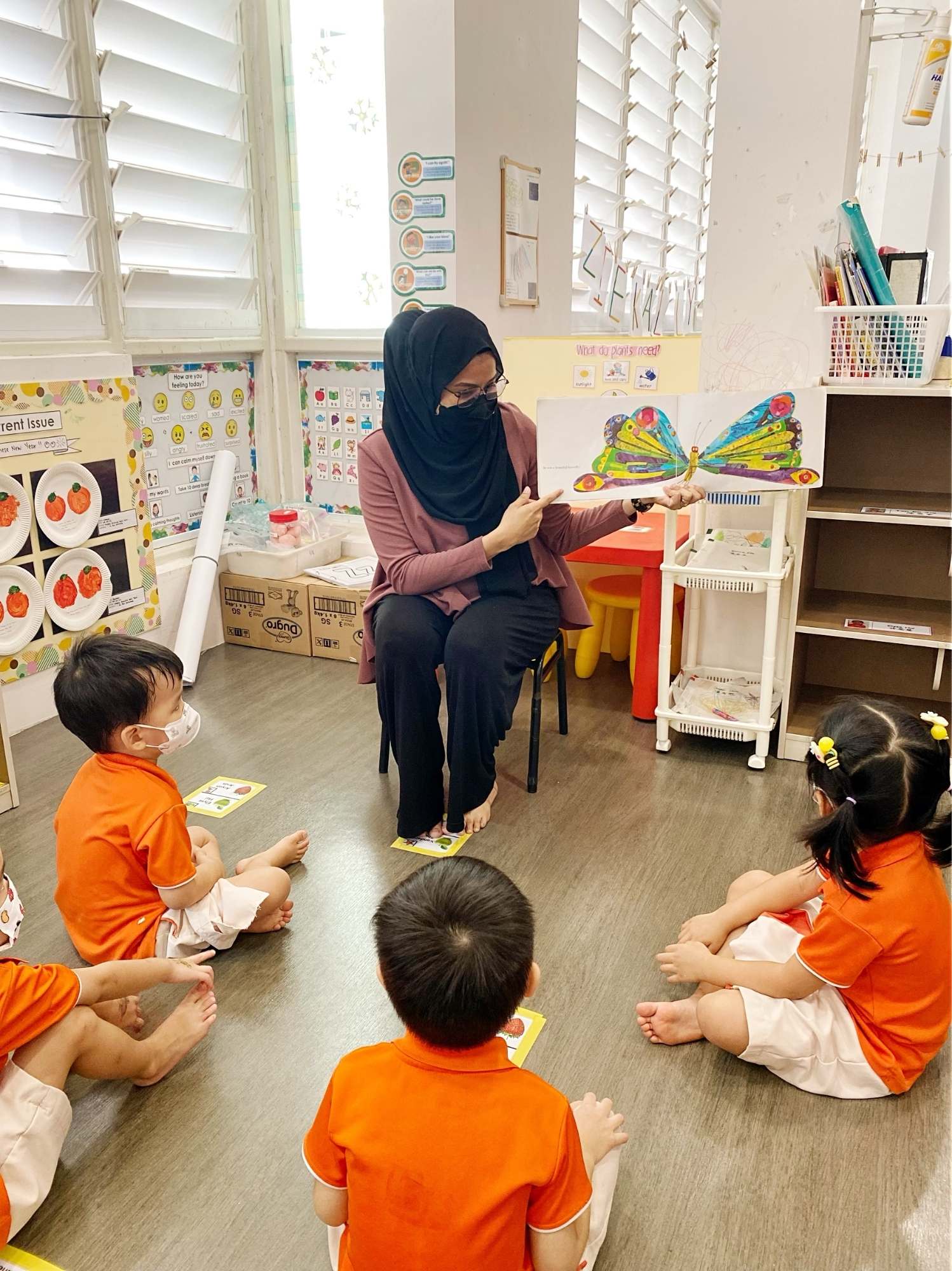
Kindergarten teachers in Singapore are trained to provide high-quality early childhood care and education to children aged 18 months to 6 years old. They are responsible for creating a nurturing environment that promotes children’s physical, emotional, and social development.
The future of early childhood education in Singapore looks promising, with the government investing heavily in the sector.
The ECDA has introduced various initiatives to improve the quality of early childhood education, including the introduction of the Singapore Pre-school Accreditation Framework (SPAF) and the Early Childhood Development Agency (ECDA) Fellowship.
These initiatives aim to raise the standards of early childhood education and provide kindergarten teachers with opportunities for professional development and career advancement.
Kindergarten teachers in Singapore cater to children aged five to six, preparing them for primary education. Aspiring educators often pursue specialised training and certifications to work effectively in early years settings.
Beyond teaching foundational subjects like literacy and numeracy, they foster social, emotional, and personal development. Their responsibilities include:
The Early Childhood Development Agency (ECDA), under the Ministry of Education (MOE) and the Ministry of Social and Family Development (MSF), regulates kindergarten teaching in Singapore.
To embark on this career, certain academic credentials are essential:
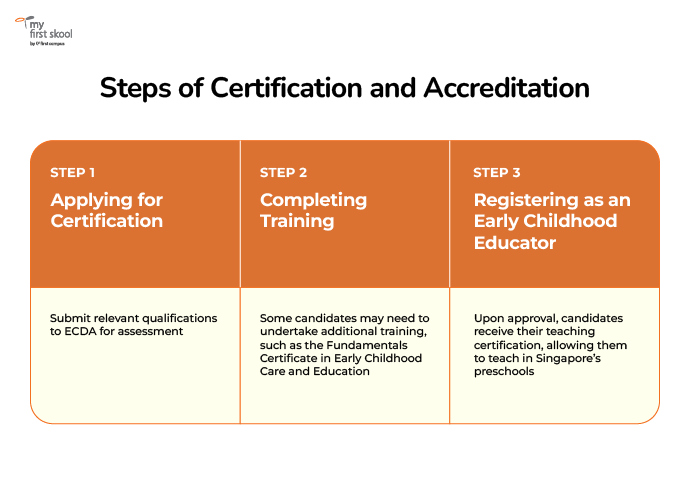
Prospective kindergarten teachers must obtain accreditation from the ECDA. The process includes:
Practical experience is invaluable for aspiring teachers. Many preschools and childcare centres offer internship opportunities that provide hands-on teaching practice. Additionally, volunteer work in early childhood settings can enhance teaching skills and provide exposure to real-world classroom environments.
Successful kindergarten teachers possess a blend of soft and technical skills, including:
Kindergarten teachers in Singapore are entitled to a competitive salary and benefits package. The salary range for kindergarten teachers varies depending on their qualifications, experience, and employer.
However, on average, kindergarten teachers in Singapore can expect to earn a monthly salary ranging from SGD 2,500 to SGD 3,700.2 In addition to their salary, kindergarten teachers are also entitled to various benefits, including:
A career in early childhood education offers various advancement opportunities, such as:
Lead curriculum development and mentor junior teachers. For example, a teacher with five years of experience might transition into this role by coaching new educators on classroom management strategies.
Managing preschools and ensuring quality education standards. An educator who has demonstrated strong leadership skills may move into this role, overseeing staff, budgets, and curriculum development.
Design educational materials and programmes for preschool education. A teacher passionate about curriculum design could work in an organisation that develops structured learning materials for preschools.
Teaching future early childhood educators in tertiary institutions. Some experienced teachers take on this role, guiding the next generation of educators through training workshops and university courses.
Teaching young children is highly rewarding but comes with challenges. Here are some common difficulties and strategies to handle them:
My First Skool is one of Singapore’s leading preschool providers, with over 160 centres island-wide, offering a nurturing and innovative learning environment that puts relationships at the heart of our kindergarten curriculum.
As a kindergarten teacher at My First Skool, you will benefit from:
If you are passionate about shaping young minds and creating a strong foundation for children’s future, consider joining My First Skool to embark on a meaningful career in early childhood education.
Kids love engaging in open-ended art activities because of the joy and spontaneity they experience during these creative pursuits. These activities are particularly beneficial for preschool-aged children as they nurture creativity, enhance fine motor skills, and encourage self-expression. Unlike structured projects, open-ended art allows preschoolers to explore materials freely without predetermined outcomes, fostering independence and…
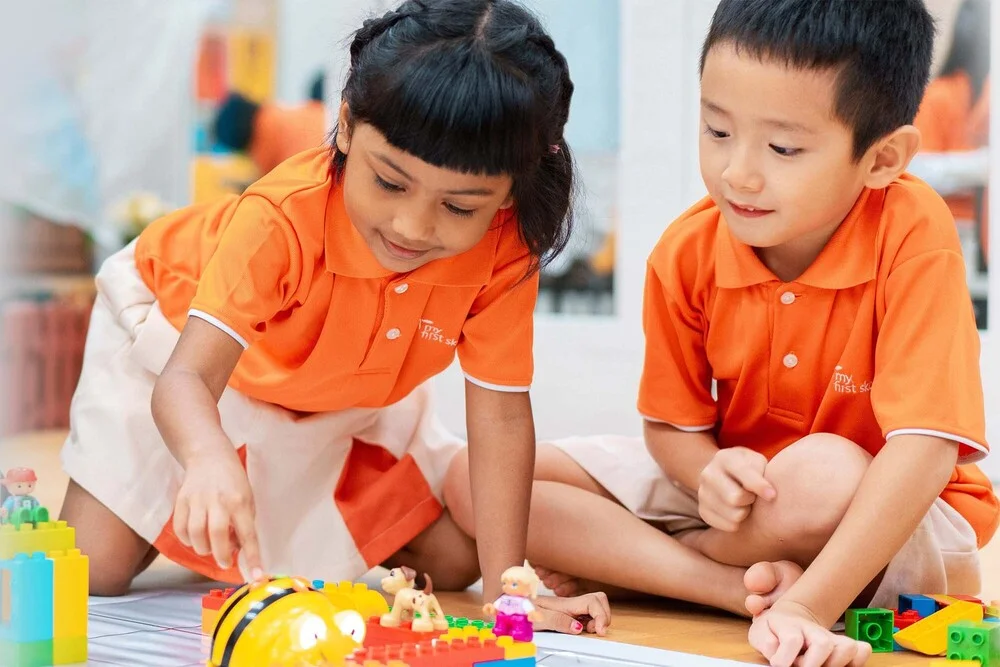
Kids love engaging in open-ended art activities because of the joy and spontaneity they experience during these creative pursuits.
These activities are particularly beneficial for preschool-aged children as they nurture creativity, enhance fine motor skills, and encourage self-expression.
Unlike structured projects, open-ended art allows preschoolers to explore materials freely without predetermined outcomes, fostering independence and confidence.
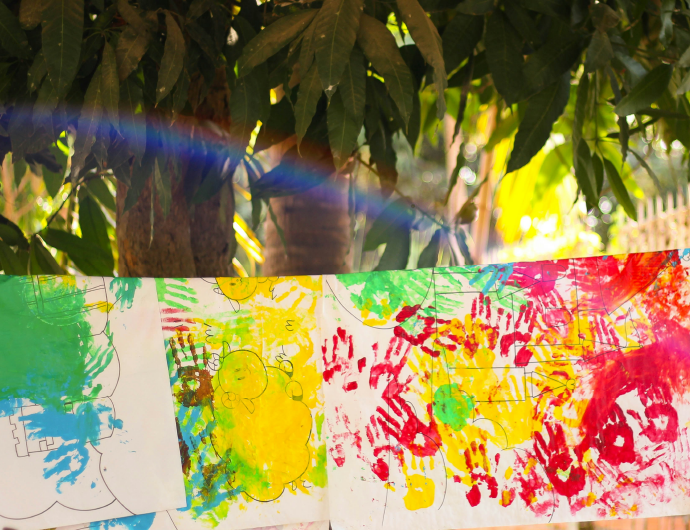
Open-ended art activities are versatile and imaginative approaches where children are given the freedom to use materials they choose without being restricted to a specific final product.
Instead of following step-by-step instructions to create a set design, children experiment with colours, textures, and shapes in ways that make sense to them.
This approach allows for deeper cognitive and emotional engagement, fostering problem-solving skills, decision-making, and personal expression.
These activities are not about achieving a perfect outcome but rather about enjoying the creative process and discovering new possibilities.
By encouraging open-ended exploration, children develop essential skills such as hand-eye coordination, spatial awareness, and the ability to think critically and imaginatively. Additionally, these activities help build confidence as children learn that there are no right or wrong ways to create art.
Each of these activities offers a range of developmental benefits for preschoolers:
Here are ten enriching open-ended art activities that you can enjoy with your preschooler in 2025:
(Age: 2–5 years | Difficulty: Easy)

Transform traditional chalk art by introducing water. Soak sidewalk chalk in water and provide black construction paper as a canvas. The wet chalk produces vibrant, smooth strokes, offering a new sensory experience and a study in contrasts. This activity encourages experimentation with colour blending and texture.
Step-by-Step:
Why It’s Beneficial: Enhances sensory experience and colour exploration.
(Age: 3–6 years | Difficulty: Medium)
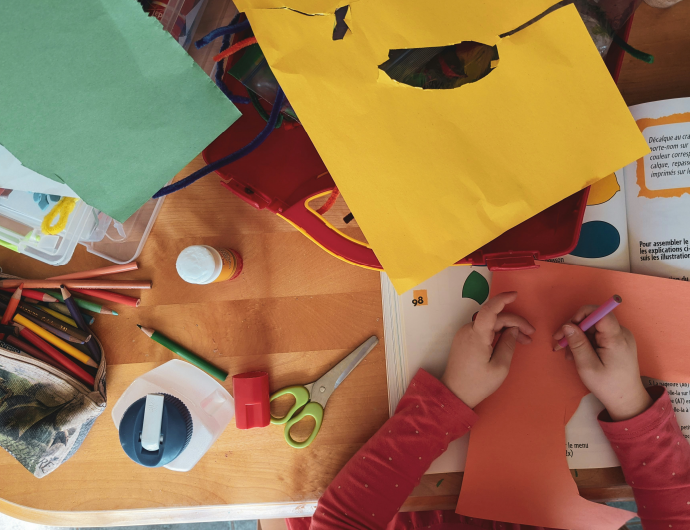
Gather an assortment of materials, such as magazine cutouts, tissue paper, fabric scraps, and natural elements like leaves or feathers. Provide your child with glue and a sturdy base, like cardboard or thick paper. Encourage them to arrange and layer the materials as they wish, resulting in a unique collage that reflects their creativity.
Step-by-Step:
Why It’s Beneficial: Develops creativity, fine motor skills, and problem-solving.
(Age: 2–5 years | Difficulty: Easy)
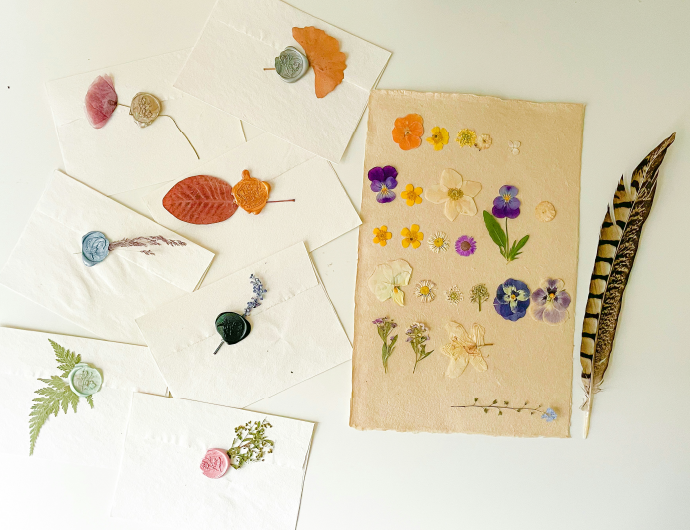
Playdough offers endless possibilities for imaginative creation. Supply various colours of playdough along with tools like rolling pins, cookie cutters, and plastic knives. Children can sculpt anything from animals to abstract forms, enhancing their fine motor skills and spatial awareness.
Step-by-Step:
Why It’s Beneficial: Enhances fine motor skills and spatial awareness.
(Age: 3–6 years | Difficulty: Medium)
Take a nature walk with your child to collect items such as leaves, flowers, sticks, and stones. Back at home, provide a large sheet of paper and some glue. Encourage your child to use natural materials to create artwork, fostering a connection with the environment and an appreciation for natural textures and shapes.
Step-by-Step:
Why It’s Beneficial: Encourages outdoor exploration and appreciation of nature.
(Age: 3–6 years | Difficulty: Medium-High)
Collect recyclable materials like cardboard boxes, plastic bottles, paper rolls, and other household items. With glue, tape, and child-safe scissors at hand, invite your child to construct models or sculptures from these “junk” materials. This activity promotes problem-solving and innovative thinking while emphasising the value of recycling.
Step-by-Step:
Why It’s Beneficial: Fosters creativity, problem-solving, and awareness of sustainability.
(Age: 2–4 years | Difficulty: Easy)
Secure a sheet of clear contact paper, sticky side up, to a table or wall. Provide various materials such as coloured tissue paper, yarn, and sequins. Children can press these items onto the sticky surface to create a collage. This activity is particularly suitable for younger preschoolers as it eliminates the need for glue and allows for easy repositioning.
Step-by-Step:
Why It’s Beneficial: It’s great for toddlers as it removes the need for glue and improves fine motor control.
(Age: 2–5 years | Difficulty: Easy)
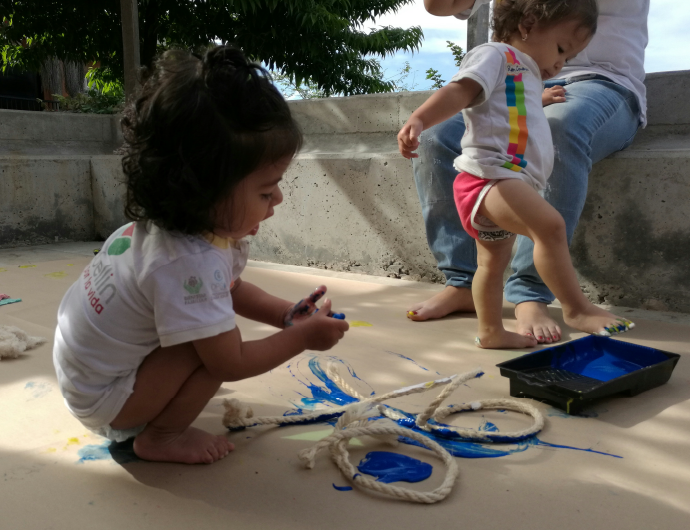
Move beyond brushes by offering items like sponges, cotton balls, feathers, or even vegetables like broccoli as painting tools. Dip these items into paint and press them onto paper to create different textures and patterns. This exploration enhances sensory experiences and broadens understanding of artistic techniques.
Step-by-Step:
Why It’s Beneficial: Enhances sensory exploration and creative thinking.
(Age: 3–6 years | Difficulty: Medium)
Draw simple, incomplete shapes or lines on a piece of paper and invite your child to complete the picture. For instance, a squiggly line might become part of a dragon, or a circle could turn into a sun. This activity stimulates imagination and encourages storytelling through art.
Step-by-Step:
Why It’s Beneficial: Boosts creativity, storytelling, and cognitive thinking.
(Age: 3–6 years | Difficulty: Medium)

Colour uncooked pasta by shaking it in a bag with a few drops of food colouring and a splash of vinegar, then let it dry. Provide the colourful pasta along with string for your child to thread and create necklaces or bracelets. This enhances fine motor skills and allows for pattern recognition practice.
Step-by-Step:
Why It’s Beneficial: Develops fine motor skills and pattern recognition.
(Age: 2–4 years | Difficulty: Easy)
Utilise art supplies designed for toddlers that offer sensory experiences without the mess. Activities like using easy-grip crayons or washable markers can make the art-making process both fun and stress-free for parents and children alike.
Step-by-Step:
Why It’s Beneficial: Supports early creativity and motor skill development.
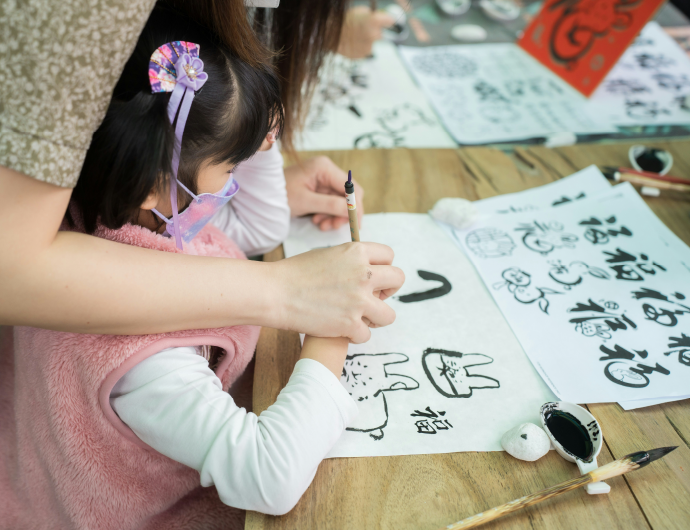
Art teachers play a crucial role in nurturing creativity and self-expression in young children.
Here are some practical tips to help you create a stimulating and supportive art environment:
By implementing these tips, art teachers can create a vibrant and nurturing environment that encourages young children to explore their creativity and develop essential skills through open-ended art activities.
At My First Skool, we believe in fostering a child’s creativity through hands-on, open-ended learning experiences. These activities are beneficial for preschool-aged children as they encourage creativity, fine motor skill development, and self-expression.
Our art-based activities are designed to encourage exploration, self-expression, and confidence in young learners. By providing a nurturing and stimulating environment, we help children build essential developmental skills while celebrating their unique artistic expressions.
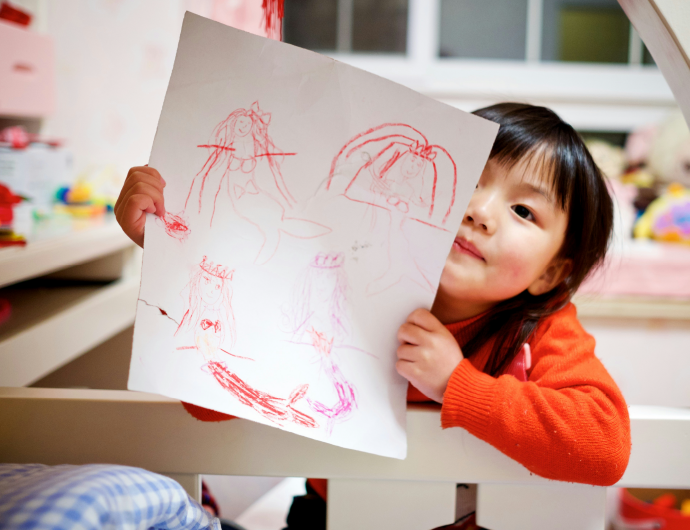
Our carefully curated preschool curriculum integrates creative play with early education principles, ensuring that every child thrives in a supportive and inspiring space.
Whether at home or in a preschool setting, open-ended art activities play a vital role in a child’s early years. By embracing creativity, children develop important cognitive and social skills that lay the foundation for lifelong learning and success.
Every year, over 26,000 families all across Singapore see their children benefit from our relationship-based curriculum – one that emphasizes forging strong bonds between children, teachers and parents.
Find a centre near you or take a virtual tour to explore our learning environments and learn how your child can thrive.
At six months, your baby is growing more curious and interactive, reaching exciting developmental milestones. They are beginning to recognise familiar faces, experiment with sounds, and explore their surroundings through touch and movement. Many are also mastering sitting up and showing early signs of crawling. Engaging in age-appropriate activities not only supports their cognitive, motor,…
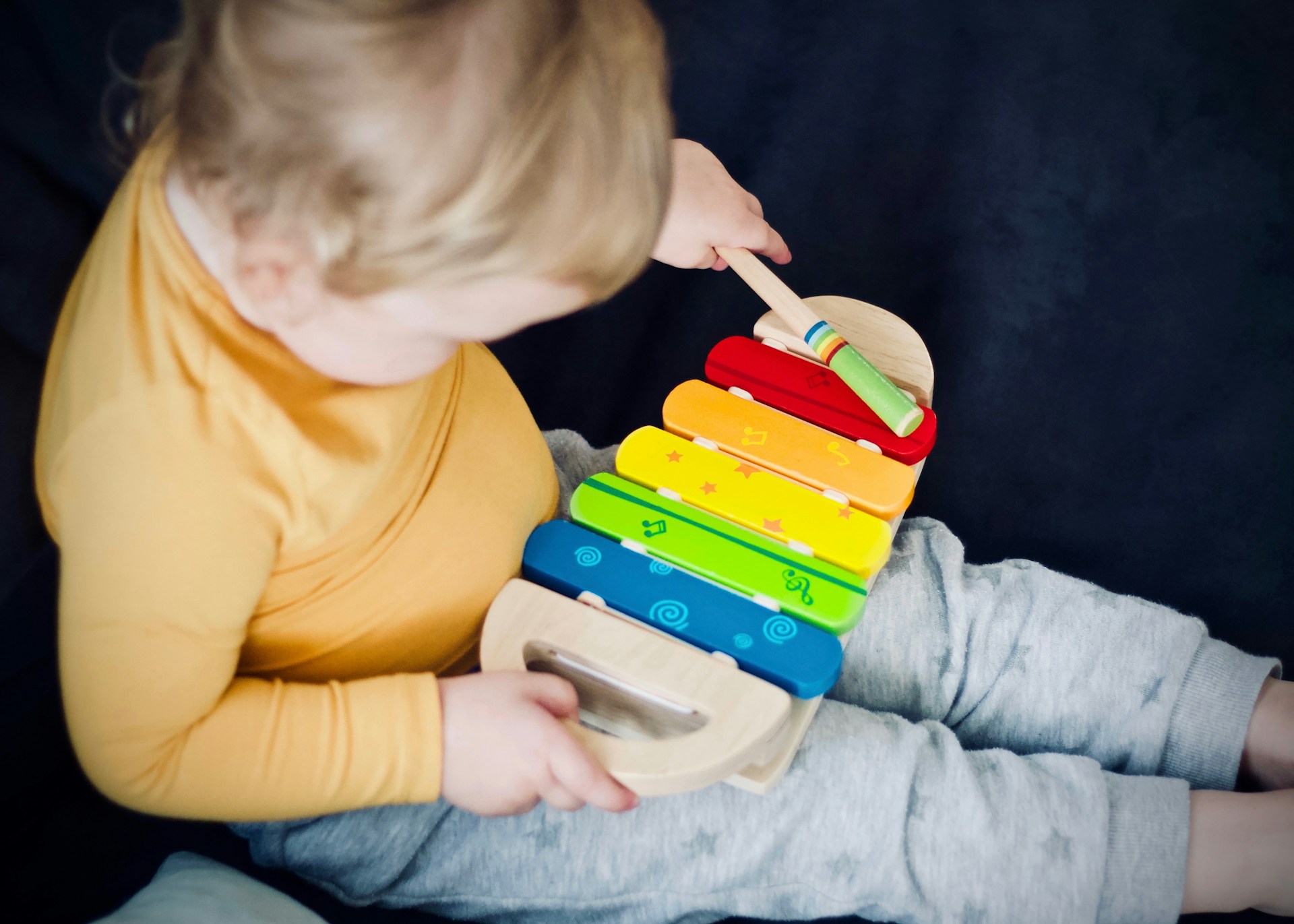
At six months, your baby is growing more curious and interactive, reaching exciting developmental milestones. They are beginning to recognise familiar faces, experiment with sounds, and explore their surroundings through touch and movement. Many are also mastering sitting up and showing early signs of crawling.

Engaging in age-appropriate activities not only supports their cognitive, motor, and social development but also strengthens your bond as a parent. Age-appropriate toys play a crucial role in providing safe and stimulating environments for young children, ensuring they can engage in healthy play and exploration.
Thankfully, Singapore offers a wealth of baby-friendly experiences designed to nurture your little one’s growth while keeping playtime fun and meaningful!
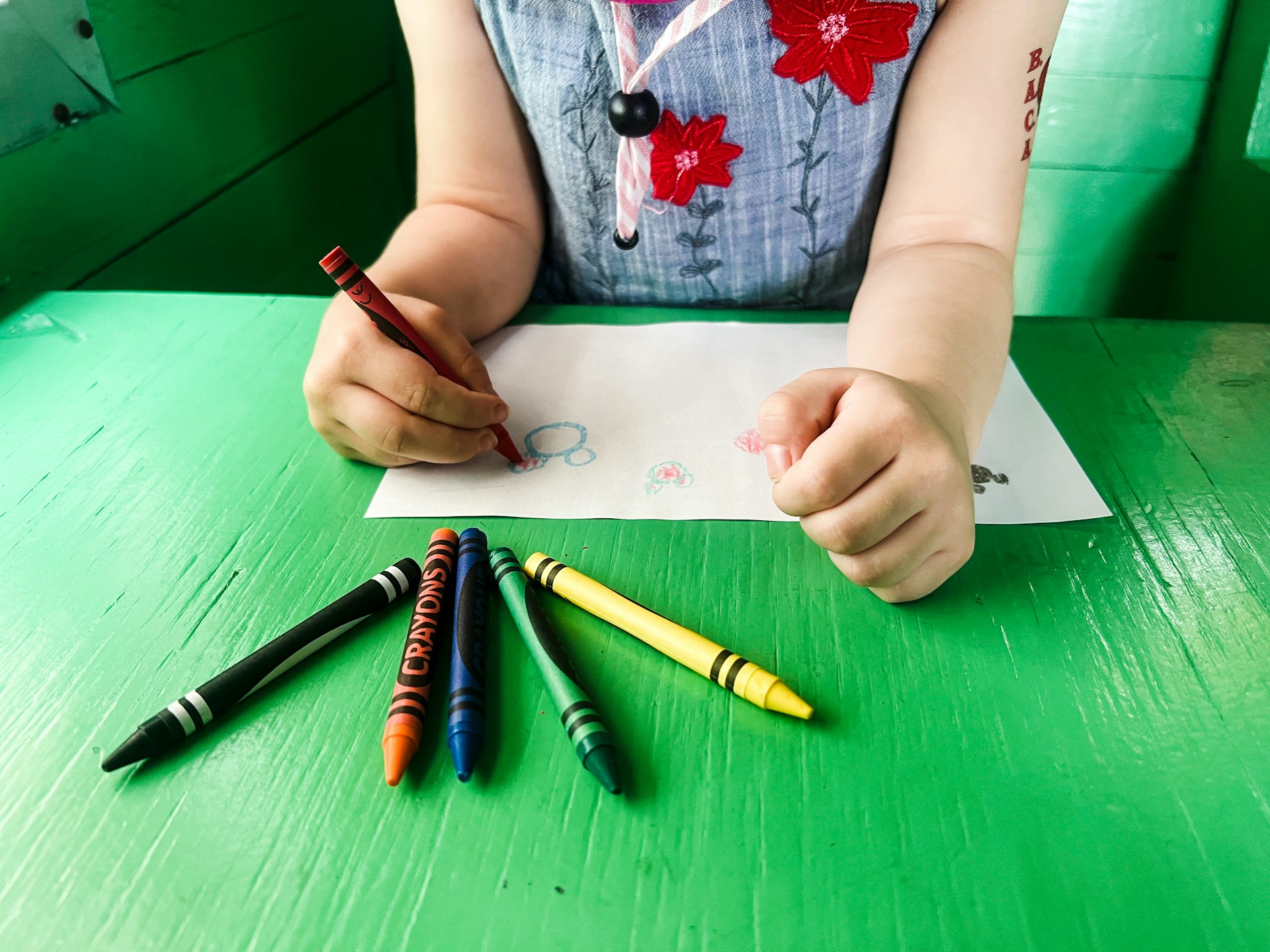
Introducing your baby to art exploration classes can enhance sensory development, fine motor skills, and creativity. In Singapore, several establishments offer art programs tailored for young children. Here is one notable option:
Engaging your baby in these art classes can lay the foundation for lifelong creativity and artistic appreciation. Additionally, art exploration can contribute to early literacy skills through storytelling and visual learning. It’s advisable to contact the providers directly for current information on class schedules, age suitability, and availability.
Engaging your baby in structured gym sessions can enhance their motor skills, coordination, and social development. Several establishments offer specialised programs for infants and toddlers:
These gyms serve as a main play space designed for babies and toddlers, featuring age-appropriate toys and activities to foster exploration and skill development.
Participating in these sessions provides a supportive environment for your child’s physical exploration and development. Contact the providers directly for current class schedules and availability.
Engaging your 6-month-old in music and movement classes can significantly enhance their cognitive and motor development while strengthening your parent-child bond. In Singapore, several programmes cater to this age group:
These music and movement sessions are often part of baby playgroups, which provide opportunities for social interaction and development.
Participating in these classes introduces your baby to rhythmic sounds and gentle movements, fostering auditory and motor skills in a fun, supportive environment.
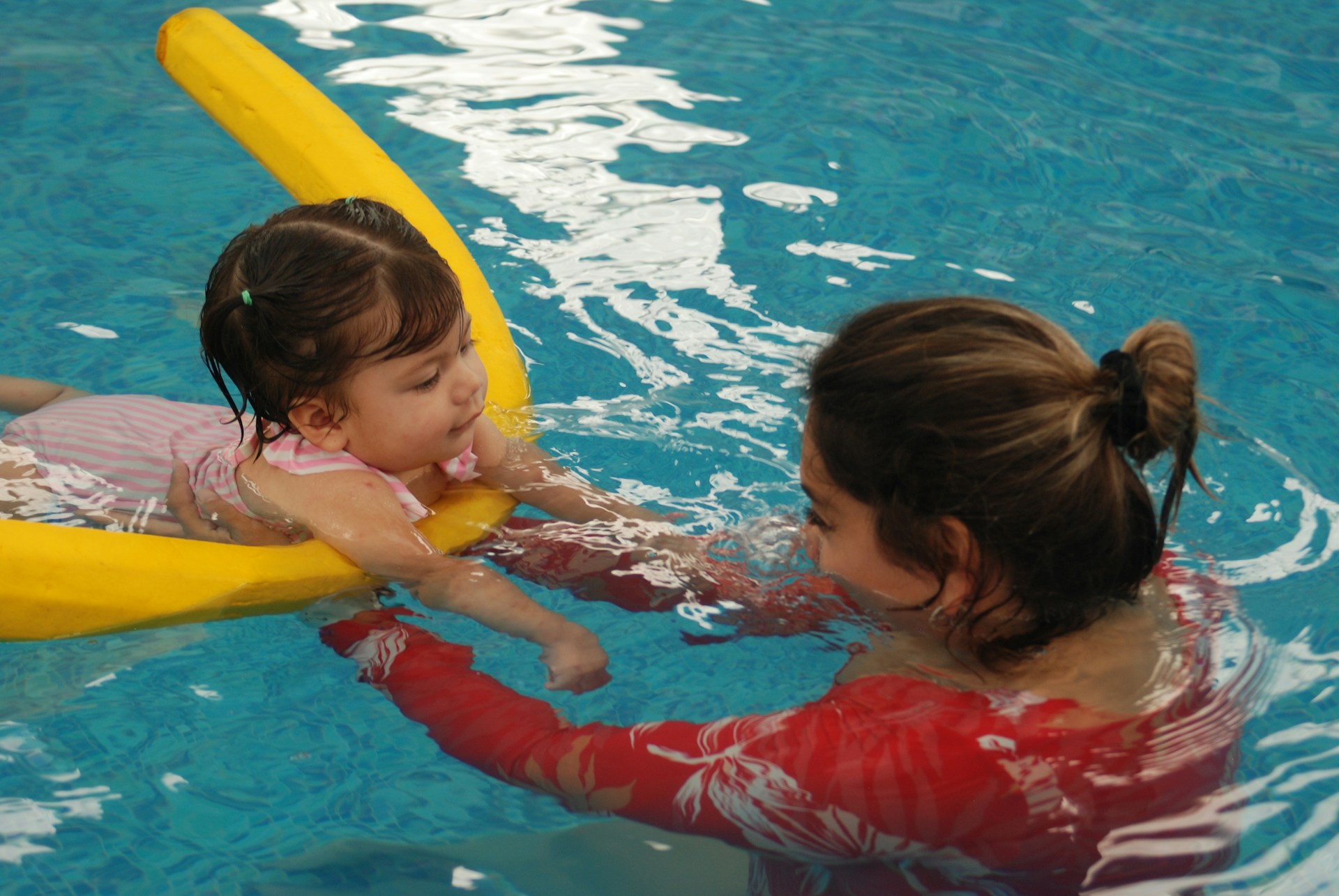
Introducing your 6-month-old to water through infant swimming classes can enhance physical coordination, build muscle strength, and increase water familiarity, all while providing a fun bonding experience. In Singapore, several swim schools offer programmes tailored for infants:
Participating in these programs can help your baby develop essential water safety skills and foster a lifelong love for swimming. These swimming lessons are part of a broader range of toddler classes available in Singapore, offering various enjoyable and beneficial activities for young children.
Engaging in yoga baby classes offers a harmonious blend of gentle movements and bonding time, benefiting both infants and parents. These sessions can enhance your baby’s flexibility, aid digestion, and promote relaxation while also supporting postpartum recovery for mothers. Baby yoga classes often incorporate tummy time to strengthen muscles and aid in physical development. In Singapore, several establishments provide tailored baby yoga classes. Here are three notable options:
Participating in these classes can provide a nurturing environment for both you and your baby, fostering physical well-being and strengthening your bond. It’s advisable to contact the providers directly for the most current information on class schedules and availability.
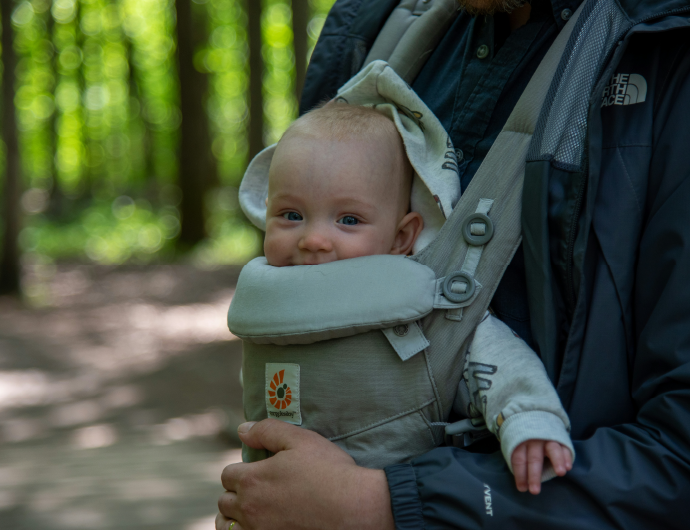
Taking your 6-month-old on nature walks in Singapore’s parks offers numerous benefits, including sensory stimulation from diverse sights and sounds, soothing effects of gentle movement, and opportunities for parent-child bonding. These parks are within walking distance and easily accessible for families with strollers. Here are three pram-friendly parks ideal for strolls with your baby:
Before embarking on your walk, ensure your baby is comfortably secured in a stroller, apply sunscreen, and bring along essentials like water and snacks. These nature walks not only promote your baby’s development but also offer a refreshing outdoor experience for you both.
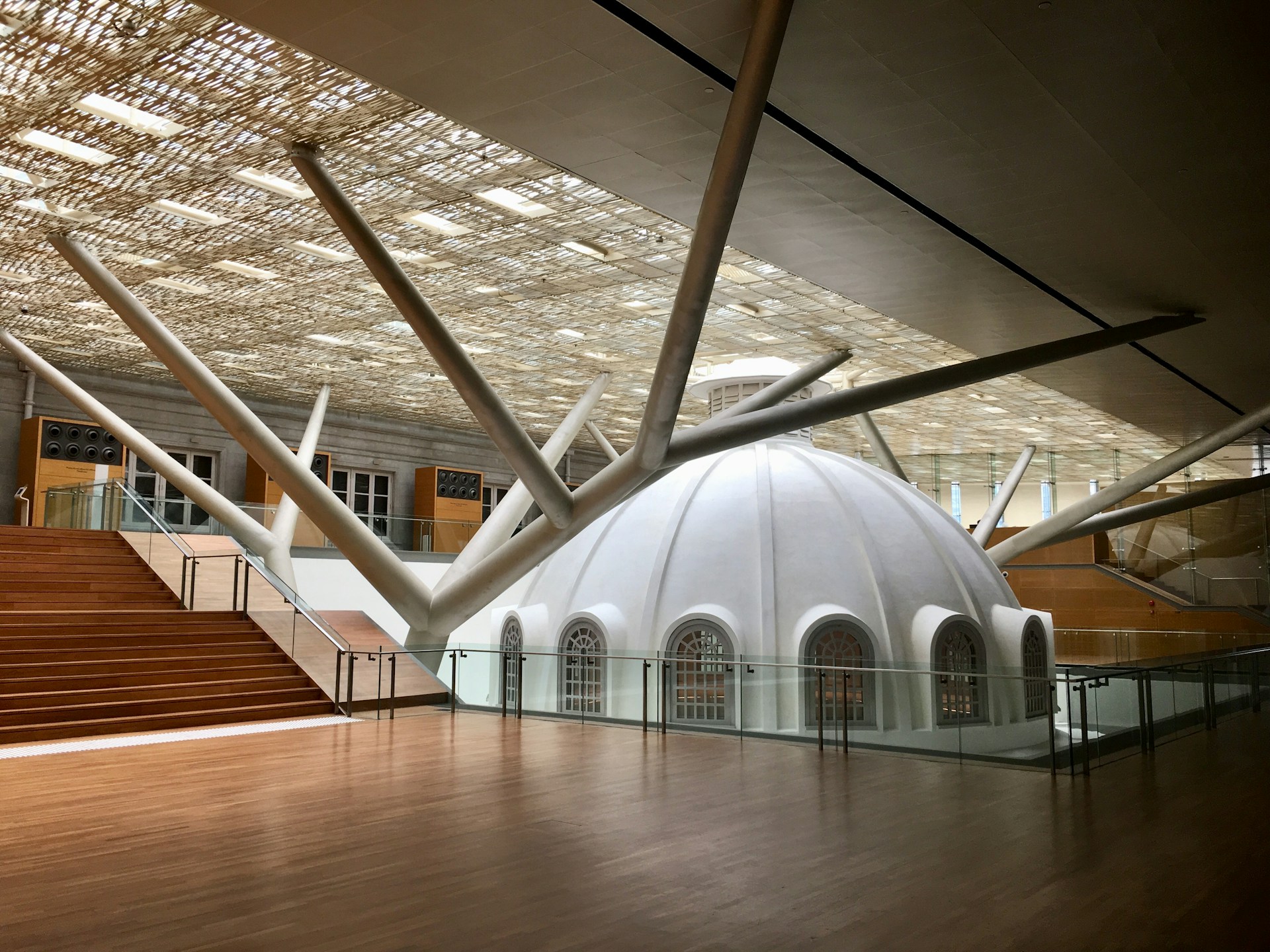
Introducing your baby or toddler to museums and exhibitions in Singapore can be both fun and educational. Many museums offer interactive exhibits and play areas tailored for young children, complete with baby-friendly facilities like nursing rooms and changing areas. Here are some notable options:
These cultural outings provide rich sensory experiences, fostering early appreciation for art and history in a child-friendly environment.
As a trusted infant care in Singapore, we understand the importance of early childhood development and the role that engaging activities play in nurturing young minds.
Our infant care curriculum is designed to provide a stimulating and nurturing environment where babies can explore, learn, and grow under the guidance of our dedicated educators.
By incorporating a variety of sensory, motor, and cognitive activities into our curriculum, we ensure that each child receives a holistic foundation for lifelong learning.
Discover how My First Skool can be a part of your child’s developmental journey by visiting our website.
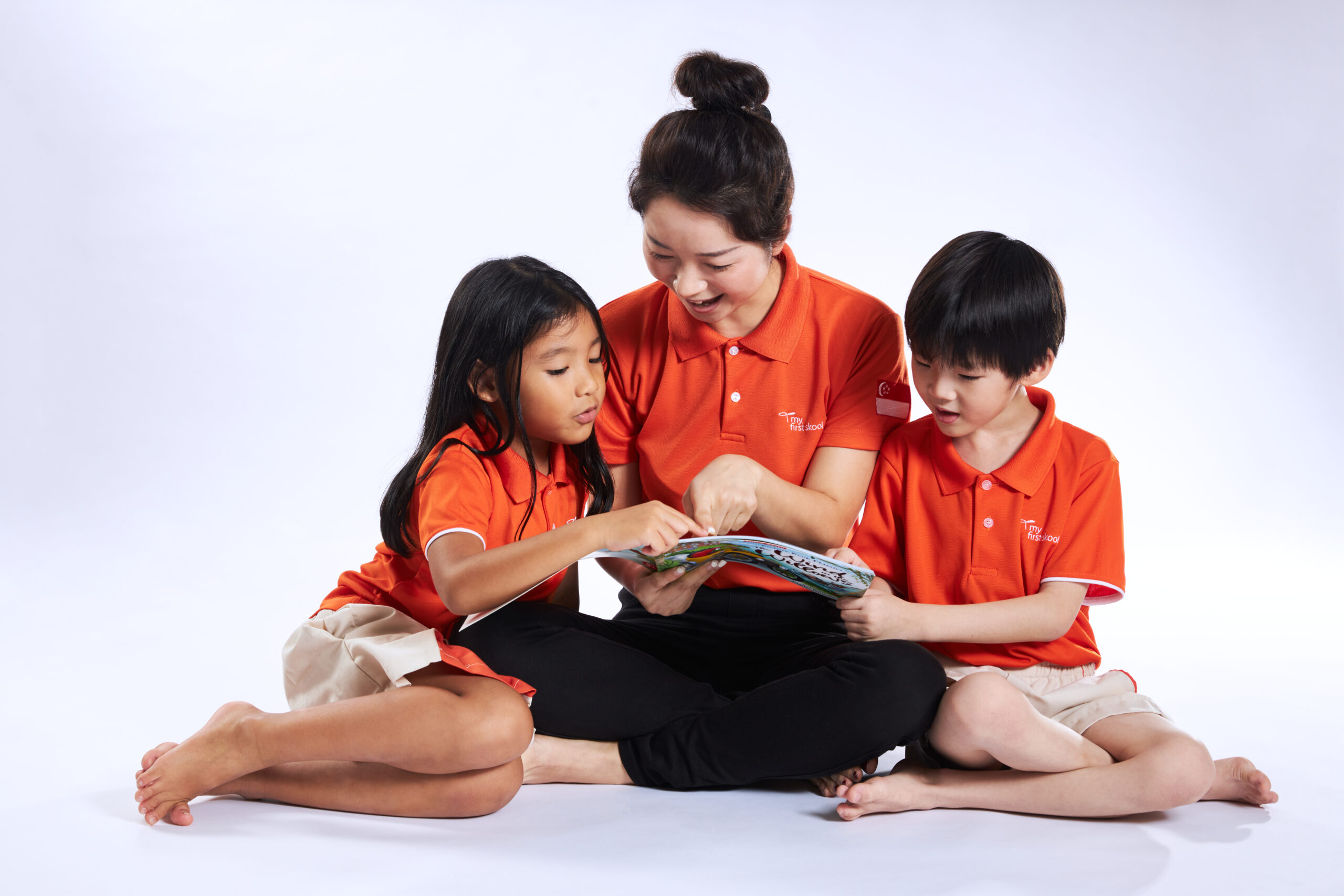
Every year, over 26,000 families all across Singapore see their children benefit from our relationships-based curriculum – one that emphasises forging strong bonds between children, teachers and parents.
Find a centre near you or take a virtual tour to explore our learning environments and learn how your child can thrive.
When selecting a preschool in Singapore, how do parents determine the “right” childcare centre? While each family may make different decisions when selecting a preschool, one of the primary factors parents consider is whether it has a SPARK-certification. This endorsement is synonymous with quality standards and distinguishes various childcare centres in Singapore. What is the…
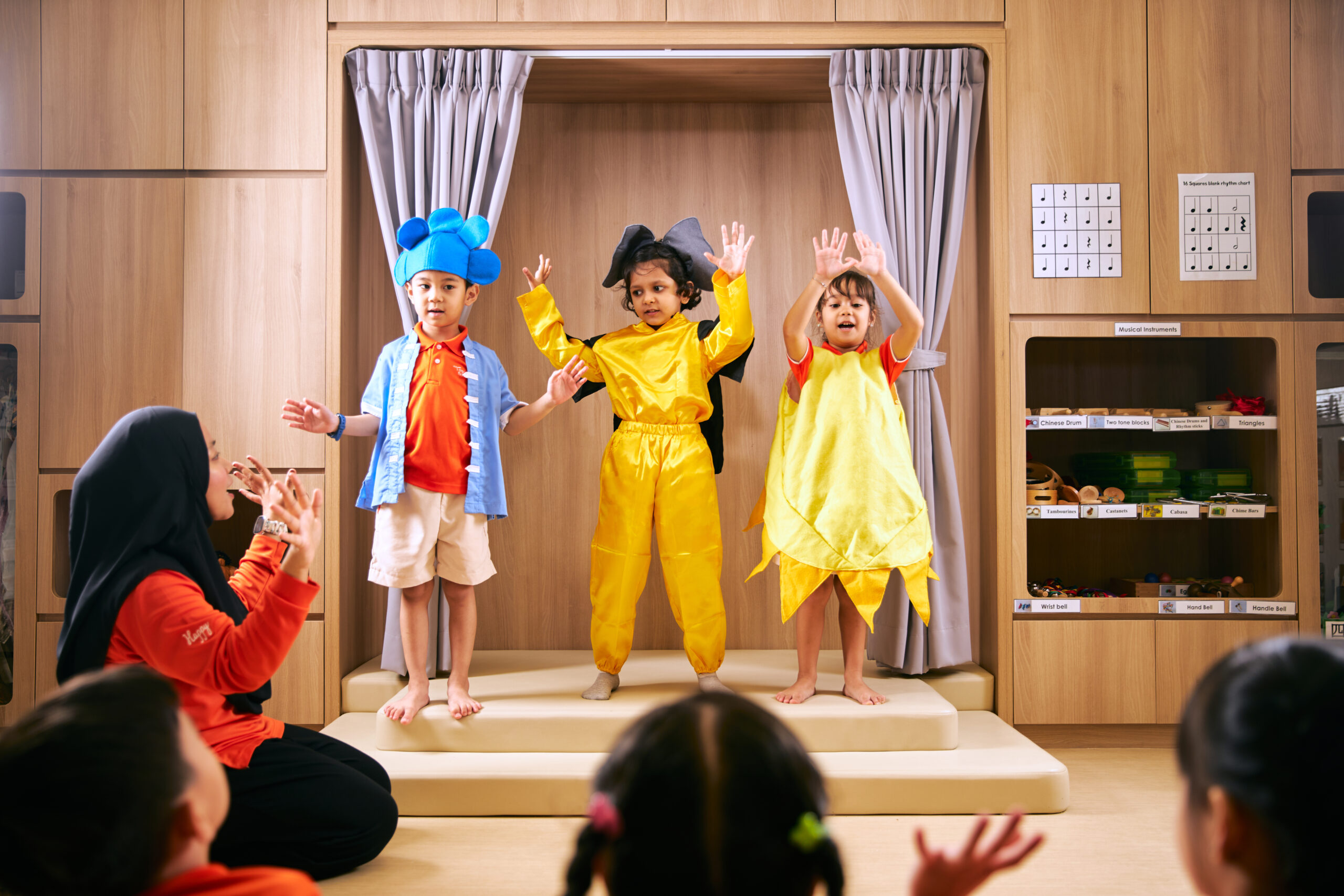
When selecting a preschool in Singapore, how do parents determine the “right” childcare centre?
While each family may make different decisions when selecting a preschool, one of the primary factors parents consider is whether it has a SPARK-certification. This endorsement is synonymous with quality standards and distinguishes various childcare centres in Singapore.
Introduced by the Ministry of Education (MOE) in 2010, SPARK is a quality assurance framework to enhance local preschools’ standards. It provides recognition and support for preschool leaders in their efforts to improve teaching and learning, as well as administration and management processes, to enhance the holistic development and well-being of young children.
You may have noticed ‘SPARK-certified preschool’ banners at some kindergartens and childcare centres in Singapore, including from some of My First Skool’s branches.
To obtain SPARK certification, preschools voluntarily undergo a comprehensive assessment to evaluate various parameters, including:
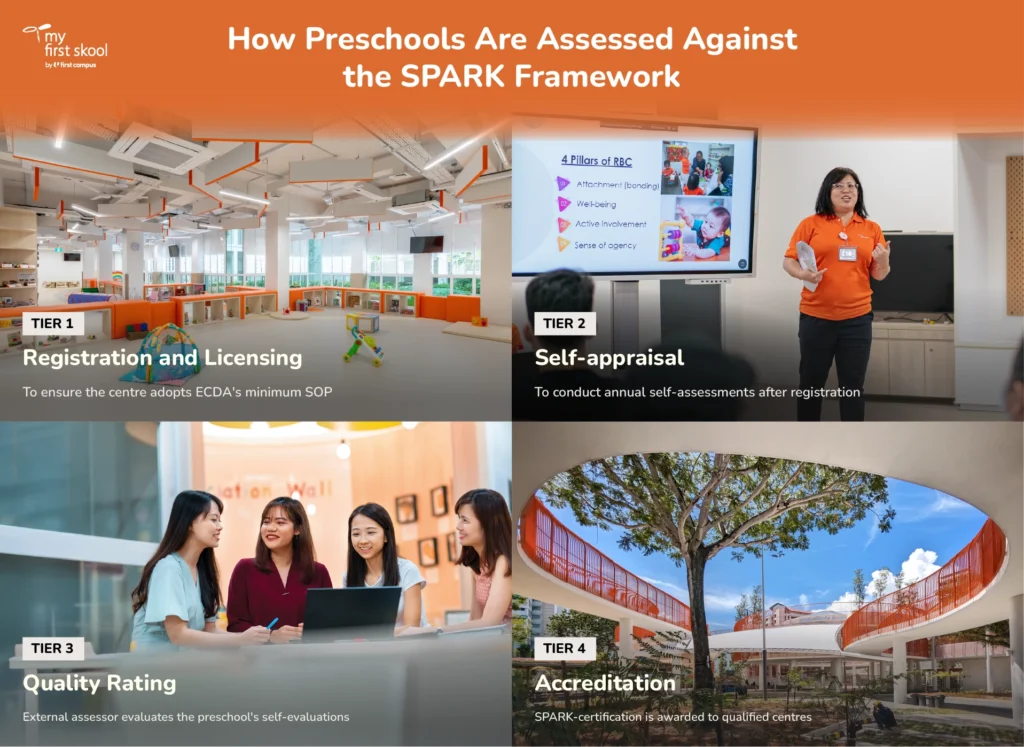
The first tier is a mandatory regulatory effort to ensure that the centre has adopted a minimum standard of operation (SOP) as outlined by the Early Childhood Development Agency (ECDA).
From the second tier onwards, the process is completed voluntarily. At this stage, the preschool team is required to conduct annual self-assessments after registration is completed and accepted.
In the third tier, the preschool’s self-evaluations are validated and assessed by an external assessor.
Reviewed across various criteria, the results are shared with the school. Only those centres that meet the required quality standards are awarded the ‘SPARK-certified’ accreditation as a testament to the excellence they uphold.
100% of My First Skool’s eligible centres are SPARK certified, an assurance of quality by ECDA.
What distinguishes a SPARK-certified childcare in Singapore from one that has received the SPARK Certification (Commendation)?
Preschools undergo the same assessment process for both certifications, but SPARK Certification (Commendation) is awarded to preschools that demonstrate a higher quality in teaching and learning practices compared to those that receive SPARK Certification.
Parents can rest assured that SPARK-certified preschools, such as My First Skool, offer a well-developed preschool curriculum that integrates strong teaching pedagogy and a conducive environment to support learning.
After striving to maintain stringent standards, these schools are motivated to sustain their certification or commendation over the years. This heightened commitment from the accredited centres means that the teams must ensure their centres continuously uphold that distinction. In turn, this provides parents with further confidence that their children are in good hands.
Further along in 2025, to further enhance the quality of early childhood education, the Early Childhood Development Agency (ECDA) will introduce SPARK 2.0. This updated framework aims to foster a culture of ownership and accountability among preschools, encouraging them to take charge of their quality journey through reflective practices and continuous improvement.
SPARK 2.0 is built upon three key tenets:
By focusing on these tenets and changes, SPARK 2.0 aims to elevate the overall quality of the early childhood sector, ensuring a strong foundation for our youngest learners.
As of 2025, 100% of My First Skool’s centres are SPARK-certified, with 29 centres receiving the prestigious SPARK-certified (Commendation) award. Visit our nearest branch for a tour or visit our website to learn about our programmes and curriculum.
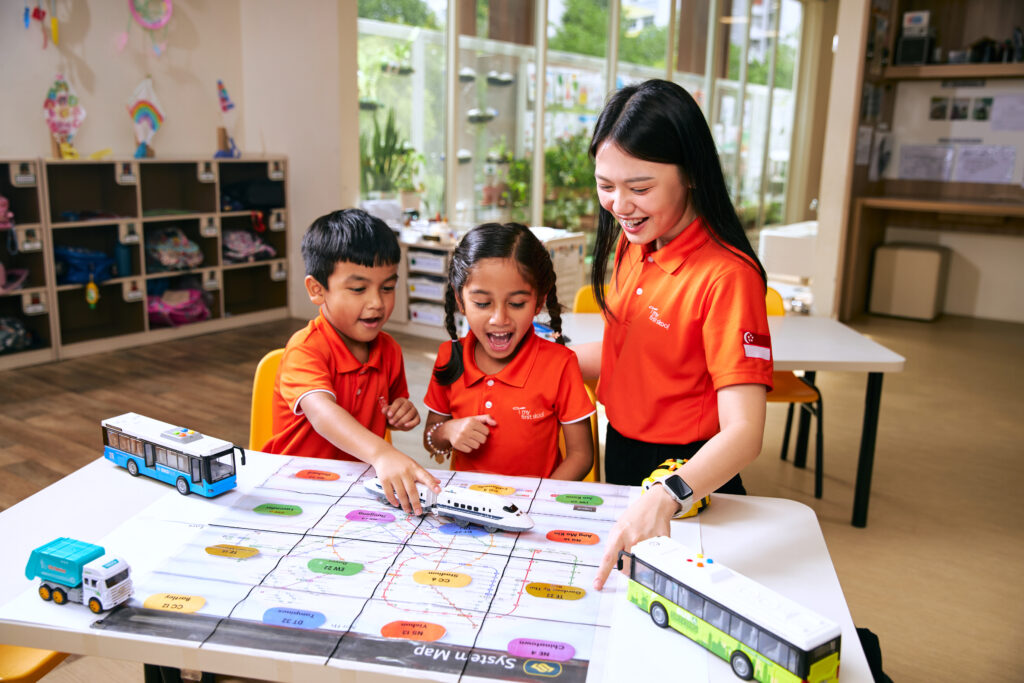
At My First Skool, we believe every child deserves a strong start. As one of the most trusted providers of childcare, preschool, kindergarten, and infant care in Singapore, we offer a nurturing environment where little ones can grow, learn, and thrive. With experienced educators and a proven curriculum, we’re here to support your child’s journey—every step of the way. Registration only takes 5 minutes.
SPARK is a quality assurance framework by ECDA that recognizes preschools for excellence in teaching, learning, and school management.
Many of our centres are SPARK-certified, and we continue to work towards full certification across all centres.
SPARK-certified centres provide a strong, holistic learning environment that supports your child’s growth and development.
SPARK certification is valid for six years, with regular reviews to maintain high standards.
Our teachers are trained to deliver high-quality education, ensuring we meet and exceed SPARK standards.
Explaining preschool in Singapore The term “preschool” in Singapore encompasses institutions offering both childcare services and educational programmes. Preschools are categorised into childcare centres and kindergartens for children under the age of 7. The Early Childhood Development Agency (ECDA) serves as the regulatory and developmental authority for the early childhood sector in Singapore. The agency…
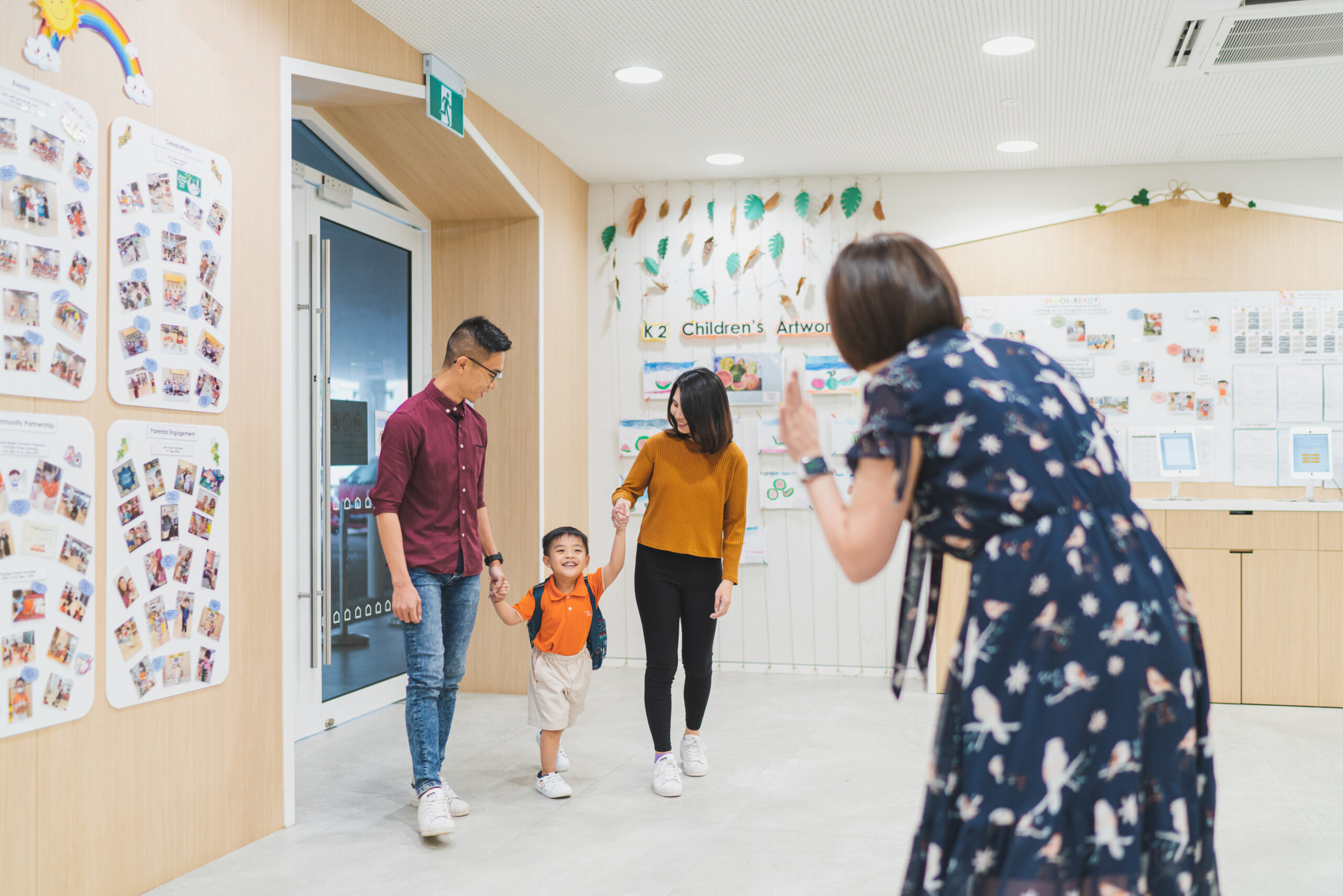
The term “preschool” in Singapore encompasses institutions offering both childcare services and educational programmes. Preschools are categorised into childcare centres and kindergartens for children under the age of 7.
The Early Childhood Development Agency (ECDA) serves as the regulatory and developmental authority for the early childhood sector in Singapore. The agency oversees several key areas, including setting standards for early childhood programmes, training and developing early childhood educators, and ensuring quality preschool programmes are affordable for all families.
In line with the Early Years Development Framework, preschool programmes have been updated to focus more on child-centred learning, emphasising holistic development and positive outcomes for children in their early years.
Key developmental areas include:
To find the best preschool in Singapore, you should determine the factors important to you and assess them against your family’s needs.
Childcare centres in Singapore provide comprehensive care and educational experiences for children aged 18 months to 6 years. Some centres also offer infant care for babies aged 2 to 17 months.
These programmes generally operate from 7 am to 7 pm to accommodate working parents, and they can include meals, enrichment activities, and nap times. Half-day options, typically running from 7 am to 1 pm, are also available for families needing shorter hours. Children in half-day programmes are usually picked up before nap time.
Childcare centres typically provide two main meals—breakfast and lunch. Morning and afternoon snacks might also be available; it’s advisable to verify this with any childcare centre you’re considering.
Apart from Sundays and public holidays, childcare centres close for six days annually for staff development, lesson planning, and selected public holidays. There is no designated school holiday period for children in childcare programmes, as these centres are structured to meet the needs of working parents.
Kindergarten in Singapore typically design their programmes for children aged 3 to 6 years and are typically more academically focused. Sessions last 3 to 4 hours daily, with comprehensive lessons to cover within a shorter timeframe.
Due to the shorter duration, kindergartens do not provide meals, although some schools may offer snacks. It’s advisable to check with the school regarding their meal arrangements and whether you need to pack a snack box for your children.
Kindergartens follow the Ministry of Education’s primary school holiday schedule, which includes breaks in March, June, September, and November/December. This schedule might be challenging for working parents who cannot take time off during school holidays, making kindergartens less suitable for some families.
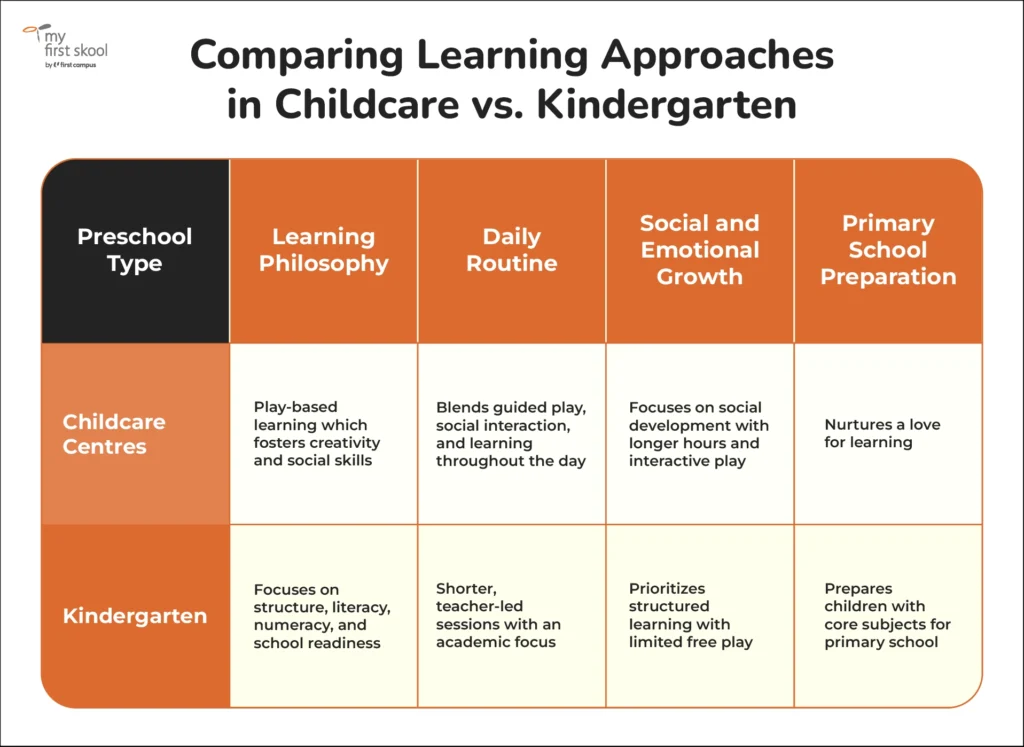
Childcare centres and kindergartens in Singapore have distinct learning approaches to support children’s development.
Note: Kindergartens may exist as a standalone service, separate from broader childcare services.
Childcare centres focus on play-based, experiential learning, fostering creativity and social skills. Kindergartens are more structured, emphasising early literacy, numeracy, and school readiness.
Childcare centres offer a mix of guided play, social interaction, and learning throughout the day, while kindergartens have shorter, teacher-led sessions with a stronger academic focus.
Childcare settings provide more opportunities for social development through longer hours and interactive play. Kindergartens prioritise structured learning, with limited free play.
While childcare centres nurture a love for learning, kindergartens align more closely with Singapore’s primary school curriculum, introducing core subjects early.
The right choice depends on your child’s learning style, your family’s schedule, and educational priorities. Visiting centres can help you decide which best suits your child’s needs.
No, the teacher-child ratio differs between kindergartens and childcare centres in Singapore, as regulated by the Early Childhood Development Agency (ECDA).
These ratios impact the level of interaction and support children receive, making it important to consider your child’s needs when choosing between a childcare centre and a kindergarten.
When comparing preschool curricula, you will encounter different educational approaches such as Montessori, Reggio Emilia, or Waldorf.
At My First Skool, we empower our children to learn through a pedagogical approach called PETAL – Playing, Exploring, Thinking, and Applying Learning. Your task is to identify one that suits your children’s learning needs.
Childcare centres and kindergartens may have similar curricula, with kindergartens being more academically oriented and structured.
At childcare centres, hands-on learning is a widely used method, where children engage in activities that support age-appropriate development and skills. Children are immersed in the learning process as they learn basic skills like numeracy and literacy while connecting these to their environment.
At My First Skool, a comprehensive curriculum includes integrated learning activities, a literacy-rich environment, and character development programmes. Our students are encouraged to engage with the community through annual projects organised in collaboration with various agencies.
Every year, over 26,000 families all across Singapore see their children benefit from our relationships-based curriculum – one that emphasises forging strong bonds between children, teachers and parents. Find a centre near you or take a virtual tour to explore our learning environments and learn how your child can thrive.
You can also quickly explore some of our locations:
Choosing between kindergarten and childcare depends on your family’s priorities. While childcare centres cater to working parents with flexible schedules, kindergartens focus more on preparing children academically for primary school.
Consider the following factors when deciding on a preschool and programme type for your children:
After narrowing down your options, it is advisable to schedule a visit to the preschools that meet your needs. Visiting the school with your child allows you to observe the environment, interact with the teachers, and assess whether it aligns with your expectations.
As a parent, it’s natural to seek the best childcare solution that meets your child’s needs while allowing you to balance work and parenthood effectively. While cost is often a major factor in decision-making, it’s important to consider the overall quality of the programme and the learning experiences it offers.
At My First Skool, we believe every child deserves a strong start. As one of Singapore’s most trusted providers of infant care, childcare, preschool, and kindergarten, we offer a nurturing environment where little ones can grow, learn, and thrive. With experienced educators and a proven curriculum, we’re here to support your child’s journey—every step of the way. Registration only takes 5 minutes.
Preschool focuses on structured learning and development, while childcare provides both education and care services, including full-day programmes.
We welcome children from 2 months to 6 years old, with age-appropriate programmes across different stages.
Our kindergarten programme prepares children aged 5 to 6 for Primary 1, focusing on literacy, numeracy, social skills, and holistic development.
Yes, our childcare services include nutritious meals, nap times, and a balanced daily routine to support each child’s growth.
Learning is hands-on, inquiry-based, and tailored to each age group, helping children build confidence, creativity, and a love for learning.
Choosing the right childcare provider is crucial for your child’s development and your peace of mind. In Singapore, My First Skool is an accredited childcare option that emphasizes holistic development, focusing on language, numeracy, and social-emotional skills. Additionally, all eligible centres have received SPARK certification from the Early Childhood Development Agency (ECDA), ensuring adherence to high standards in teaching and learning practices.
Have you noticed the joy children experience when they are playing? The advantages of play for preschoolers are numerous – these enjoyable moments, including active play, aid in their cognitive, emotional, physical, and social development. Active play helps build strength, enhance coordination, and prevent obesity. Educational specialists recognise the impact of play on healthy growth….
Have you noticed the joy children experience when they are playing?
The advantages of play for preschoolers are numerous – these enjoyable moments, including active play, aid in their cognitive, emotional, physical, and social development. Active play helps build strength, enhance coordination, and prevent obesity. Educational specialists recognise the impact of play on healthy growth. Children’s play is essential for learning and development, fostering skills like communication, social interaction, and problem-solving. Consequently, playtimes are intentionally integrated into childcare programmes as part of their early childhood support.
Play is a natural and essential part of childhood, allowing children to express themselves, explore their creativity, and develop their imagination. It is a way for children to learn about the world around them, develop their problem-solving skills, and build their confidence and self-esteem. Play can take many forms, including physical play, creative play, dramatic play, and fantasy play. Each type of play offers unique benefits and opportunities for growth, making it an integral part of a child’s daily routine.
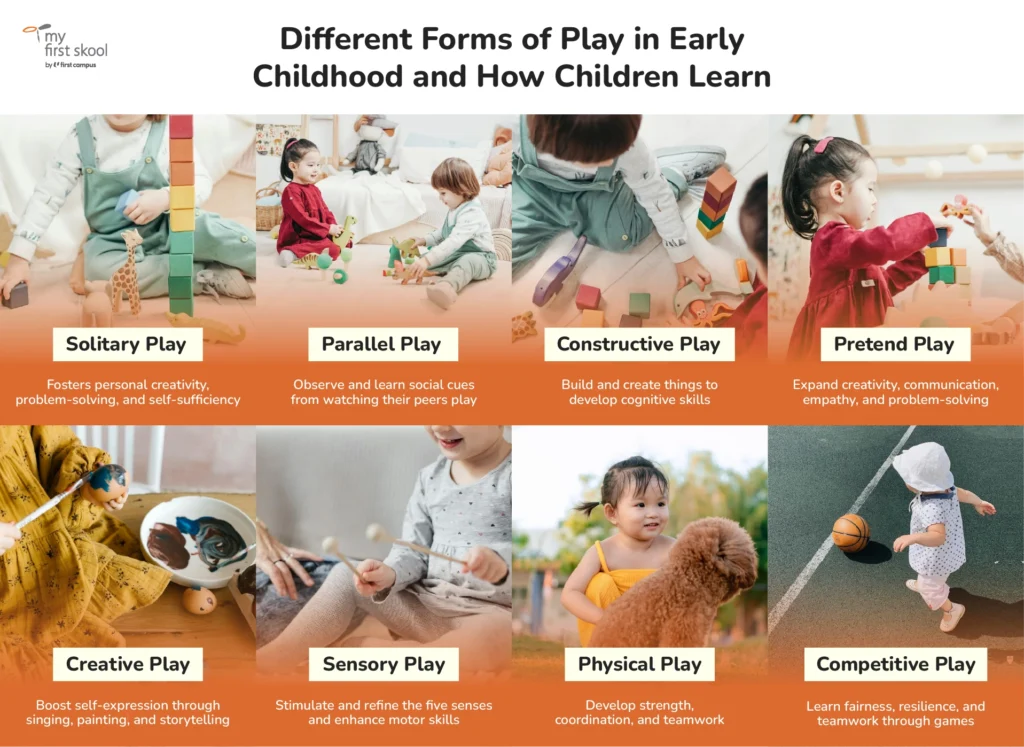
Does your toddler often choose to play alone, showing little interest in how a child plays with others or sharing their toys? Solitary play is a critical developmental stage in early childhood. At this phase, children are still learning about their environment and have yet to develop the social awareness necessary for cooperative play.
Solitary play allows children to explore their interests at their own pace, fostering creativity, problem-solving skills, and self-sufficiency. It also serves as an opportunity for them to process the world around them without external influences. While some children engage in solo play for only a few minutes before seeking comfort or interaction from a caregiver, others may be content playing alone for longer stretches. Over time, as their cognitive abilities, physical skills, and confidence grow, children gradually expand their engagement in more social forms of play.
Examples:
Have you ever taken your child to a playdate, only to notice that they play beside another child rather than with them? This is a classic example of parallel play, a developmental stage in which toddlers and young children play independently yet remain observant of one another.
Though it may seem as though they are playing in isolation, they are actually absorbing essential social cues. Watching how others use toys, express emotions, and interact with their surroundings helps children build foundational social skills. This stage often serves as a bridge between solitary play and more interactive play, preparing children for future collaborative experiences.
Examples:
Constructive play is when children manipulate objects to build, create, or construct something new. In addition to constructive play, children also engage in symbolic play, where they use one object to represent another, fostering creativity and cognitive skills. Whether they are stacking blocks into a tower, crafting a spaceship out of cardboard boxes, or moulding clay into fun shapes, they are developing crucial cognitive and motor skills.
This type of play not only enhances problem-solving abilities and hand-eye coordination but also introduces children to the concept of cause and effect. In a group setting, constructive play encourages teamwork, communication, and the exchange of ideas. Many childcare centres and educational environments prioritise constructive play by providing open-ended toys like building blocks, puzzles, and art supplies, which allow children to engage in both structured and unstructured creative activities.
Examples:
Also known as imaginative or role-playing, pretend play allows children to step into different roles and scenarios. Whether they’re pretending to be a chef whipping up a gourmet meal, a doctor treating a patient, or a superhero saving the day, they are actively expanding their creativity, linguistic abilities, and emotional intelligence.
Through role-playing, children practice communication, problem-solving, and perspective-taking. It also offers parents and caregivers a glimpse into their child’s thoughts, interests, and understanding of the world. This type of play fosters storytelling skills, enhances empathy, and supports social and emotional development.
Examples:
Singing a self-invented song, painting an abstract masterpiece, or weaving a make-believe story about an enchanted forest—these are all forms of creative play. This type of play allows children to express themselves freely, exploring different mediums and ideas without constraints.
Creative play nurtures self-expression, boosts confidence, and strengthens fine motor skills. It encourages children to think outside the box, try new things, and develop resilience when their creative efforts don’t go as planned. Providing materials like crayons, musical instruments, and craft supplies can inspire children to engage in endless imaginative endeavours.
Examples:
Sensory play is an integral part of early development, especially for younger children, helping them refine their five senses while building neural connections in the brain. Often carried out in infant care in Singapore, activities such as sand play, finger painting, and exploring different textures and scents stimulate sensory experiences that enhance fine motor skills and cognitive development.
This type of play also introduces children to scientific concepts like cause and effect. For instance, they may observe how water changes the texture of sand or how mixing colours creates new shades. Sensory play supports language development as children describe what they feel, see, and hear, making it a crucial component of early learning.
Examples:
From clapping hands and jumping in place to running, skipping, and climbing, physical play, also known as active play, is essential for developing strength, coordination, and gross motor skills. As children grow, their physical play evolves to include more structured activities like riding a bike, swimming, or playing team sports.
Physical play not only promotes overall health and fitness but also teaches children balance, agility, and spatial awareness. In social settings, it introduces elements of teamwork, cooperation, and friendly competition. Encouraging outdoor play and active games helps children develop a lifelong appreciation for movement and exercise.
Examples:
As children grow older, they begin to engage in competitive play, where games have set rules and involve winning and losing. Whether it’s a football match, a dance competition, or a simple board game, competitive play helps children understand structure, fairness, and sportsmanship.
While young children may initially struggle with losing, this type of play offers valuable lessons in resilience, emotional regulation, and perseverance. It also promotes goal-setting, strategy development, and teamwork. Encouraging a positive attitude toward competition helps children embrace challenges and handle setbacks gracefully.
Examples:
Every child develops at their own pace, and play is an evolving process that mirrors their growth. Whether your toddler prefers solitary activities or is eager to jump into group play, each stage of play contributes to their development in unique ways. By providing opportunities for various types of play, parents and caregivers can nurture well-rounded skills that support emotional, cognitive, and physical growth. Embrace the different play styles, encourage exploration, and most importantly—enjoy the journey alongside your child!
At My First Skool, we believe every child deserves a strong start. As one of Singapore’s most trusted providers of infant care, childcare, preschool, and kindergarten, we offer a nurturing environment where little ones can grow, learn, and thrive. With experienced educators and a proven curriculum, we’re here to support your child’s journey—every step of the way. Registration only takes 5 minutes.
At My First Skool, we believe play is the foundation of early childhood education. Through play, children make sense of the world around them, develop critical thinking skills, express their emotions, and build social connections. Different types of play help nurture the whole child — cognitively, socially, emotionally, and physically.
Exploratory play encourages children to use their senses — touch, sight, hearing, smell, and taste — to discover and understand their environment. Activities like playing with sand, water, or textured materials help sharpen sensory awareness, fine motor skills, and cognitive development.
In imaginative play, children role-play different scenarios — like pretending to be a doctor, chef, or superhero. This kind of play boosts creativity, language development, empathy, and emotional regulation as children explore different perspectives and express their thoughts and feelings.
Physical play includes active movement such as running, jumping, climbing, and dancing. It strengthens gross motor skills, improves coordination and balance, and promotes healthy physical development. It also helps children build confidence and resilience through active exploration.
Social play happens when children interact and collaborate with others. It teaches essential life skills like sharing, negotiation, empathy, teamwork, and conflict resolution. Through social play, children learn how to form friendships and develop a sense of belonging.
Singapore is a paradise for families with young children, offering a wealth of enriching activities that don’t have to cost a fortune. Whether your little one loves splashing in water parks, exploring nature, or getting hands-on with interactive exhibits, there’s something for every curious toddler in the Lion City. Engaging your child in meaningful play…
Singapore is a paradise for families with young children, offering a wealth of enriching activities that don’t have to cost a fortune.
Whether your little one loves splashing in water parks, exploring nature, or getting hands-on with interactive exhibits, there’s something for every curious toddler in the Lion City. Engaging your child in meaningful play helps develop essential skills like coordination, social interaction, and creativity—all while having fun!
To help you plan memorable family outings, we’ve compiled a list of 17 affordable (or free!) activities in Singapore that will keep your toddler entertained and stimulated. From sensory gardens to indoor playgrounds, farm visits to interactive museums, these experiences offer a perfect balance of learning and fun.
So, pack your little one’s essentials, put on those comfy shoes, and get ready to explore Singapore through the eyes of your toddler!
The Artground provides an ever-changing interactive art space tailored for children up to nine years old. With themed installations that evolve throughout the year, toddlers are encouraged to engage in sensory play, movement activities, and hands-on exploration. The space fosters creativity and imagination, making each visit a unique and enriching experience for little ones. Admission is $5 per person on weekdays, $8 per child and $5 per adult on weekends/public holidays. Blue and Orange CHAS card holders can enjoy free admission to the art spaces.
Opening Hours: Friday to Sunday, 9:30am – 5:00pm (Closed Monday to Thursday unless there are scheduled programmes)
Address: 90 Goodman Road, Singapore 439053

Located on the top floor of Jewel, Canopy Park offers a magical indoor experience with attractions like hedge mazes, discovery slides, foggy bowls, and sky nets. Most indoor playgrounds cater to various age groups, with dedicated spaces for younger children and features that support parents, such as nursing and changing facilities. The soft-play spaces and sensory areas are perfect for toddlers to climb, run, and explore in a safe, air-conditioned environment. Parents can also enjoy the beautiful views of the Rain Vortex while their little ones play. Entry costs just $6 for Singapore residents.
Opening Hours: Daily, 10:00am – 10:00pm
Address: Level 5, Jewel Changi Airport, 78 Airport Boulevard, Singapore 819666
Spanning 12,700 square feet, Kidz Amaze is one of Singapore’s largest indoor playgrounds, featuring a massive jungle gym and a soft play area specially designed for younger kids, ensuring a safe and engaging environment for them. The multi-level play structure is filled with slides, tunnels, and interactive elements that help develop gross motor skills and coordination. Parents can rest assured that safety is a priority, with padded floors and age-appropriate play zones. Prices start from $10.10 per child up to 14 years old.
Opening Hours: Monday to Thursday: 1:00pm – 7:00pm; Friday: 1:00pm – 9:00pm; Weekends, School Holidays & Public Holidays: 10:00am – 9:00pm
Address: SAFRA Toa Payoh, 293 Lorong 6 Toa Payoh, Singapore 319387

FutureWorld is a permanent exhibition by TeamLab that features captivating digital installations, interactive light projections, and hands-on experiences designed to engage young minds. Toddlers will be mesmerised by the beautiful, responsive digital landscapes where they can draw, colour, and watch their creations come to life. The space encourages exploration, creativity, and sensory development, making it a must-visit for families.
Opening Hours: Daily, 10:00am – 7:00pm (Last admission at 6:00pm)
Address: 6 Bayfront Avenue, Singapore 018974
Various venues across Singapore offer structured baby and toddler classes designed to enhance cognitive and physical development. From baby yoga and sensory play to music and movement sessions, these classes provide a nurturing environment where little ones can explore new skills, interact with peers, and build confidence. Many community centres and early learning providers offer affordable options for parents.
Singapore’s public swimming complexes feature toddler-friendly pools, interactive water play areas, and shallow kiddie pools, making them ideal for little swimmers. Introducing toddlers to water play from an early age helps build confidence and coordination while providing a fun way to cool down in Singapore’s warm climate. The interactive water play areas are designed to keep kids entertained while helping them build confidence and coordination. Entry fees are typically just a few dollars, making it an affordable family activity.
As Asia’s first garden dedicated to children, the Jacob Ballas Children’s Garden is an exciting outdoor space designed for nature exploration. It includes a farm, orchard, sensory gardens, and even a water play area where toddlers can splash and play. The garden also features interactive stations that encourage hands-on learning about plants, wildlife, and sustainability. This is a great spot for little ones to run free and connect with nature.
Opening Hours: Tuesday to Sunday, 8:00am – 7:00pm (Closed on Mondays, except public holidays)
Address: 481 Bukit Timah Road, Singapore 259769
Many public libraries in Singapore host free storytelling sessions designed for toddlers. These sessions, led by engaging storytellers, help develop language skills, foster a love for reading, and provide an opportunity for social interaction. Some libraries even incorporate songs, puppetry, and movement activities to make the experience more immersive and enjoyable.
This expansive outdoor playground offers a variety of play structures suitable for toddlers, including swings, slides, and sand play areas. With plenty of open space for running around, it’s an excellent place for active toddlers to burn off energy. Families can also enjoy picnics or nature walks along the scenic waterfront.
Opening Hours: Open 24 hours (outdoor public park)
Address: W Coast Ferry Rd, Singapore 126978

A UNESCO World Heritage site, the Singapore Botanic Gardens offers vast green spaces, beautiful flora, and scenic walking trails that are perfect for toddlers to explore. The Symphony Lake area is particularly popular for families, with plenty of open areas for little ones to run around, enjoy a picnic, or simply soak in the natural beauty.
Opening Hours: Daily, 5:00am – 12:00am
Address: 1 Cluny Rd, Singapore 259569
A visit to Hay Dairies Goat Farm offers a unique opportunity for toddlers to see goats up close and learn about dairy farming. Children can watch the goats being milked in the morning, feed them with specially provided hay, and explore the farm at their own pace. It’s an educational yet fun experience that brings them closer to nature.
Opening Hours: Tuesday to Sunday, 9:00am – 4:00pm (Closed on Mondays)
Address: 3 Lim Chu Kang Lane 4, Singapore 718859
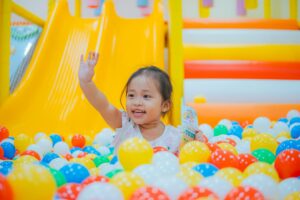
Changi Airport isn’t just for catching flights—it’s home to several free indoor playgrounds located across its terminals. These vibrant play areas feature slides, climbing structures, and soft-play zones designed specifically for toddlers. It’s a great spot for little ones to burn off energy while parents relax before a flight or after a meal at the airport.
Opening Hours: Daily, 24 hours (availability may vary slightly by terminal)
Address: Various locations within Changi Airport Terminals
Marine Cove Playground at East Coast Park is a spacious, ocean-themed play area designed for children of all ages. The toddler-friendly section features low slides, gentle swings, and shaded areas, making it a great place for young children to play safely while enjoying the sea breeze. Parents can also enjoy a meal at the nearby eateries while keeping an eye on their kids.
Opening Hours: Open 24 hours (lighting available until late evening)
Address: East Coast Park, near Car Park C3
Bollywood Veggies is an organic farm where toddlers can explore lush greenery, learn about different plants, and even take part in simple hands-on farming activities. The open spaces allow them to run freely, and there’s a farm-to-table bistro where families can enjoy fresh, wholesome meals. It’s a fantastic way to introduce young children to farm life in a fun and interactive manner.
Opening Hours: Friday: 10:00am – 3:00pm; Saturday and Sunday: 7:00am – 6:00pm
Address: 100 Neo Tiew Road, Singapore 719026

Gardens by the Bay’s Children’s Garden is a must-visit for families with young children. This interactive garden is designed for kids aged 1-12 and features a range of fun and educational activities. The garden is divided into different zones, each with its own unique theme and play elements. Kids can explore the sensory garden, play with water features, and learn about the importance of conservation. The garden also offers a range of interactive exhibits and activities, including a treehouse, a maze, and a play area with age-appropriate toys. With its focus on imaginative play and learning, the Children’s Garden is an ideal place for kids to explore and have endless fun.
Opening Hours: Daily, 9:00am – 7:00pm
Address: 18 Marina Gardens Dr, Singapore 018953
Hort Park is a nature reserve located on the West Coast of Singapore, offering a range of activities and attractions for families with young children. The park features a nature play area where kids can explore and learn about the natural world. The play area includes musical wind chimes, wooden dens, and other interactive elements that encourage imaginative play and exploration. Hort Park also offers a range of other activities, including allotments and butterfly gardens, making it a great place for families to spend the day. With its focus on nature and the outdoors, Hort Park is an ideal place for kids to learn about the environment and have fun at the same time.
Opening Hours: Daily, 6:00am – 11:00pm
Address: 33 Hyderabad Road, Singapore 119578
KidsSTOP is an interactive science centre located within the Singapore Science Centre, offering a range of fun and educational activities for kids aged 8 and below. The centre features a range of interactive exhibits and play areas, including a massive ball pit, a giant slide, and a play space with age-appropriate toys. Kids can learn about science and technology through hands-on activities and experiments, including a space station and a mini-grocery store. With its focus on interactive learning and play, KidsSTOP is an ideal place for kids to engage in science and develop their curiosity and creativity.
Opening Hours: Monday to Friday: 10:00am – 5:00pm; Saturday and Sunday: 10:00am – 6:00pm; Closed on Public Holidays
Address: 21 Jurong Town Hall Rd, Singapore 609433
Engaging your toddler in these fun activities supports their overall development, helping to build social skills, motor abilities, and cognitive growth.
At My First Skool, we believe in creating a nurturing environment where children thrive through play-based learning. Our well-designed preschool curriculum and dedicated educators provide a strong foundation for your child’s preschool years, ensuring they are ready for their next stage of learning.
Every year, over 26,000 families all across Singapore see their children benefit from our relationship-based curriculum – one that emphasises forging strong bonds between children, teachers and parents.
Find a centre near you or take a virtual tour to explore our learning environments and learn how your child can thrive.
Get up to speed on Singapore’s latest preschool subsidies for 2026-2027. Find out how the upcoming $15,000 income ceiling affects your family and calculate your subsidies today.
Navigating the landscape of childcare subsidies in Singapore can be complex for many parents. The Singapore government provides substantial subsidies to ensure quality early childhood education remains accessible and affordable for all families.
These financial supports are designed to ease the burden on working parents, significantly offsetting the monthly fees for both infant care and childcare programmes at ECDA-licensed preschool centres.
However, because the exact subsidy amount depends on a variety of factors, including your working status, household income, and the specific programme your child is enrolled in, figuring out your precise out-of-pocket expenses can sometimes be confusing.
As of 2026, full-day childcare fees are capped at a maximum of $610 per month at Anchor Operator preschools, which includes all My First Skool centres, and $650 at Partner Operator preschools, such as Little Skool-House.
This baseline fee cap ensures that out-of-pocket expenses for full-day childcare at an Anchor Operator remain highly affordable, often comparable to primary school and after-school care fees combined. Coupled with the available government subsidies, many families can expect their net fees to be significantly lower.
Following the Budget 2026 announcement1, and subsequent parliamentary sessions (Budget Debate and Committee of Supply Debate) , the government will be expanding preschool subsidy eligibility. Starting from January 2027, the income ceilings for means-tested preschool subsidies (Additional Subsidy) will be raised. This adjustment will allow over 60,000 more families in Singapore to qualify for higher Additional Subsidies, significantly reducing out-of-pocket childcare costs.
Key changes taking effect in 2027 for Additional Subsidy include:
(Note: The subsidy tables below reflect the current rates valid until December 2026).
Beyond the enhanced preschool subsidies taking effect in 2027, the government also announced immediate support to help parents with child-raising costs. Every Singaporean child aged 12 and below will receive a one-off $500 Child LifeSG Credit.
These credits can be conveniently used to pay for child-related expenses, including medical fees, enrichment classes, and even out-of-pocket preschool expenses – at any merchant or clinic that accepts PayNow or NETS QR, giving parents extra flexibility to manage their daily expenses.
It is important to understand how subsidies for preschool work, what factors can affect the final amount you receive, so you’ll know exactly what to expect and how to make the most of the subsidy for your child’s preschool journey. The amount of subsidy a family can receive is calculated based on several factors, including the family’s income, the number of children in care, and the type of childcare service used.
Singapore provides two primary types of subsidised childcare4 for families with Singapore Citizen (SC) children enrolled in licensed infant or childcare centres:
These subsidies are designed to make early childhood education more accessible and affordable, particularly for low- and middle-income families. By easing the financial burden, the ECDA supports families in providing quality early childhood education for their children.
For full-day childcare programmes, eligible families receive a monthly Basic Subsidy of $300. Additionally, depending on their means-tested household income, families may qualify for an Additional Subsidy of up to $467 per month to further offset their childcare expenses.
| Applicant’s working status | Gross Monthly Household Income | Gross Monthly Per Capita Income | Basic Subsidy (BS) | Additional Subsidy (AS) – Max AS | Additional Subsidy (AS) – Min Co-Pay # |
| Working Applicant | $3,000 and below | $750 and below | $300 | $467 | $3 |
| $3,001 to $4,500 | $751 to $1,125 | $440 | $25 | ||
| $4,501 to $6,000 | $1,126 to $1,500 | $340 | $115 | ||
| $6,001 to $7,500 | $1,501 to $1,875 | $260 | $185 | ||
| $7,501 to $9,000 | $1,876 to $2,250 | $190 | $255 | ||
| $9,001 to $10,500 | $2,251 to $2,625 | $130 | $315 | ||
| $10,501 to $12,000 | $2,626 to $3,000 | $80 | $365 | ||
| Above $12,000 | Above $3,000 | N/A | N/A | ||
| Non-working applicant | N/A | $150 | N/A | N/A | |
* As announced in Budget 2026, the income ceiling will be raised to $15,000 (HHI) or $3,400 (PCI) starting from 2027, allowing more families to qualify for the Additional Subsidy.
# Please note that a minimum co-payment is always required, regardless of whether your total eligible subsidies exceed the actual programme fees. The amount increases progressively with higher income brackets.
For full-day infant care programmes, eligible families receive a monthly Basic Subsidy of $600. Additionally, depending on their means-tested household income, families may qualify for an Additional Subsidy of up to $710 per month to further offset their infant care expenses.
| Applicant’s working status | Gross Monthly Household Income | Gross Monthly Per Capita Income | Basic Subsidy (BS) | Additional Subsidy (AS) – Max AS | Additional Subsidy (AS) – Min Co-Pay# |
| Working Applicant | $3,000 and below | $750 and below | $600 | $710 | $40 |
| $3,001 to $4,500 | $751 to $1,125 | $640 | $110 | ||
| $4,501 to $6,000 | $1,126 to $1,500 | $500 | $250 | ||
| $6,001 to $7,500 | $1,501 to $1,875 | $380 | $360 | ||
| $7,501 to $9,000 | $1,876 to $2,250 | $240 | $500 | ||
| $9,001 to $10,500 | $2,251 to $2,625 | $100 | $640 | ||
| $10,501 to $12,000 | $2,626 to $3,000 | $40 | $700 | ||
| Above $12,000 | Above $3,000 | N/A | N/A | ||
| Non-working applicant | N/A | $150 | N/A | N/A | |
When assessing your eligibility for the Additional Subsidy, ECDA evaluates your household income based on one of two methods:
Per Capita Income (PCI): Calculated by dividing the total gross monthly household income by the number of family members residing in the same household. This option is particularly beneficial for larger families (with 5 or more family members), as it may qualify the family for a higher subsidy tier.
Gross Monthly Household Income (HHI): The combined gross monthly income of both spouses, prior to CPF deductions.
Applications for both Basic and Additional Subsidies should be made through your chosen infant care and childcare centre. The centre will guide you through the application process and inform you about the necessary documentation. Once approved, the subsidies are disbursed directly to the centre, and you will only need to pay the net fees after the subsidy.
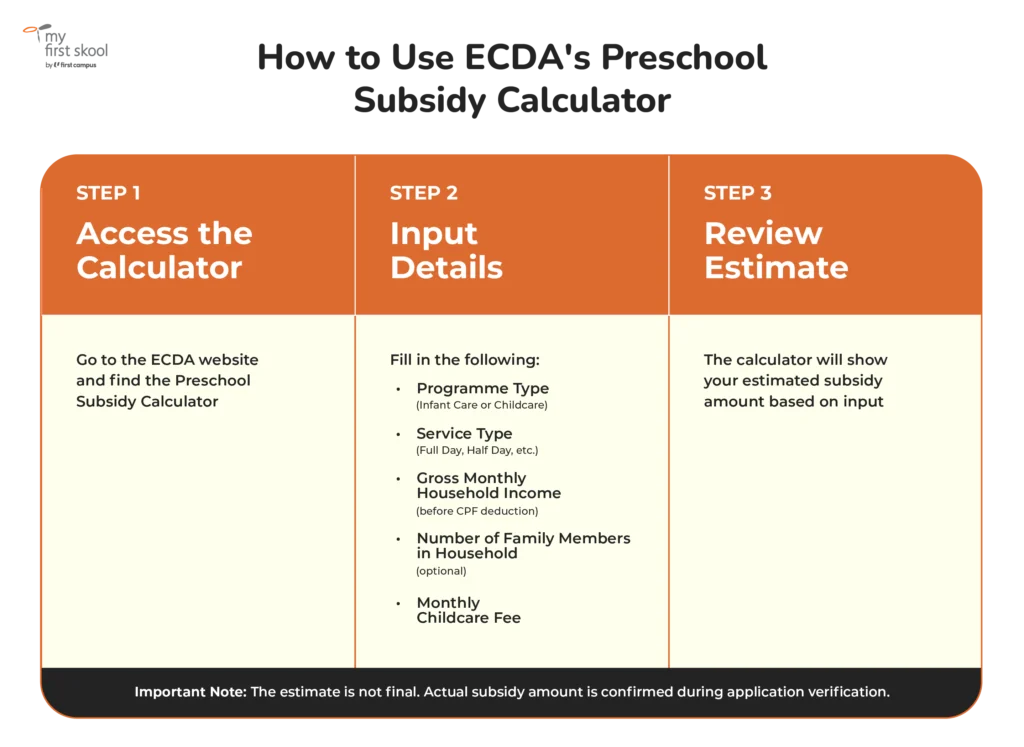
To assist parents in estimating their eligible subsidy amount, the Early Childhood Development Agency (ECDA) provides an online Preschool Subsidy Calculator, designed to help families estimate the amount of financial assistance they may receive for childcare services and infant care in Singapore.
Here’s how you can use it:
Please remember that the figures generated are estimates. The actual subsidy amount will be determined upon verification of your details during the application process.
At My First Skool, we understand the importance of quality and affordable early childhood education.
We are committed to assisting families in navigating our childcare subsidy application process. Our staff are well-versed in the various subsidy schemes and can guide you to ensure you receive the financial support you’re entitled to.
By choosing My First Skool, you’re selecting not only a premier educational institution but also a partner dedicated to making quality childcare accessible and affordable for your family.
Every year, over 26,000 families all across Singapore see their children benefit from our relationship-based curriculum – one that emphasises forging strong bonds between children, teachers and parents. Find a centre near you or take a virtual tour to explore our learning environments and learn how your child can thrive.
In Singapore, the government provides financial assistance to support families with young children through various infant care subsidies. These subsidies aim to reduce the financial burden on low-income families and ensure that children receive quality early childhood education and care. Types of Infant Care Subsidies The Early Childhood Development Agency (ECDA) offers two main types…
In Singapore, the government provides financial assistance to support families with young children through various infant care subsidies.
These subsidies aim to reduce the financial burden on low-income families and ensure that children receive quality early childhood education and care.
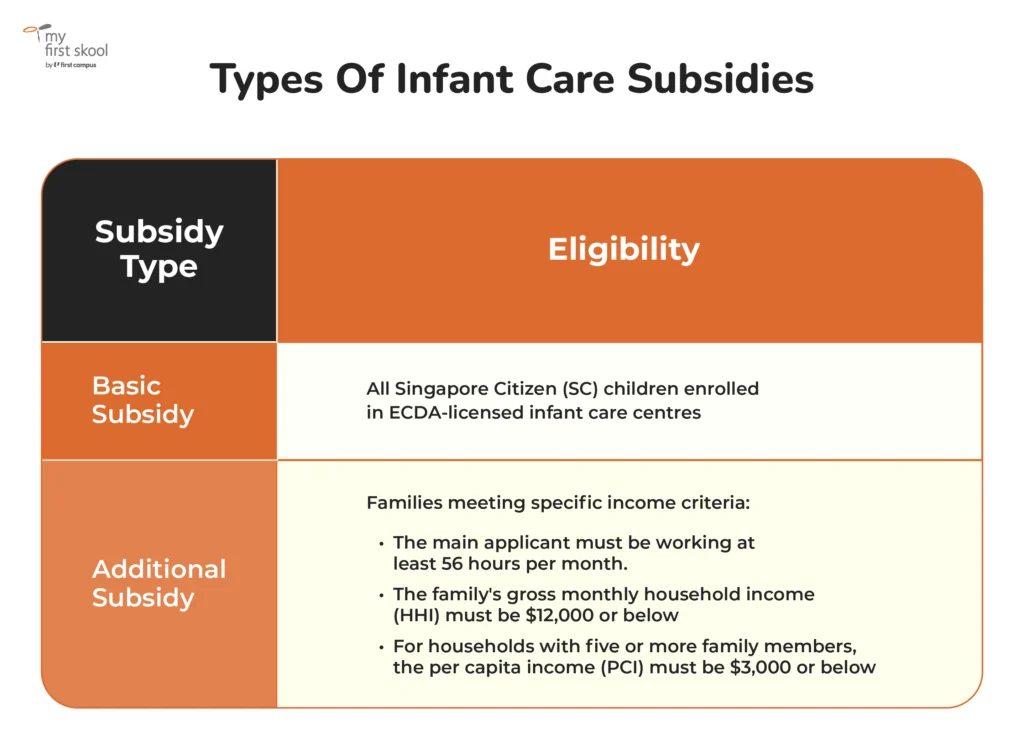
The Early Childhood Development Agency (ECDA) offers two main types of subsidies for infant care:
The subsidy amounts vary based on the working status of the main applicant and the family’s income level. The table below summarises the subsidies available for full-day infant care programmes:
| Types of subsidy | Working main applicant | Non-working main applicant | ||
| Basic Subsidy | $600 | $150 | ||
| Additional Subsidy | $40 to $710 | NA | ||
Note: The exact amount of the Additional Subsidy depends on the family’s income level.
The subsidy application is typically facilitated by the infant or childcare centre during the child’s enrolment. Parents are required to provide the necessary documentation to verify income and employment status. The subsidies are then disbursed directly to the infant care centre, reducing the preschool fees for parents.
But by the end of March 2025, all parents will be able to apply for preschool subsidies via the LifeSG application, reducing the time spent on such paperwork. Please approach your preschool if you need clarification on the subsidy application process that applies to your centre.
Non-working main applicants may still qualify for subsidies under Special Approval (SA) if they meet certain conditions, such as:
Approval under SA is granted for a limited period, depending on individual circumstances.
Regardless of the subsidy amount, families are subject to a minimum co-payment for infant care services. This minimum co-payment applies to Singapore Citizen children enrolled in infant care services. The co-payment amount increases progressively with higher household or per capita income levels.
| Applicant’sworkingstatus | Gross MonthlyHousehold Income | Gross Monthly Per Capita Income | Basic Subsidy (BS) | Additional Subsidy (AS) – Max AS | Additional Subsidy (AS) – Min Co-Pay |
| Working Applicant | $3,000 and below | $750 and below | $600 | $710 | $40 |
| $3,001 to $4,500 | $751 to $1,125 | $640 | $100 | ||
| $4,501 to $6,000 | $1,126 to $1,500 | $500 | $240 | ||
| $6,001 to $7,500 | $1,501 to $1,875 | $380 | $360 | ||
| $7,501 to $9,000 | $1,876 to $2,250 | $240 | $500 | ||
| $9,001 to $10,500 | $2,251 to $2,625 | $100 | $640 | ||
| $10,501 to $12,000 | $2,626 to $3,000 | $40 | $710 | ||
| Above $12,000 | Above $3,000 | N/A | N/A | ||
| Non-working applicant | N/A | $150 | N/A | N/A | |
Full-Day Infant Care Subsidy Table 2025
| Applicant’sworkingstatus | Gross MonthlyHousehold Income | Gross Monthly Per Capita Income | Basic Subsidy (BS) | Additional Subsidy (AS) – Max AS | Additional Subsidy (AS) – Min Co-Pay |
| Working Applicant | $3,000 and below | $750 and below | $300 | $355 | $20 |
| $3,001 to $4,500 | $751 to $1,125 | $320 | $60 | ||
| $4,501 to $6,000 | $1,126 to $1,500 | $250 | $130 | ||
| $6,001 to $7,500 | $1,501 to $1,875 | $190 | $185 | ||
| $7,501 to $9,000 | $1,876 to $2,250 | $120 | $255 | ||
| $9,001 to $10,500 | $2,251 to $2,625 | $50 | $325 | ||
| $10,501 to $12,000 | $2,626 to $3,000 | $20 | $355 | ||
| Above $12,000 | Above $3,000 | N/A | N/A | ||
| Non-working applicant | N/A | $150 | N/A | N/A | |
Half-Day Infant Care Subsidy Table 2025
My First Skool is one of the leading providers of quality early childhood education and infant care in Singapore.
As one of the Anchor Operator Partners (AOP) licensed by the Early Childhood Development Agency (ECDA), My First Skool ensures that all eligible children receive the applicable Basic and Additional Subsidies, making quality infant care accessible to more families.
Find out more about our infant care Singapore prices and how you can benefit from government subsidies.
Every year, over 26,000 families all across Singapore see their children benefit from our relationship-based curriculum – one that emphasises forging strong bonds between children, teachers and parents. Find a centre near you or take a virtual tour to explore our learning environments and learn how your child can thrive.
In early childhood education, the teacher-child ratio is a critical factor influencing the quality of care and education provided. In Singapore, the Early Childhood Development Agency (ECDA) sets forth specific guidelines to ensure that children receive adequate attention and helpful support during their formative years in class. ECDA’s Minimum Qualified Programme Teacher-Child Ratio 2025 ECDA…
In early childhood education, the teacher-child ratio is a critical factor influencing the quality of care and education provided.
In Singapore, the Early Childhood Development Agency (ECDA) sets forth specific guidelines to ensure that children receive adequate attention and helpful support during their formative years in class.
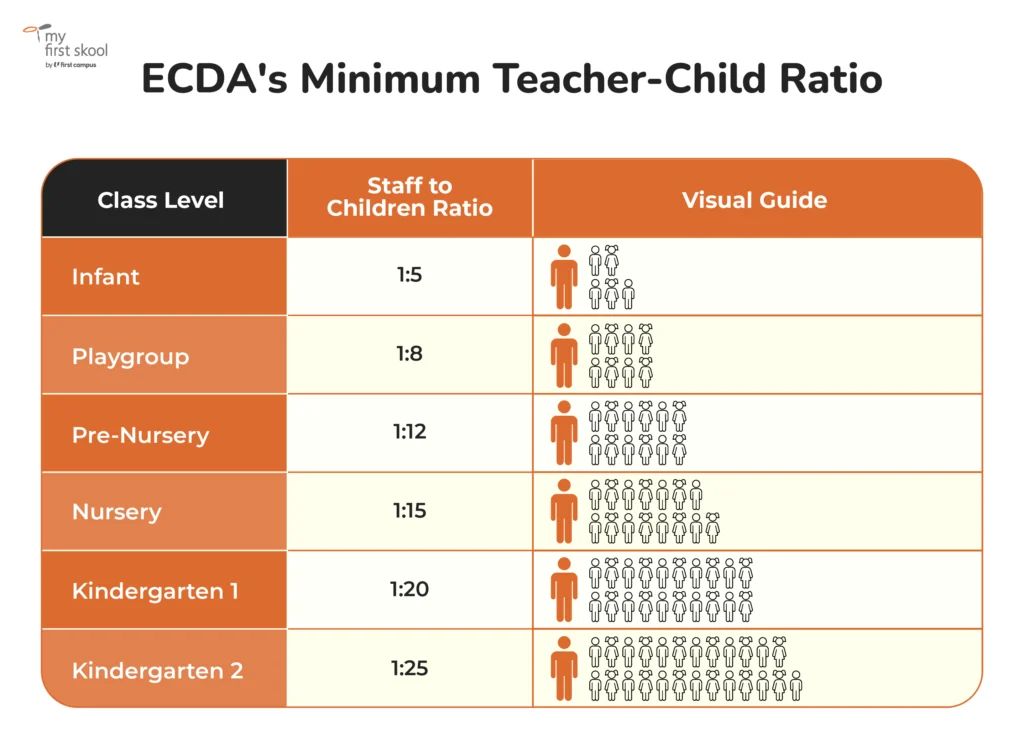
ECDA has established minimum staff-child ratios based on the age of the children, aiming to balance the developmental needs of children with practical staffing considerations. The stipulated ratios as of March 2025 are as follows:
| Class Level | Age of Children | Staff to Children Ratio | Staff to Children Ratio (+ Assistant Educator) |
| Infant | 18 months and below | 1:5 | Not Applicable |
| Playgroup | 18 months – below 3 years | 1:8 | 1+1 : 12 |
| Pre-Nursery | Children who turn 3 years old during the year enrolled | 1:12 | 1+1 : 18 |
| Nursery | Children who turn 4 years old during the year enrolled | 1:15 | 1+1 : 20 |
| Kindergarten 1 | Children who turn 5 years old during the year enrolled | 1:20 | 1+1 : 25 |
| Kindergarten 2 | Children who turn 6 years old during the year enrolled | 1:25 | 1+1 : 30 |
ECDA Minimum Staff-Child Ratios
As a trusted, long-standing preschool in Singapore, we recognise the profound impact teacher-child ratios have on early childhood development. And if you’re searching for a preschool near you that prioritises quality education, we adhere to—and in many instances, strive to surpass—the minimum staff-child ratios stipulated by ECDA.
My First Skool also works very closely with ECDA to ensure our centres adhere to their quality standards, including our staff-child ratio. We receive regular audits from the ECDA at our centres to ensure operational standards are met and that our children receive the best conditions for learning, playing and resting.
My First Skool’s quality extends beyond mere numbers, offering quality education and early childhood development through our relationships-first approach that ensures our students develop meaningful connections with their peers and educators.
We foster real-world values and relational skills such as social and emotional confidence, empathy, and teamwork. This approach not only enhances children’s well-being but also lays a solid foundation for their future learning and development.
Registration only takes 5 minutes


.jpg)