Published Jun 6, 2025
Updated Aug 25, 2025


Updated Aug 25, 2025
Gross motor skills are essential for a child’s physical and emotional development, helping them move confidently, maintain balance, and build strength. These skills, such as walking, jumping, and climbing, play a key role in a child’s independence and coordination. In Singapore, where academic readiness is often emphasised from an early age, it’s important not to…
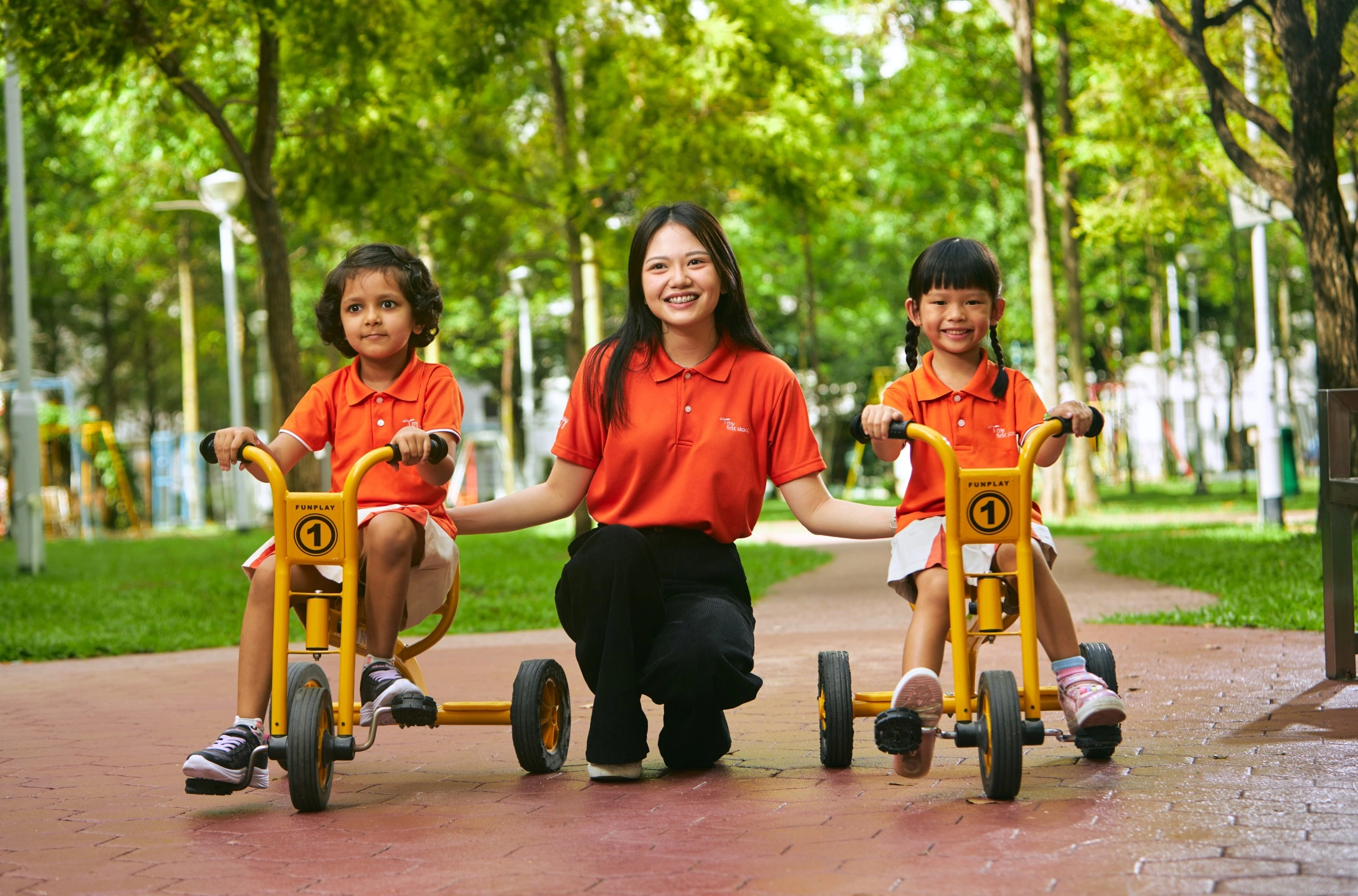
Gross motor skills are essential for a child’s physical and emotional development, helping them move confidently, maintain balance, and build strength. These skills, such as walking, jumping, and climbing, play a key role in a child’s independence and coordination.
In Singapore, where academic readiness is often emphasised from an early age, it’s important not to overlook physical development as part of a child’s overall growth.
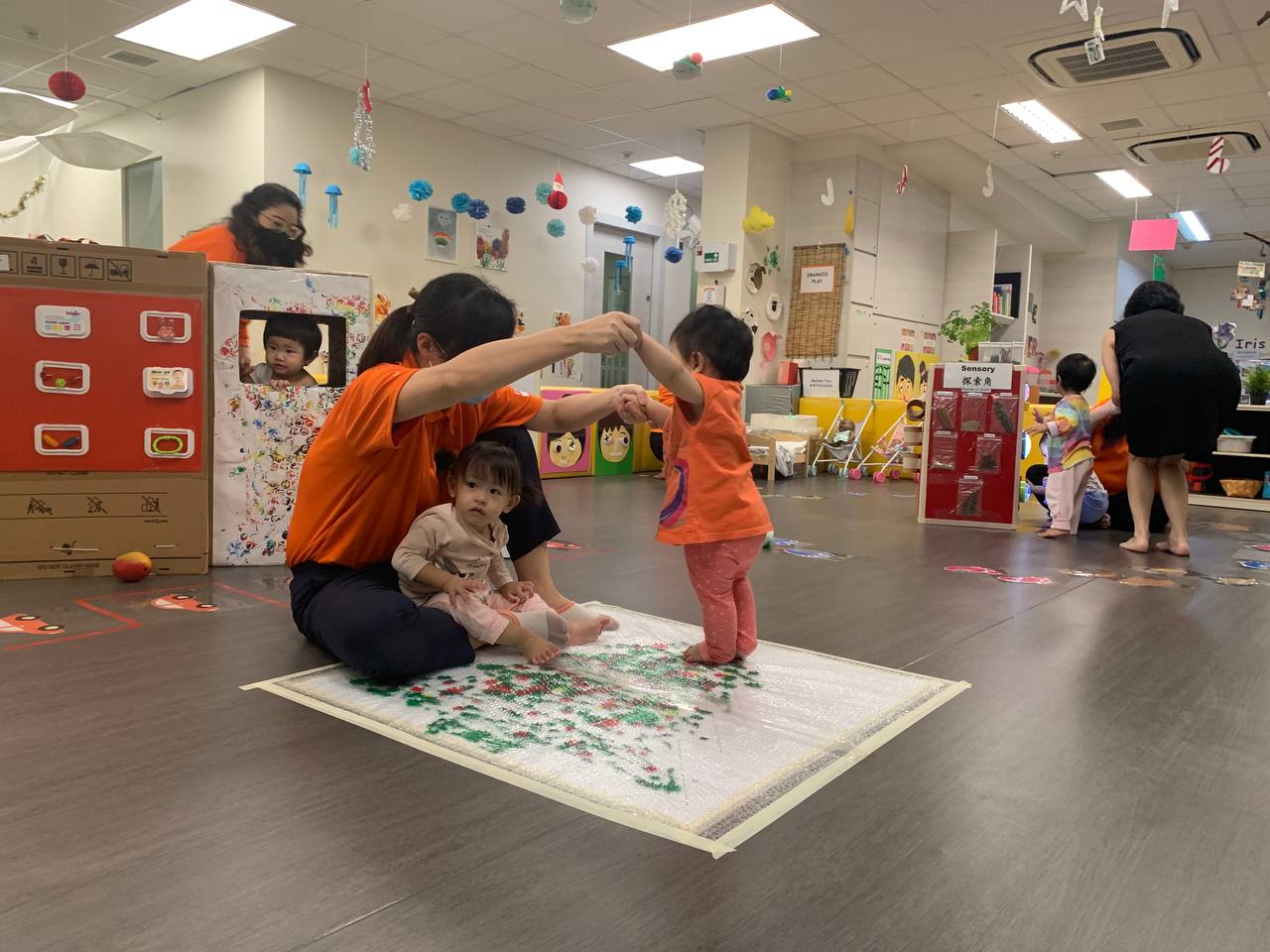
That’s why even at My First Skool, activities that support gross motor skills are a natural part of daily learning, helping children build strength, balance, and confidence as they grow.
In this article, we’ll explore ten engaging activities to help children develop their gross motor skills.
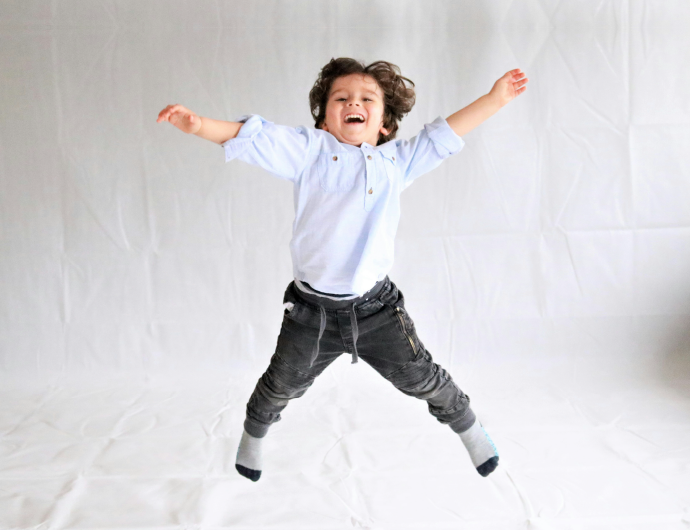
Gross motor skills refer to the large muscle movements we make with our bodies. Gross motor skills examples include:
These skills are essential for a child’s physical development, helping them gain strength, coordination, and balance.
Building strong gross motor skills supports mobility, balance, and overall health, and also lays the foundation for fine motor control and other critical abilities.
These skills enable children to manage classroom routines, participate confidently in school activities, and maintain a healthy balance between learning and active play — all crucial for thriving in Singapore’s fast-paced educational environment.
Age Range: 0–6 months
Tummy time is a simple but effective way to help infants strengthen their neck, back, and shoulder muscles.
By placing your baby on their stomach while awake, you encourage them to lift their head and eventually push up with their arms, building crucial muscles needed for later movements like crawling and walking.
As a natural progression from tummy time, belly crawling helps infants further develop their gross motor skills.
Benefits:
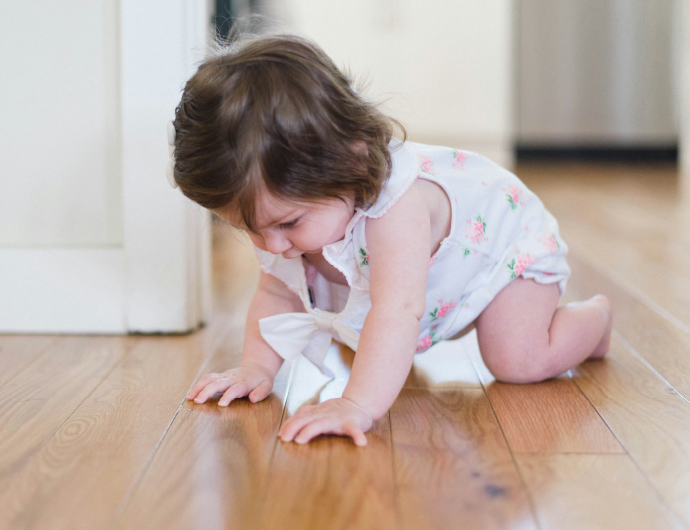
Age Range: 6–12 months
As your baby begins to crawl, encourage them to race towards a toy or a sibling.
This fun activity not only motivates movement but also strengthens muscles, improves coordination, and promotes spatial awareness.
Benefits:

Age Range: 9–18 months
Rolling a ball back and forth with your child encourages hand-eye coordination and promotes physical activity. It’s a simple game, but it supports muscle control and spatial awareness as children move toward the ball and push it back.
Benefits:

Age Range: 2–5 years
Jumping on a mini trampoline is a super fun way for children to build leg strength, improve balance, and have fun! It’s a great way to enhance physical confidence and coordination.
Benefits:
Age Range: 2–5 years
Create a simple obstacle course at home using cushions, tunnels, and furniture to get kids moving and promote physical activity. Encourage your child to crawl, jump, climb, and balance their way through the course. This activity promotes coordination, problem-solving, and muscle strength.
Benefits:
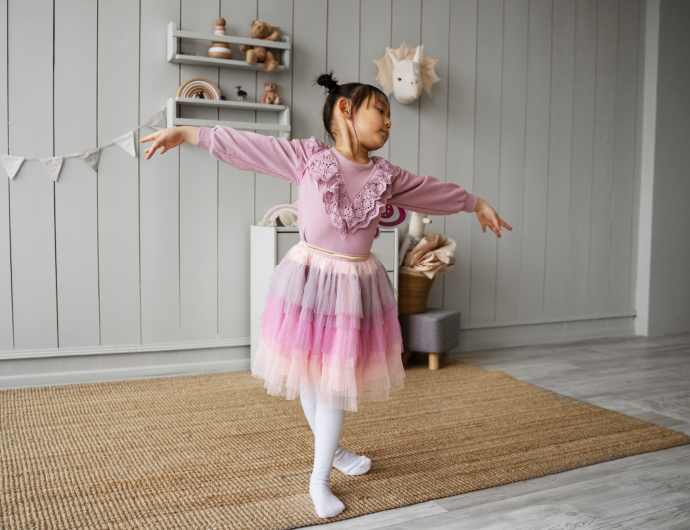
Age Range: 1–5 years
Dancing is a fun way for children to develop their large muscles, improve coordination, flexibility, and rhythm. Play some music and encourage your child to move their body to the beat. This activity also helps them learn to express themselves physically and emotionally.
Benefits:
Age Range: 1–3 years
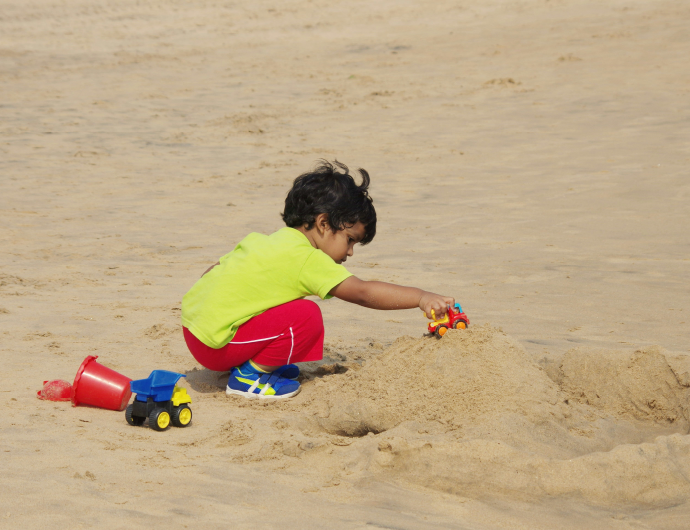
Encourage your child to walk on a variety of surfaces like grass, sand, or soft rugs. This helps develop balance, strengthens the feet and leg muscles, and improves spatial awareness.
Benefits:

Age Range: 2–5 years
Introduce simple throwing and catching games with soft balls or beanbags. These games help children develop hand-eye coordination and improve motor planning as they learn to time their movements.
Benefits:
Age Range: 2–5 years
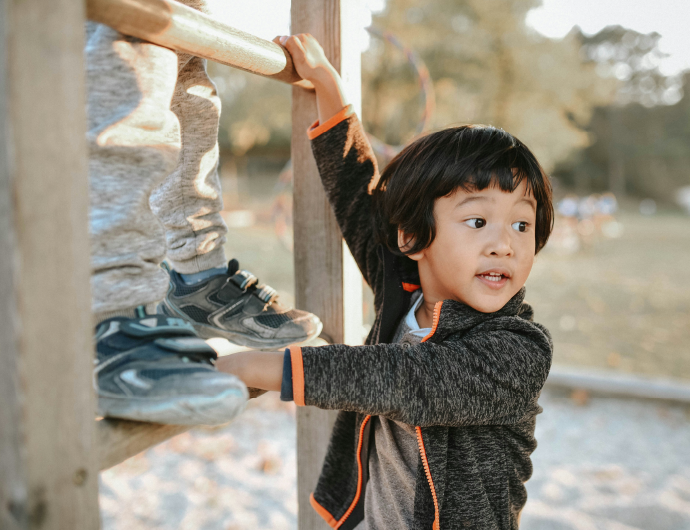
Climbing activities, whether on playground equipment or safe indoor structures, are fantastic for managing body weight, building strength, balance, and spatial awareness. These activities help children develop confidence as they explore their physical limits.
Benefits:
How My First Skool Incorporates It: My First Skool provides safe, supervised climbing opportunities in their outdoor play areas, where children can enjoy physical challenges while building confidence.
Age Range: 3–5 years
Balance beams help children learn to stand and balance effectively, improving their stability and coordination. Children can start by balancing on a low beam and progress to more challenging ones as they improve.
Benefits:
While home activities are a great way to support gross motor development, consistent opportunities to move, play, and build strength in a preschool setting help reinforce these skills even more.
That’s why at My First Skool, physical play is a natural part of our daily environment, giving children the space to grow confidently and steadily.
Gross motor skills are crucial for a child’s overall development. Activities like running, jumping, and climbing build strength, coordination, and confidence, while also fostering problem-solving and emotional regulation. Gross Motor Activities are monitored and conducted by teachers to ensure safety as well.
Physical activities at My First Skool support more than just physical growth. As children develop their gross motor skills, they also enhance cognitive abilities, emotional regulation, and social skills. These activities help children understand spatial relationships, build creativity, and learn how to make decisions and solve problems.
Mastering gross motor skills like walking and jumping boosts a child’s confidence. With each milestone, children feel more capable and independent. Whether playing with friends or exploring new tasks on their own, these skills empower children to take on challenges with confidence and assurance.
At My First Skool, we understand that every step of your child’s development is significant.
As your child embarks on their journey of growth and exploration, developing strong gross motor skills is fundamental to their overall development.
Gross motor skills lay the foundation for a child’s ability to engage with the world around them, fostering emotional regulation, problem-solving, and social interaction.
Through incorporating gross motor skill activities into our preschool curriculum, we provide a holistic learning experience that empowers children to explore, take on new challenges, and grow with confidence.
Every year, over 26,000 families all across Singapore see their children benefit from our relationship-based curriculum – one that emphasises forging strong bonds between children, teachers and parents.
Find a centre near you or take a virtual tour to explore our learning environments and learn how your child can thrive.
For many young children in Singapore, Show and Tell is one of their first experiences speaking in front of a group. Beyond being a fun classroom tradition, it plays a key role in nurturing communication, emotional expression, and confidence — and even contributes to a child’s English language development. Show and Tell is a significant…
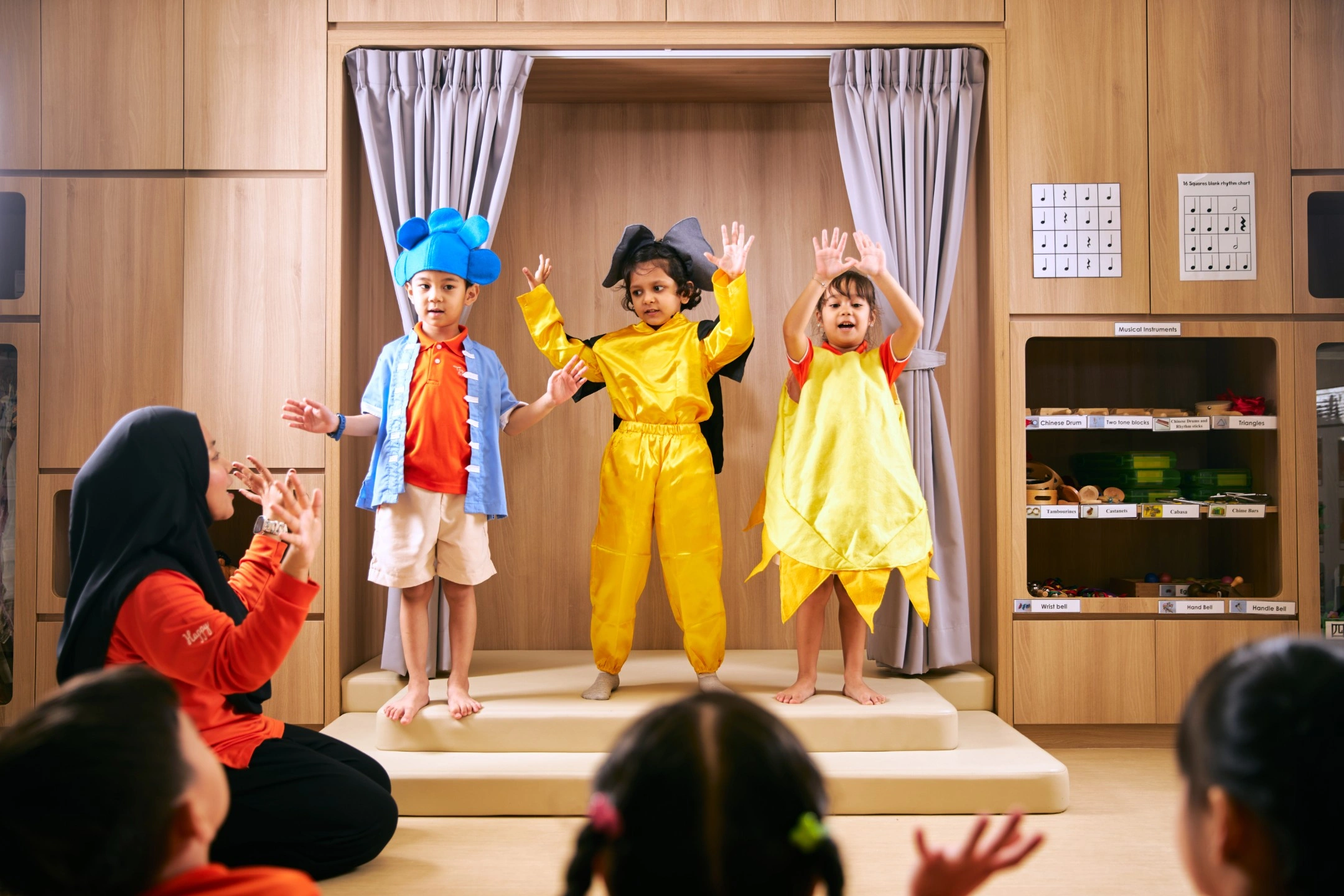
For many young children in Singapore, Show and Tell is one of their first experiences speaking in front of a group. Beyond being a fun classroom tradition, it plays a key role in nurturing communication, emotional expression, and confidence — and even contributes to a child’s English language development.
Show and Tell is a significant component of early education, contributing to a child’s English language score and essential skills.
As a parent, you play a crucial role in helping your child embrace this experience with excitement instead of fear. At My First Skool, experiences like Show and Tell are naturally part of daily learning, supporting children as they build confidence and communication skills over time.
In this guide, we’ll walk you through a simple 6-step journey to help your child prepare for their first Show and Tell, from picking the right topic to shining confidently on stage.
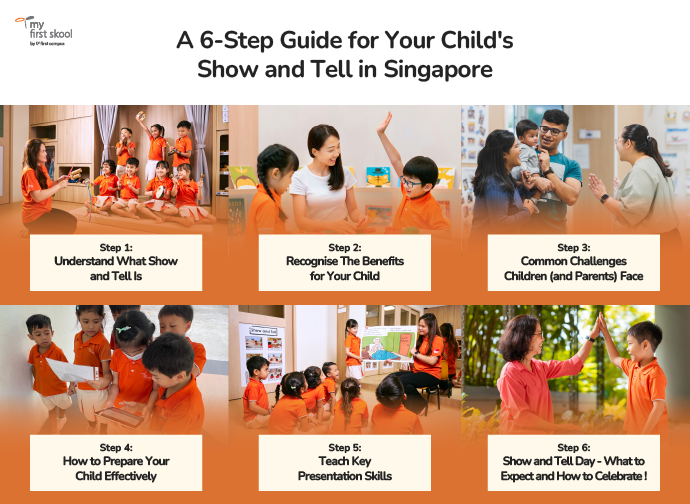
Show and Tell is a cherished classroom tradition that goes beyond simply showing off a favourite toy. It’s a dynamic activity designed to help children develop essential skills that will serve them for years to come.
At its core, Show and Tell is a chance for children to bring something from home, like a treasured book, a special toy, or even a meaningful memory, and explain its significance to their classmates.
In many Singaporean preschools, Show and Tell is an opportunity for children to practice public speaking in a safe, supportive environment, helping them gain confidence in themselves and their ability to communicate.
Show and Tell is more than just a fun classroom activity; it is an opportunity to create interesting presentations that capture the audience’s attention.
Here are some key benefits your child will gain through this valuable experience:
Show and Tell encourages children to use a wider range of vocabulary, practice their articulation, and form coherent sentences. By explaining their thoughts and ideas clearly, they also develop listening skills, which help them become better communicators overall.
Presenting in front of peers helps children overcome their fears of public speaking and boosts their self-esteem. The more they practice, the more confident they become, not just in the classroom, but in social interactions, group work, and later in life.
Through Show and Tell, children learn to articulate their feelings, thoughts, and personal experiences. This encourages them to reflect on their emotions and express themselves openly, fostering emotional intelligence.
To effectively communicate in front of an audience, children must organise their thoughts logically. Show and Tell enhances critical thinking and helps them structure their ideas in a clear, engaging manner.
Show and Tell isn’t just about speaking; it’s also about listening. When children watch their peers present, they learn to be attentive, respectful, and patient. Active listening helps them develop empathy and fosters a culture of respect, both of which are invaluable life skills.
📝 Quick Takeaway: Show and Tell nurtures language, confidence, emotional intelligence, critical thinking, and listening skills — all at once!
While Show and Tell is a wonderful learning experience, it can come with its fair share of challenges. Clear instructions from teachers can help overcome these challenges by guiding parents and students on how to effectively prepare their presentations.
As a parent, understanding these hurdles will help you better support your child through the process and ensure a positive experience:
📝 Quick Takeaway:
Show and Tell challenges like stage fright and disorganised thoughts can be overcome with support, boosting confidence and authenticity!
Preparing your child for Show and Tell doesn’t have to be stressful. Providing relevant information can help in preparation, making your child feel confident and excited about presenting.
Here are some practical tips to ensure a smooth and enjoyable preparation process:
The best Show and Tell topics are those that your child is passionate about or feels a strong connection to. Choosing an item that holds personal significance will make your child feel more comfortable and confident, such as:
Props are a great way to help your child feel at ease while speaking. Bringing an object from home, such as a favourite stuffed animal, a special drawing, or a photo from a recent holiday, can give them something familiar to focus on, easing any nervousness.
While it’s important to let your child express themselves authentically, gentle guidance can help them feel more prepared. Ask open-ended questions at home to get them thinking about their topic and its significance. For example:
📝 Quick Takeaway:
Choose a familiar topic, use comforting props, and practice with gentle guidance to help your child shine during Show and Tell!
While Show and Tell is a fun activity, it also serves as an early introduction to essential presentation skills.
Teaching your child some basic techniques can help them present with confidence and clarity. Here are a few simple skills to focus on:
Encourage your child to stand tall, with their feet still and together, which helps project confidence. Maintaining eye contact with their audience (rather than focusing solely on the item) will help them engage with their peers and feel more connected.
These small but impactful body language tips will boost their confidence and make their presentation more compelling!
A common challenge for young children is speaking clearly and loudly enough for everyone to hear. Encourage your child to speak slowly, project their voice, and articulate their words.
Practising at home in front of a mirror or with family members can help them get used to speaking loudly and confidently.
Engaging with other students can make the presentation more interactive. This helps build a connection with the audience and makes the presentation feel more interactive. It also boosts your child’s comfort level with public speaking.
📝 Quick Takeaway:
Teach good posture, clear speaking, and audience engagement to help your child present confidently and effectively during Show and Tell!
The big day has arrived! Your child is ready to step into the spotlight and share their story with the class during the Show and Tell session. But how can you ensure the day goes smoothly, and how can you celebrate your child’s achievement afterwards?
On the day of their presentation, encourage your child to stay calm and excited. It’s completely normal for nerves to kick in, but remind them that everyone is there to listen and support.
Teachers typically guide the children through their presentations in a structured way, which means your child won’t be alone in the spotlight. They will have time to introduce their topic and share their thoughts with their classmates.
Your child might feel nervous just before going up, but the more they practice, the easier it will become. Give them a reassuring hug and a few encouraging words before they go up to present. Let them know that you believe in them and that it’s okay to take their time.
After the presentation, take time to celebrate your child’s effort, no matter how they performed.
Praise their bravery for speaking in front of the class, their effort in preparing, and their ability to communicate clearly. If they made it through their first Show and Tell, that’s a huge achievement!
📝 Quick Takeaway:
Celebrate your child’s Show and Tell success by praising their bravery, preparation, and communication skills—every effort is a big win!
While Show and Tell is an important milestone, it’s just one of many opportunities to help your child grow into a confident communicator. Public speaking and self-expression are lifelong skills that can be further developed through everyday activities and encouragement.
At My First Skool, we believe in providing continuous opportunities for your child to express themselves and build confidence in a supportive environment.
Here are a few ways to nurture your child’s communication skills both at home and through our enriching programs:
By incorporating these practices into your child’s routine, and with the support of My First Skool’s nurturing environment, you’ll help them develop a strong foundation for expressing themselves with clarity and confidence — skills that will serve them well in Show and Tell and beyond.
At My First Skool, we believe that every child has a story worth sharing.
Show and Tell is a special opportunity for your child to develop crucial life skills that will serve them far beyond the classroom.
With the right support, practice, and encouragement, your child will not only succeed in Show and Tell but also grow in confidence, communication, and emotional expression.
We strive to create an environment where your child feels confident to express themselves, connect with others, and thrive in a supportive community. By nurturing these skills through our preschool curriculum, we help your child grow into a strong communicator, ready to take on new challenges with confidence.
Because when children feel supported, they don’t just participate — they soar.
Every year, over 26,000 families all across Singapore see their children benefit from our relationship-based curriculum – one that emphasises forging strong bonds between children, teachers and parents.
Find a centre near you or take a virtual tour to explore our learning environments and learn how your child can thrive.
Children of My First Skool at Blk 601 Ang Mo Kio performing the nursery rhyme titled ‘Trampoline’ on August 3. On August 3, My First Skool (MFS) at Blk 601 Ang Mo Kio was awarded second prize for its nursery rhyme titled ‘Trampoline’ in the ‘Thumbs Up Little Junior’ Nursery Rhymes Competition. There was a…
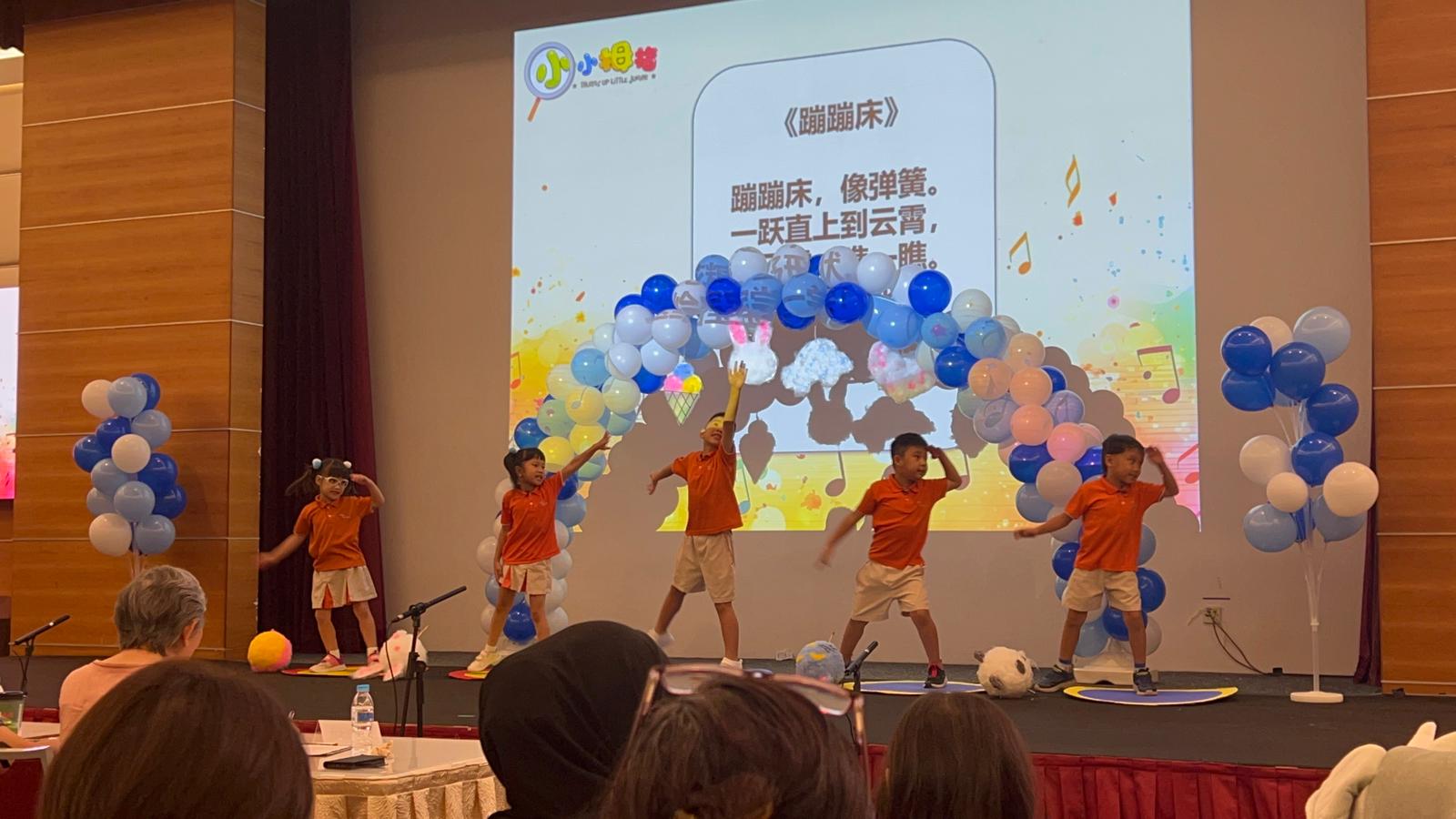
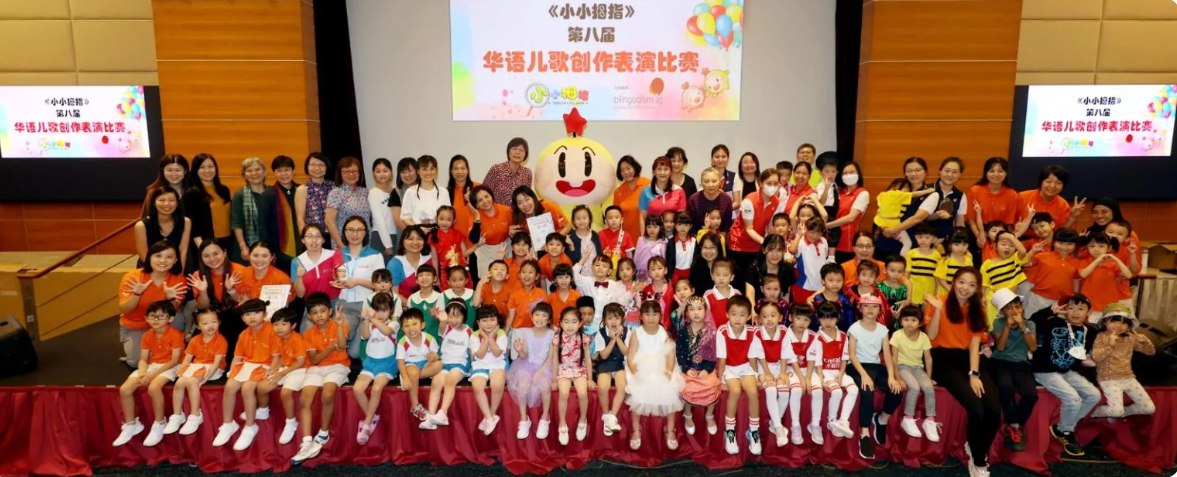
Children of My First Skool at Blk 601 Ang Mo Kio performing the nursery rhyme titled ‘Trampoline’ on August 3.
On August 3, My First Skool (MFS) at Blk 601 Ang Mo Kio was awarded second prize for its nursery rhyme titled ‘Trampoline’ in the ‘Thumbs Up Little Junior’ Nursery Rhymes Competition. There was a total of 475 entries, which is the highest number received for the competition in the past 9 years.
Gan Chun Yan, Chinese Senior Teacher, said the nursery rhyme was inspired by her daily observations of children enjoy jumping on trampolines and cotton candy.
“We combined this popular activity with our rich imagination, bringing trampolines and cotton candy to the stage,” she added.
Dr Connie Lum, Director of Mother Tongue Language Curriculum, NTUC First Campus, was also a judge at the event.
“The nursery rhymes competition is not just for teachers and students. I am delighted to see some entries involving parents this year, giving us a glimpse of family life at home. Families play a crucial role in encouraging children to love the Chinese language from a young age,” she said.
MFS also received 4 Commendation Awards and a Special Recognition Award at the competition.