Published Jun 26, 2026
Updated Jul 27, 2026


Updated Jul 27, 2026
Are you preparing for your return to work and weighing your childcare options in Singapore? Recent global research from the OECD highlights that the first five years are foundational for your child’s brain development. At My First Skool, we turn these research-backed insights into daily moments of love, learning, and discovery.
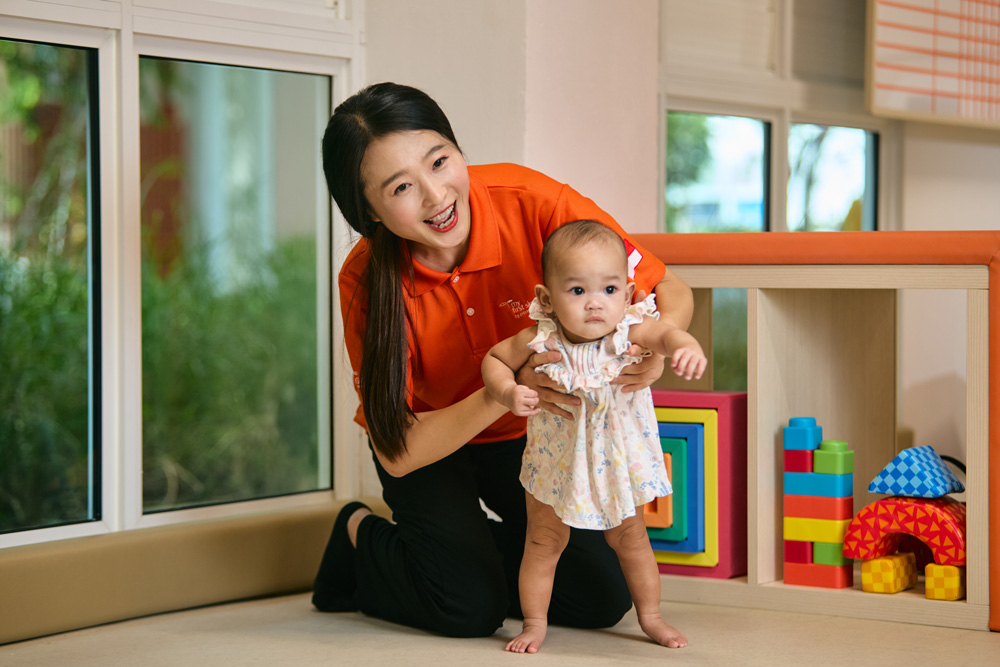
The OECD’s International Early Learning and Child Well-being Study (IELS), has provided fresh insights into what helps children thrive in their earliest years. Drawing on data from more than 23,000 five-year-olds across multiple countries, the study found that children’s early experiences are closely linked to their language development, self-regulation and social-emotional skills by age five. [1]
Many of the experiences highlighted in the research – from responsive caregiving and shared reading to play-based exploration – are already part of everyday life at My First Skool Infant Care. Here’s what the research found, and how these principles come to life throughout a child’s day.
Are you preparing for your return to work and weighing your childcare options in Singapore? Recent global research from the OECD highlights that the first five years are foundational for your child’s brain development. At My First Skool, we turn these research-backed insights into daily moments of love, learning, and discovery.
There is a question almost every new parent in Singapore wrestles with as maternity leave ends and mothers prepare to return to work. Parents often struggle to decide which caregiving option is truly best for their infant. Is keeping the baby at home with a trusted helper, or with grandparents who clearly adore them, the ideal choice? Or does structured infant care offer unique developmental benefits that make a genuine difference?
It is a fair question, and here is additional evidence that might make your decision process easier, or that you might want to consider, as you decide which is the better caregiving option to provide quality interactions for your child.
In 2026, the Organisation for Economic Co-operation and Development published Building Strong Foundations for Life, the results of its International Early Learning and Child Well-being Study. It assessed more than 23,000 five-year-olds across eight countries and is the first study of its kind to give a genuinely comparable picture of how children are developing at the start of their learning journey.
The central finding is that children who attended quality early childhood education and care settings in their earliest years had measurably better outcomes by age five across literacy, numeracy, self-regulation, and social development. A large share of the differences in outcomes came down to the quality of the individual centre a child attended. [1]
“By the age of 5, the story is already being written. Early childhood development is not just a warm-up act for education; it is the foundation.”
– Andreas Schleicher, Director for Education and Skills, OECD, 2026The OECD study confirms well-being and learning are deeply connected. Our PETAL pedagogy creates play environments where children build literacy and communication simultaneously.
Self-regulation predicts long-term success better than early scores. Through our Relationships-Based Approach, educators respond to every coo with warmth to build emotional confidence.
Children develop skills at varying rates. Rather than rushing standardised milestones, we move at your child’s pace by documenting personal rhythms and feeding cues.
While the OECD research highlights the importance of quality care, My First Skool brings these findings to life through our Relationships-Based Approach. This helps our educators create a nurturing, supportive environment where children feel safe, valued, and understood. This sense of security encourages natural exploration and learning.
Our early years curriculum is aligned with the latest Early Years Development Framework (EYDF) and our PETAL™ (Playing, Exploring and Thinking as Active Learners) pedagogy. We focus on creating learning moments through meaningful routines, experiences, and interactions across four key areas: Cognitive, Communication and Language, Physical, and Social and Emotional.
Every interaction is an opportunity for your baby to feel loved. Our educators practice the 3Rs:
Babies can “talk” through art long before speaking. In partnership with the National Gallery Singapore, our visual arts programme provides:
With nearly 50 years of trusted experience in early childhood, My First Skool supports infants through responsive care, meaningful interactions and age-appropriate experiences that nurture their development from the very beginning.
Recent findings from the OECD’s International Early Learning and Child Well-being Study reinforce what early childhood educators have long understood: children’s earliest experiences play an important role in shaping their development. Many of the practices highlighted by the research are already woven into the everyday experiences of children at My First Skool. Here is what a typical day looks like, and where the science now lines up.
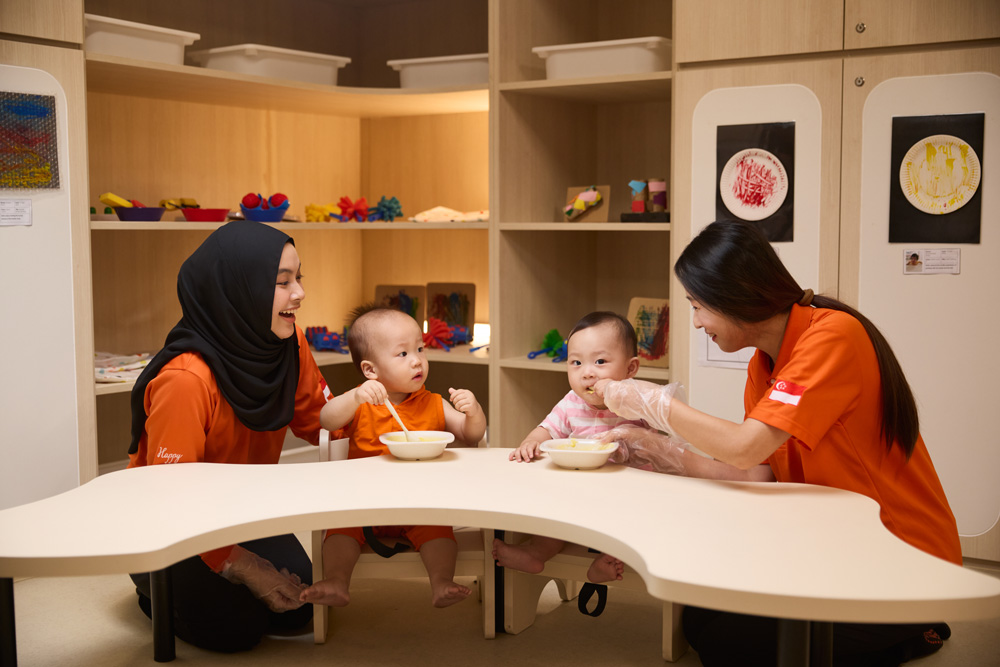
A nutritious start supports more than physical growth; it helps children feel secure, energised and ready to engage. Meals follow Health Promotion Board guidelines. For infants starting solids, educators work closely with parents to introduce foods at an individual pace with patience and care.
Soft scarves, textured materials, water play and natural objects give infants opportunities to explore with all their senses. Educators introduce new words, describe sensations, and respond to curiosity to build early language and thinking skills.
We apply our 3R strategy to nappy changes and handwashing, making them meaningful learning moments. Conversing gently (“Let’s feel the warm bubbles!”) ensures infants feel like active participants rather than passive subjects.
The OECD study found that children’s development is shaped not only by planned learning activities, but also by the quality of everyday interactions they experience throughout the day. Mealtimes, play, and caregiving routines all contribute directly to language, social-emotional, and cognitive growth.
Lunches meet nutritional guidelines. For babies weaning, we plan closely with parents. Educators name foods, describe tastes and textures, and follow each baby’s cues for unhurried, conversational mealtimes.
Infants rest according to their natural developmental needs in a calm environment. Supporting healthy sleep routines rather than enforcing rigid schedules helps children feel secure.
Older infants enjoy soft snacks while younger ones continue milk feeds. Each child gets what they need when they are ready, without rushing development to fit a rigid schedule.
Action songs, simple instruments, and movement games allow babies to clap, kick, and sway—building motor skills, early speech patterns, and social connection simultaneously.
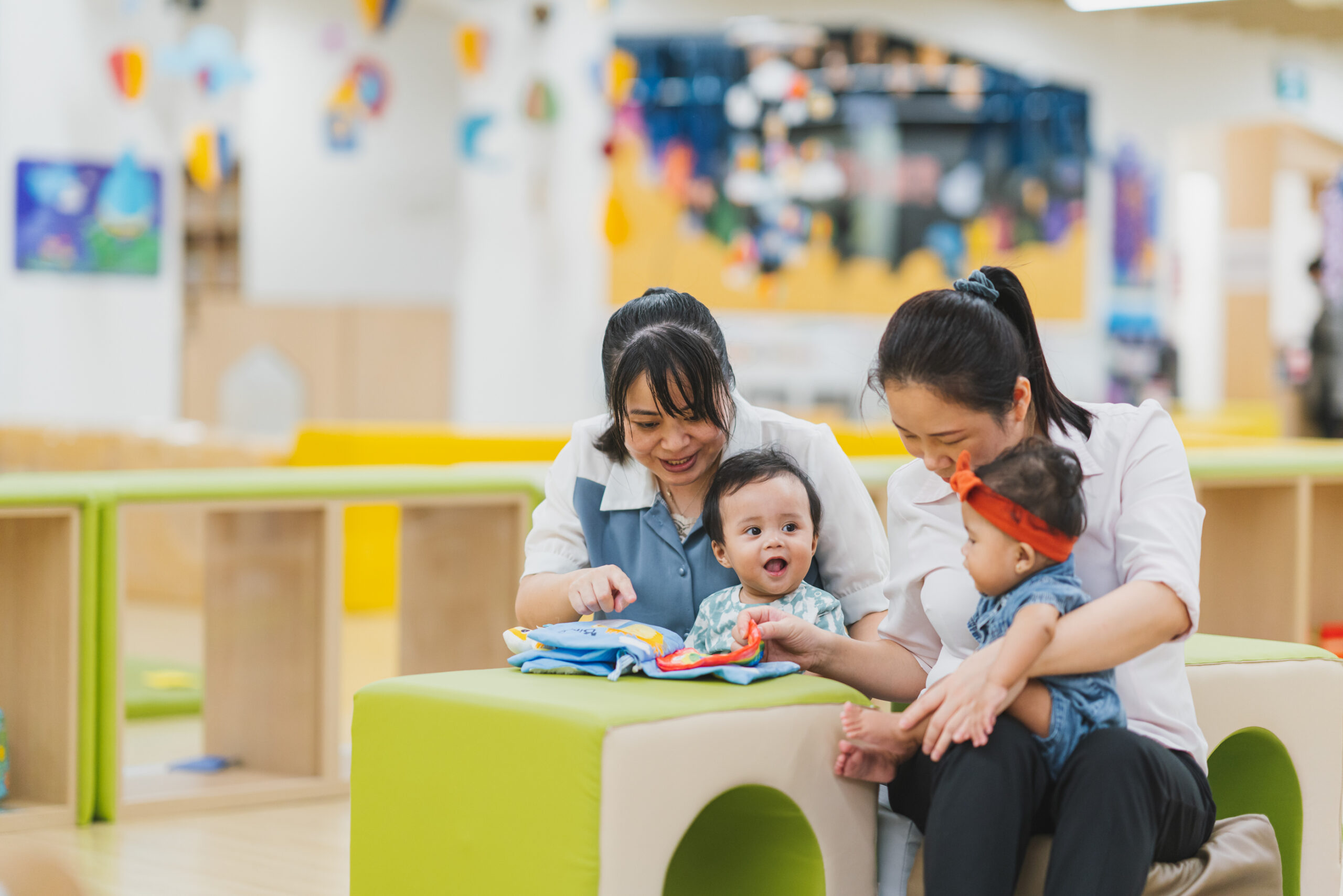
Books are always within reach. Educators read with expression, follow children’s interests, and turn stories into interactive conversations to foster imagination and vocabulary.
If you’re exploring infant care in Singapore, the OECD findings offer a reassuring message: children do not need formal lessons to thrive in their earliest years. What matters most are responsive relationships, meaningful interactions, opportunities to explore through play, and caring adults who understand their developmental needs.
At My First Skool, we focus on what truly matters: respectful relationships and creative play. By using the 3Rs and Art Exploration, we create an environment where your baby feels safe to explore, curious to learn, and empowered to express themselves, setting the best possible foundation for their future.
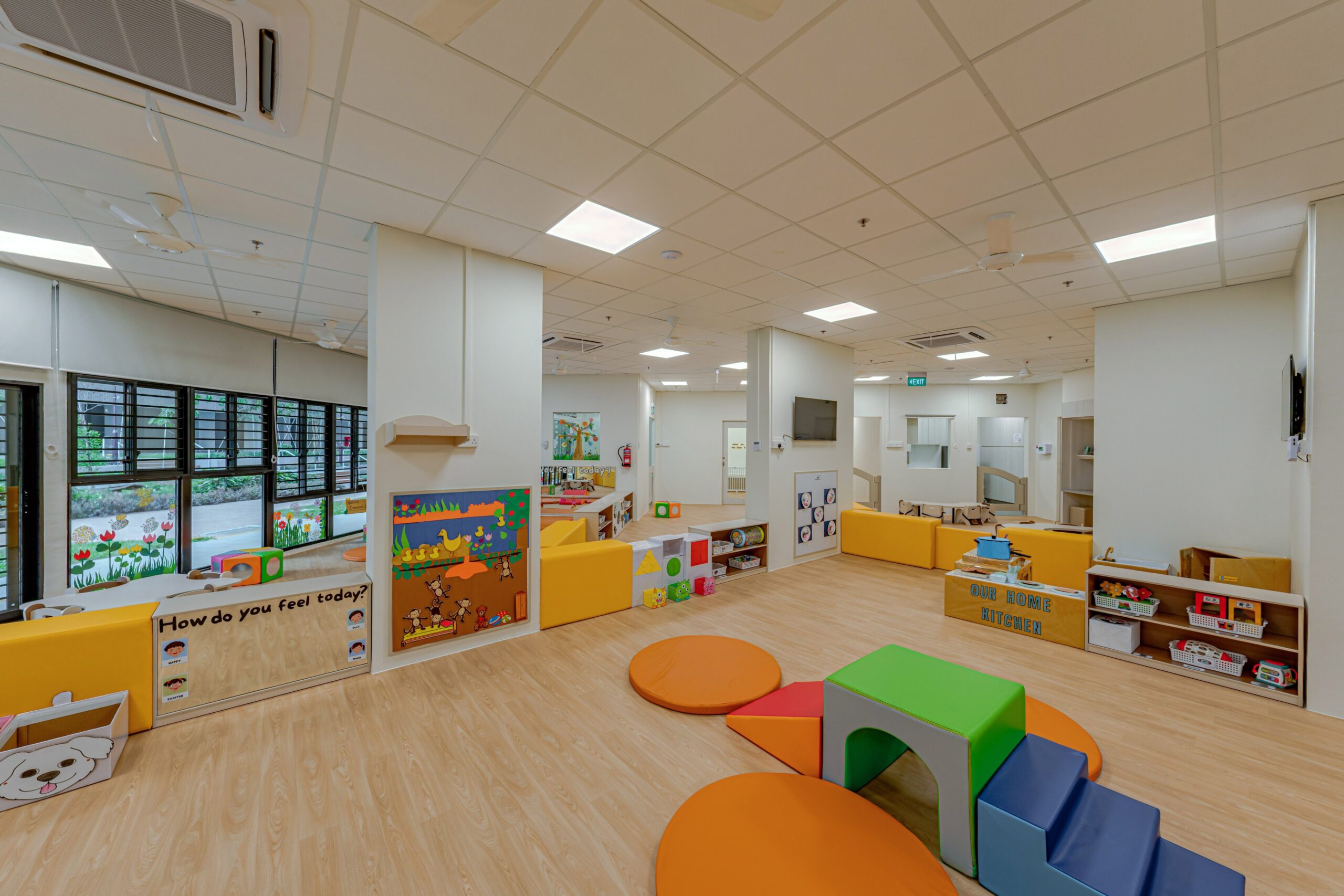
Choosing infant care is a big decision, but the research is clear: a quality environment filled with responsive, respectful care makes a world of difference. At My First Skool, we don’t just provide basic caregiving; we nurture your baby’s heart and mind through every cuddle, every conversation, and every colourful brushstroke.
Experience how responsive caregiving and structured early learning environments give your child the best start in life.